

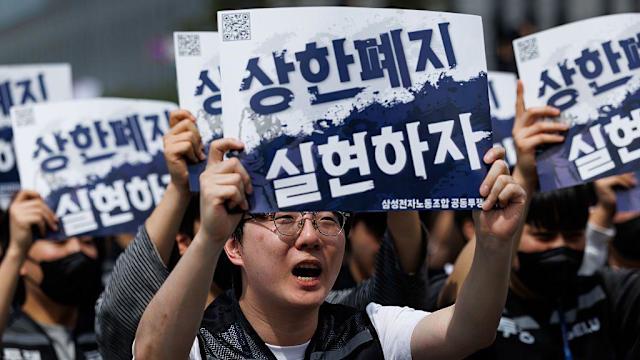
Samsung Electronics has avoided an immediate strike after its largest union agreed to suspend planned industrial action while workers vote on a tentative pay deal.
The National Samsung Electronics Union, which represents nearly 48,000 employees, had been preparing to begin a walkout on Thursday. The strike is now on hold as members consider the agreement from 22 to 27 May, easing concerns over possible disruption at one of the world’s most important chipmakers.
The dispute comes at a sensitive moment for Samsung, as demand for artificial intelligence infrastructure fuels a sharp recovery in the semiconductor industry. The company is the world’s largest memory chipmaker by sales and supplies components used in AI data centres, smartphones, laptops, and other electronics.
At the centre of the disagreement is how Samsung should share profits from the AI boom. The company had planned to offer much larger bonuses to employees in its memory chip division than to workers in other parts of the business. The union argued that staff producing less advanced chips, including components supplied to companies such as Tesla and Nvidia, should not be left behind.
Samsung’s recent performance has intensified the debate. Its operating profit for the January to March quarter rose by about 750% from a year earlier, while its market value passed $1 trillion in May as investors backed its role in the AI supply chain.
The company has also faced pressure from rival SK Hynix, which removed its bonus pay cap last year and offered substantially higher payouts to workers. Samsung reportedly proposed bonuses worth 607% of annual salary for memory chip employees, while other staff would receive between 50% and 100%. The union had sought the removal of Samsung’s own bonus cap and wanted 15% of annual operating profit placed into a worker bonus pool.
Samsung had warned that a strike could weigh on South Korea’s wider economy through weaker sales, lower investment, and reduced tax revenue. A court order had also limited the scope of any walkout by requiring staffing levels for safety, facility protection, and product quality to remain normal.
Following the tentative agreement, Samsung said, “With a humble attitude, we will build a more mature and constructive labour-management relationship to ensure that such an incident never happens again.”
The deal still requires union approval.