

The robot arrived, but not where you’d expect
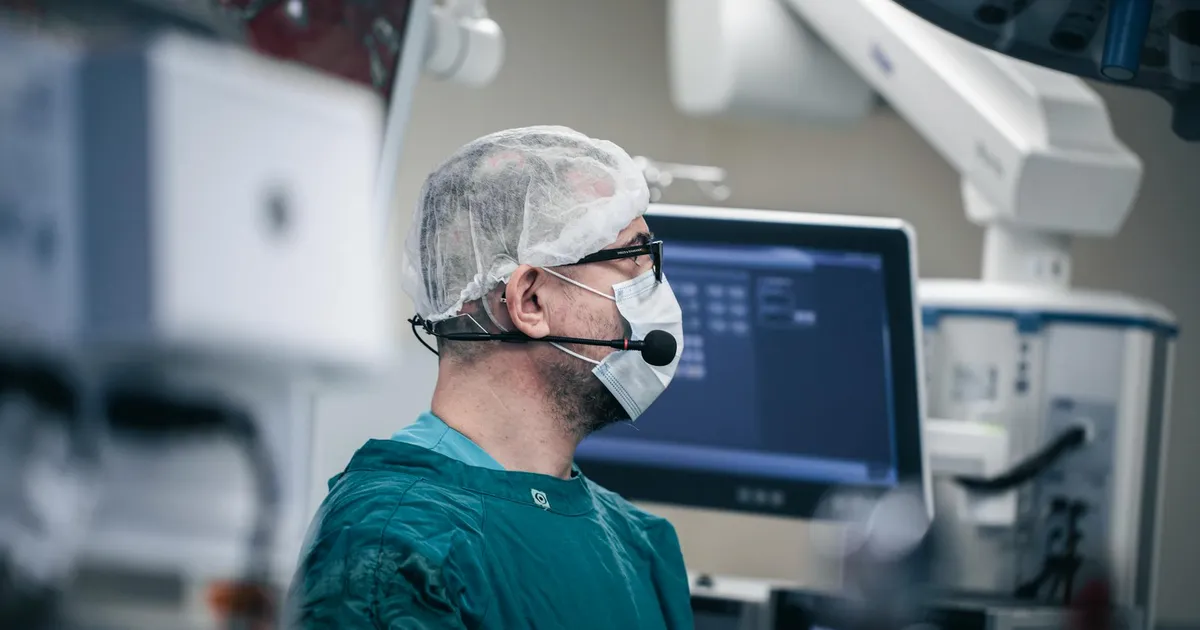
Royston Hospital in Hastings has installed the Medtronic Hugo robotic-assisted surgical system, making it the first facility in Hawke’s Bay with robotic surgical capability. The public Hawke’s Bay Hospital, with its eight operating theatres handling both elective and emergency cases, has nothing comparable.
This is not a story about one regional hospital getting a shiny new toy. It is the latest confirmation that advanced surgical technology in New Zealand accumulates in private hands first, stays there longest, and reshapes the healthcare workforce in ways the public system cannot easily reverse.
Hawke’s Bay urologist Dr Kenny du Toit, who trained on the Hugo system in Sydney, said robotic-assisted surgery “allows us to perform very complex procedures more efficiently and accurately” and “expands treatment options for local residents who previously may have needed to travel outside Hawke’s Bay.”
Private capital is filling a gap public budgets won’t touch
Royston, owned by Evolution Healthcare Group, has invested $33 million over three years in expanded theatres, post-anaesthetic care, and a new orthopaedic day facility. It treats more than 5,000 patients a year, with its day surgery arm performing 1,200 operations last year and expecting 10% growth.
It sits alongside Kaweka Health, a $120 million private hospital with four theatres and 28 surgeons that has treated 8,395 patients since opening roughly 2.5 years ago. Between them, these two private facilities represent well over $150 million in recent capital deployed in a single regional centre.
The national picture is starker. By August 2025, eight surgical robots were operating across New Zealand, most in private hospitals. A December 2023 New Zealand Medical Journal study found 4,709 robotic operations were performed in private hospitals between 2007 and 2022, with annual volume rising nearly sevenfold from 110 to 743. North Shore Hospital was the only public hospital with a da Vinci system, performing its first procedure in late 2022.
The workforce follows the technology
Here is where the two-tier problem compounds. Surgeons who want to use advanced tools gravitate toward the facilities that have them. The typical specialist split is 70% public, 30% private, but that ratio assumes the public system offers comparable professional development.
When private hospitals acquire robotic capability and public ones do not, the gravitational pull on specialist time shifts. Not through conspiracy, but through the simple logic of where the interesting work lives.
Professor Robin Gauld, a health systems expert, warned in February 2025 that “unless you’re bringing in a volume of specialists and theatre staff to ensure the whole system is able to improve its capacity, it’s a zero sum game.” He noted that “where there is increased access to private sector delivery there is actually less access to public sector.”
RANZCOG stated in May 2025 that outsourcing to private hospitals is “a pragmatic short-term solution” but “not a sustainable fix,” calling for long-term investment in public capacity.
The public system is already dependent
OIA data from March 2025 shows publicly funded day case procedures in private facilities rose 73% from 26,648 in 2019/20 to 46,004 in 2023/24. Inpatient overnight procedures rose 51% to 7,140. Orthopaedics nearly doubled. Royston itself has been receiving outsourced public patients since 2003, though public work represents less than 20% of its business. Kaweka Health runs at 46% publicly funded patients.
The dependency is structural, not temporary. Health NZ acknowledged in August 2025 that cost and training requirements remained hurdles for public robotic adoption. Nothing in current fiscal settings suggests that is about to change.
What this means for business owners
The practical implications are concrete. The value proposition of comprehensive private health insurance is widening, not narrowing. Businesses using health benefits to attract and retain staff are operating in a market where the gap between what private and public patients can access is growing measurably each year.
For business owners weighing regional locations, Hawke’s Bay’s private healthcare infrastructure is now genuinely competitive with larger centres. Two well-capitalised surgical facilities with advanced capability change the calculus for executives who previously assumed regional meant compromised healthcare access.
The deeper question is fiscal. The public system’s increasing reliance on private infrastructure it does not own will flow through to Health NZ’s cost base. That cost base determines the tax and spending settings every business operates within. Private capital is solving today’s surgical access problem. Whether it is creating tomorrow’s structural cost problem is a question nobody in government appears willing to answer.
Sources
- Royston Hospital surgical robot: a first for Hawke’s Bay (2026-04-20)
- Exciting news from Royston Hospital (2025-12-03)
- What the doctor ordered? (2026-05)
- Royston’s surgical robot, a first for HB (2026-04-20)
- Surgeons get a helping hand from robots in NZ hospitals (2025-08-12)
- Robot-assisted general surgery in Aotearoa New Zealand – NZ Medical Journal (2023-12-15)
- Is private healthcare the answer to public funding woes, or making it worse? (2025-02-18)
- OIA response: Publicly funded procedures in private facilities (2025-03-20)
- RANZCOG position on outsourcing planned surgical care in Aotearoa New Zealand (2025-05-23)