

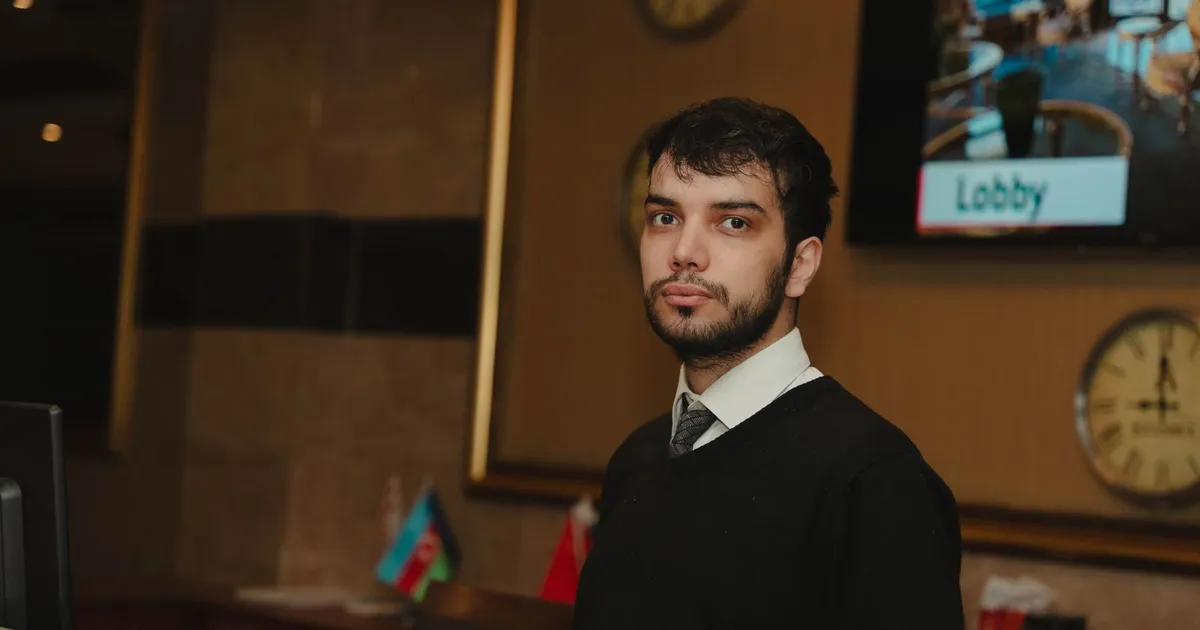
Most awards stories are about the trophy. This one is about a line in the accounts. Quest Mt Maunganui Apartment Hotel, named Supreme Franchisee of the Year at the 2026 New Zealand Franchise Awards in Auckland last week, hands 10% of its net profit to its 22 staff twice a year. Not a pizza Friday, not a vague line about culture. A defined share of the bottom line, paid on a schedule.
In a service economy that has spent years complaining it can’t keep good people, that is the detail every franchise operator should be studying.
The churn it is beating
Hospitality’s turnover problem is well documented. MBIE’s 2024 survey of 1,031 hospitality and tourism workers found 61% intended to leave their current job within 12 months or were unsure. That same year, intention to leave the sector altogether had fallen to 18.3% from 33.7% in 2022, while 51% of workers still earned below the Living Wage. Put simply, people were staying in hospitality but hopping between employers, which is the most expensive kind of turnover for an individual business.
Against that backdrop, co-owner Avelien Strickland told the NZ Herald that turnover has remained low compared with industry norms, with many employees still at the hotel three years after its June 2023 opening. The 40-apartment property is also an accredited Living Wage Employer and has run at near-100% occupancy through FY26 to date. Stable staff and full rooms are not a coincidence. Corporate guests on repeat stays notice when the same faces are behind the desk.
Why a profit share beats a pay rise
The commercial logic is sound. A legal guide from Sprintlaw notes that profit-sharing retains key staff, encourages cost-conscious behaviour and avoids permanently inflating fixed payroll. That last point matters for any owner nervous about margins. A wage increase is forever. A profit share flexes with the year you actually have. When trade is strong, the people who made it strong get paid. When it is not, the cost falls away.
It also changes what staff pay attention to. A housekeeper who knows 10% of the profit is partly theirs has a reason to care about waste, linen costs and guest complaints that no KPI dashboard will ever create.
In 2025, the Restaurant Association argued that retention protects productivity and service quality while cutting the cost of rehiring and retraining. Every departure means recruitment fees, training hours and a few weeks of weaker service. Profit-sharing converts some of that leakage into loyalty.
One honest caveat. The hotel does not publish its profit, so there is no way to say what each employee actually takes home. The structure is the point, not the size of the cheque.
Profit share plus a training ladder
The money sits alongside a serious development programme. ServiceIQ reports that eight staff have graduated with ServiceIQ qualifications since 2023, with nine more enrolled. Strickland, who spent 15 years in Quest’s corporate franchise support team before buying in, is unsentimental about it. “My goal is that when they leave us, they leave us better,” she told ServiceIQ in June, the same year after the hotel won Quest Franchise of the Year and a FANZ customer service award in 2025.
The payoff came when Strickland’s mother became critically ill and the team kept the hotel running without her. “It’s given us space to work on the business rather than in it,” she told the NZ Herald. That is what most owner-operators say they want and few ever build.
An old idea that never went mainstream
None of this is new. Back in 2022, then-Master Plumbers chief executive Greg Wallace said many members were looking at profit share and shareholdings to hold skilled staff, while Craigs Investment Partners’ Mark Lister called employee ownership “a great solution not just for staff retention, but more importantly for straight up productivity”. Comvita had handed shares to staff during Covid. Then the conversation went quiet.
Why franchisors should take notes
The stakes are large. Franchising employs about 120,000 people across roughly 500 brands and contributes about 11% of GDP, much of it in exactly the low-margin, high-churn service roles where retention bites hardest.
The catch for franchisees is that a profit share comes out of the owner’s slice, after royalties and fees. That is a real cost, and it is why franchisors have a role here. Packaging a simple, legally sound profit-share template as part of the system would lower the barrier for operators who like the idea but lack the time to design one.
FANZ chief executive Katrina King says “strong results come from business owners who understand their customers, back their teams and continually look for ways to do things better”. Quest Mt Maunganui has shown what backing the team looks like in dollar terms. The next test is whether anyone else in the sector is willing to share the upside, or keeps paying recruiters instead.
Sources
- NZ Herald: Quest Mt Maunganui wins Supreme Franchisee of the Year at 2026 awards (2026-11-21)
- RNZ: Resilience and collaboration shines for winners of annual Franchise Association awards (2026-11-16)
- NZBusiness: Dream Doors NZ and Quest Mt Maunganui take top honours at 2026 Franchise Awards (2026-11-16)
- ServiceIQ: Quest For Excellence in Mt Maunganui, with ServiceIQ (2026-06-04)
- NZ Herald: More businesses offer shareholdings, profit share, succession to keep staff (2022-09-17)
- Sprintlaw: Employee Profit-Sharing Schemes NZ (2026-06-07)
- Restaurant Association NZ: 7 Essential Strategies for Maximizing Staff Retention in the Hospitality Industry (2025-05-02)
Join the discussion
Add useful context, ask a good question, or challenge an idea — keep it specific and respectful.