

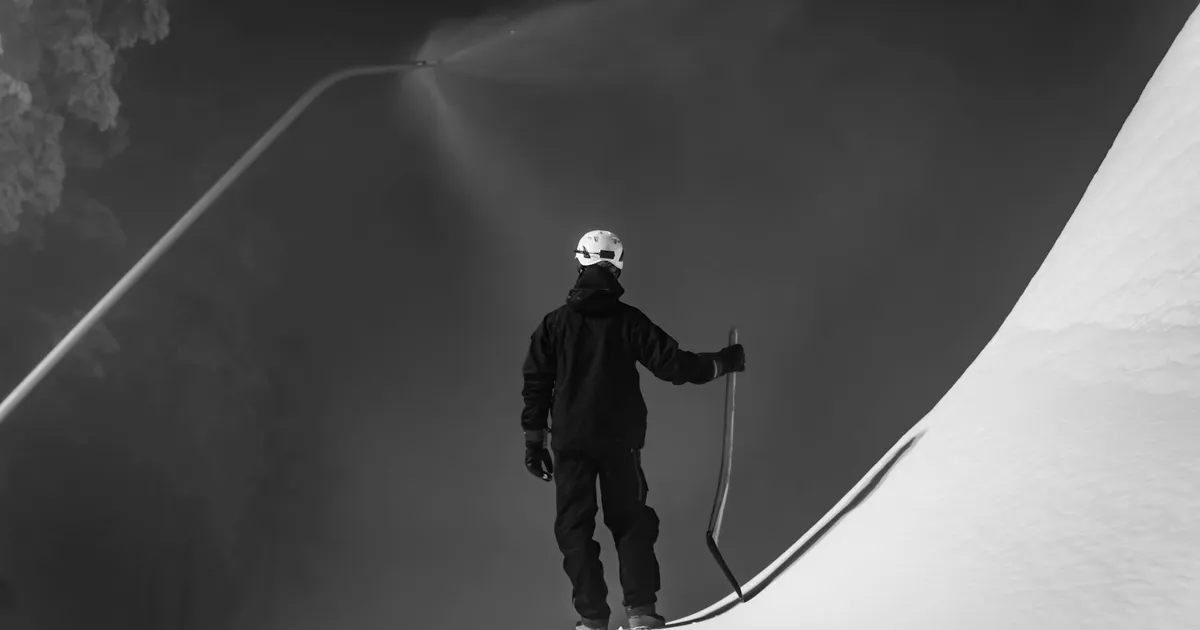
NZSki dropped $2 million on new snowmaking equipment at Coronet Peak this season, enough to push the opening date to May 29, weeks ahead of the traditional late-June start. It is the kind of capital expenditure a ski field operator only makes when it expects a strong winter. And by every demand indicator, that expectation looks well founded. Advance bookings from both domestic and international markets are reported as strong, and the broader tourism recovery narrative has shifted from “will they come back?” to “how many can we actually handle?”
That second question is the one that matters for business.
Demand recovered, supply didn’t
Queenstown’s tourism economy was gutted by border closures from 2020 to 2022. International visitors vanished, operators shed staff, leases lapsed, and some businesses simply closed. When borders reopened, Australian visitors returned quickly, but higher-spending Asian markets, particularly China, recovered more slowly. The demand side has now largely caught up. What hasn’t caught up is the infrastructure required to service it.
The constraints are not new. They predate the pandemic. But COVID stripped out the thin layer of slack that previously allowed the system to absorb peak demand, and that slack has not been rebuilt.
Three bottlenecks now define Queenstown’s earnings ceiling.
A single runway sets the hard limit
Queenstown Airport operates under noise curfews, has a single runway hemmed in by mountains, and offers limited direct international routes. Every seat on every flight into the region is effectively a cap on visitor numbers. Air New Zealand’s route and capacity decisions dictate how many international tourists can physically reach Queenstown on any given day, and expansion of the airport itself has been contested on environmental and community grounds for years.
No amount of snowmaking investment or marketing spend changes that arithmetic. If you cannot get more planes in, you cannot get more tourists in.
Workers who can’t afford to live where the jobs are
Queenstown’s housing market is among the most expensive in the country relative to local wages. Pre-pandemic, the hospitality and tourism workforce relied heavily on working holiday visa holders willing to share cramped flats for a season. That pipeline was disrupted by border closures and has not fully recovered. Meanwhile, short-term rental platforms have absorbed housing stock that might otherwise be available for workers, pushing rents higher and reducing the pool of people willing or able to take seasonal roles.
The result is a labour market where job vacancies exist but applicants do not, at least not at wages the industry can sustain while remaining profitable. Industry sources identify workforce shortages as one of the binding constraints on the region’s ability to convert demand into revenue.
Accommodation is the invisible cap
Even when visitors can fly in and staff can be found, beds are finite. Queenstown has chronically tight accommodation supply relative to peak demand. Hotel development is slow and expensive in a geographically constrained, high-land-cost environment. The gap between what visitors want to book and what the region can actually offer means pricing power is strong for existing operators but total visitor capacity is capped.
For individual hotel and lodge owners, that is not necessarily bad news. Scarcity supports margins. But for the regional economy and for New Zealand’s tourism earnings as a whole, it means revenue is being left on the table.
The lever is supply, not marketing
This is the point most ski-season coverage misses. The $2 million snowmaking investment is a smart private-sector bet, but it solves only the weather risk. The bigger constraints, airport capacity, housing for workers, accommodation stock, are collective action problems that no single operator can fix.
They require coordinated investment from central government, the Queenstown Lakes District Council, the airport company, and the private sector. That coordination moves slowly at the best of times, and the current fiscal environment does not favour large infrastructure commitments.
For business owners and investors watching the tourism sector, the implication is clear. The post-COVID demand recovery story is essentially over. Visitor appetite has returned. What determines whether New Zealand captures that demand is now entirely a supply-side question, and supply is where the underinvestment sits.
Queenstown’s ski season will be strong this winter. The snowmaking works, the bookings are there, the Australians are coming. But the region is operating at or near its physical capacity, and until the infrastructure catches up, every good season will look roughly the same as the last one. The ceiling is built in.
Sources
- RNZ: Queenstown’s ski season set for early start with $2m snowmaking investment
- NZ Herald: Coronet Peak prepares for early May opening as tourism demand surges
- Stuff: Tourism recovery hinges on infrastructure, not demand, says Queenstown operators
- 1News: Coronet Peak $2m investment signals strong Queenstown winter ahead
- BusinessDesk: Queenstown ski season: demand back but capacity constraints loom
- Stats NZ: Tourism Statistics
- Air New Zealand: Capacity and Route Data