

Otago Regional Council has said, in effect, what no resident or business owner wants to hear from the body responsible for water quality. Asked whether drinking water near the Lauder sludge disposal site is safe, chief executive Richard Saunders replied: “We are not able to give assurances on the status of individual water supplies”.
That sentence should worry anyone who owns land, insures assets or runs a business in a fast-growing district. A high-growth council found a cheaper way to deal with its waste. A smaller neighbour inherited the risk. And the regulator in the middle won’t say the water is fine.
One council listened, the other signed
The contrast between the two councils is the story most coverage misses. On 30 September, Central Otago District Council abandoned its own plan to truck Cromwell pond sludge to Lauder after community pushback. Instead it is paying just over $3 million to send roughly 20,000 cubic metres to Winton landfill in Southland, more than $1 million under pre-tender estimates. That is not cheap, but it is a cost the council chose to carry inside its own district.
Queenstown Lakes District Council went the other way. Its five-year Lauder arrangement saves its ratepayers about $1.25 million compared with carting sludge to Winton. An Otago Daily Times investigation laid out how the decision proceeded without proper community consultation, approved under delegated authority rather than debated by full council. The people living with the consequences vote in a different district.
Central Otago Mayor Tamah Alley has written to QLDC urging it to halt the operation. “There is a huge sentiment out there that it is just inherently unfair what has happened,” she said. “They feel like they’ve been marginalised.”
The numbers that should have stopped it
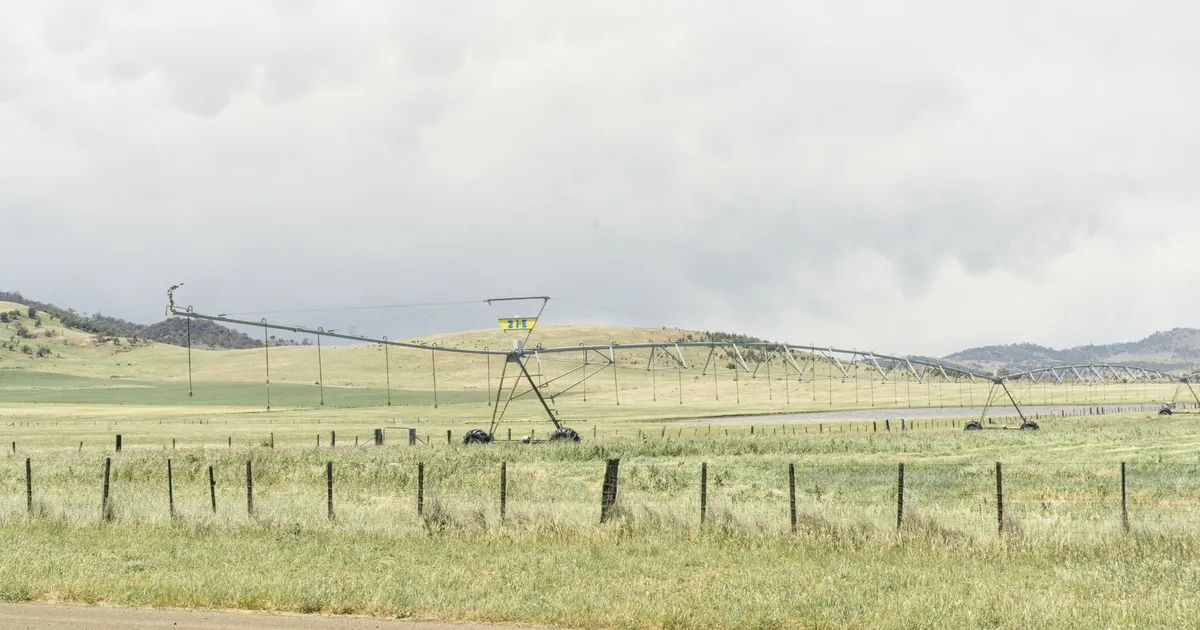
The ODT reported E. coli concentrations in the discharged waste at 6,500 times the guideline amount. The receiving environment is about as unforgiving as it gets. Farmer and Otago regional councillor Gary Kelliher called the situation “disgraceful”, pointing to the Manuherekia Valley’s shallow soils and shallow water table, a vulnerability locals have long understood.
Even Federated Farmers, rarely squeamish about land use, is uneasy. Otago president Anna Gillespie welcomed Central Otago’s reversal but said the organisation still questioned “the science and modelling behind the consent” for Wānaka sludge at Lauder.
ORC says the site has a regular monitoring and compliance programme and has not ruled out a consent review. Monitoring is not the same as assurance, and Saunders has been explicit that assurance is off the table.
A system already under strain
Lauder is not an isolated slip. ORC’s own compliance reporting shows it monitors 31 reticulated wastewater plants and 55 discharge consents across five districts, issued 25 infringement notices between April 2023 and December 2024, and that Central Otago District Council currently holds three abatement notices. The region’s wastewater planning work has long flagged ageing onsite systems and aquifer contamination risk as structural weaknesses.
There is a sensible case for biosolids reuse over landfill. The water industry has argued that resource recovery can beat burial when it is properly regulated. But that case rests on rigorous, transparent data. A regulator that won’t vouch for nearby water has not met that bar.
Why business owners should care
Strip out the smell and this is a liability chain. Lauder is a working sheep and beef farm. Sustained doubt over groundwater affects land values, lending conversations and food-safety assurance for anything produced in the catchment. Insurers and lawyers will note that the regulator publicly declined to guarantee safety while a cost-saving contract proceeded. If contamination is ever confirmed, that record will be exhibit A.
Then there is the brand. Wānaka and Central Otago sell clean water, clean land and premium experiences. Headlines pairing human waste with E. coli readings thousands of times over guideline are corrosive to exactly the high-value tourism and food economy the region depends on.
The bigger precedent is for growth councils. Queenstown Lakes is among the fastest-growing districts in the country and courts development hard. Growth requires infrastructure, and infrastructure costs money. Pushing that cost onto a neighbour with no vote is not fiscal discipline, it is cost-shifting with a liability tail. Fiscally conservative ratepayers should want their council to price waste honestly, not save $1.25 million by borrowing someone else’s aquifer.
What happens next
The pressure points are clear. ORC can trigger a consent review, and the gap between “monitoring” and “assurance” makes that harder to avoid. QLDC can follow Central Otago’s lead and absorb the Winton cost. Or it can hold its position and hope the data stays clean for five years. Any council selling itself as a place to invest should be able to say, plainly, that the water around its infrastructure is safe. Right now, nobody in Otago will.
Sources
- Newsroom: Council refuses to guarantee water safety (2026-11-01)
- RNZ: ‘Inherently unfair’: Central Otago pushes back on Wānaka sewage sludge disposal (2026-10-29)
- ODT: ‘Unbelievable’: Inside the decision to dump human waste on Central Otago farmland (2026-10-20)
- Newsroom: From lavatory to Lauder, ‘every part of this stinks’ (2026-10-12)
- RNZ: Central Otago council dumps plans to truck human waste to local farm (2026-09-30)
- Otago Regional Council: Territorial Authority Wastewater Treatment Plant Compliance Summary Report (2026-08-28)
- Otago Regional Council: Section 32 Evaluation Report, Proposed Land and Water Regional Plan, Chapter 19 Wastewater
- Water New Zealand: Estimating the location of decentralised wastewater infrastructure and the potential risk to drinking water sources
Join the discussion
Add useful context, ask a good question, or challenge an idea — keep it specific and respectful.