

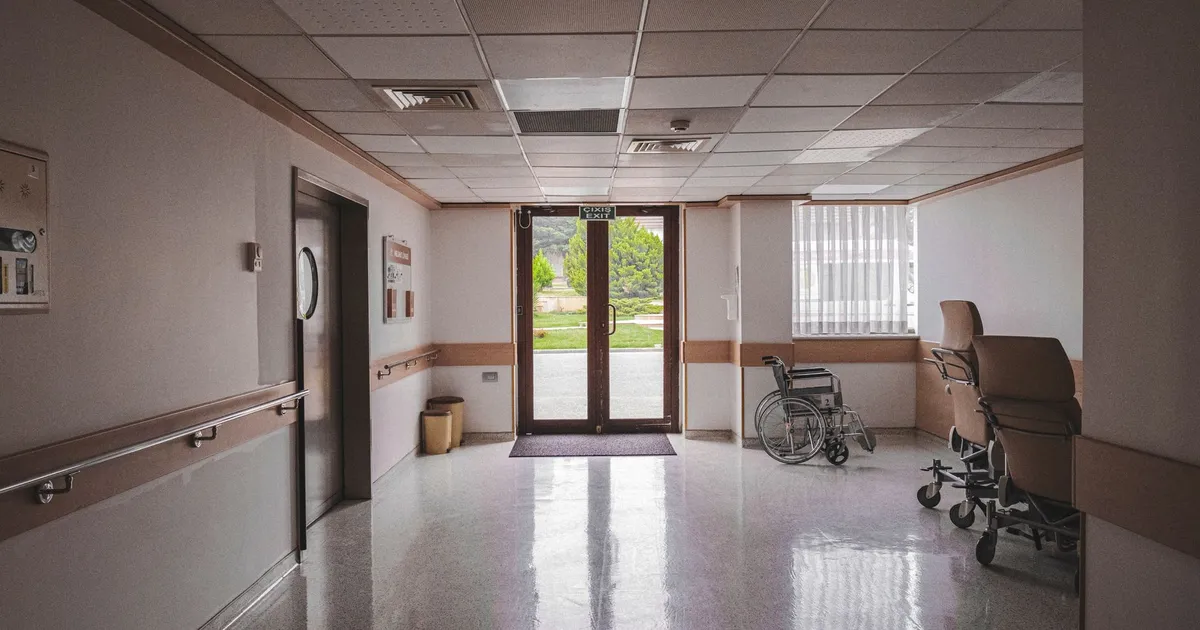
A department funded for six, staffed by none
As of 19 June 2026, Palmerston North Hospital has zero permanent gastroenterologists. Dr James Irwin, the last of them, finished after more than a decade at the hospital. The department is funded for 5.6 full-time equivalent positions and now holds none.
This was not a sudden collapse. In April 2026, Feilding GP Dr Nicola Barrack told RNZ that only a few years ago the region had seven hospital gastroenterologists plus at least three private specialists. Now there are none in either sector. For a regional economy that depends on holding skilled workers, that is not a health story confined to the hospital. It is a workforce liability.
What the waitlist actually represents
As at 14 April 2026, 280 patients were waiting for a first specialist appointment and 913 were waiting for treatment, including endoscopy, with the total clinic waitlist sitting at around 1,100 people and little capacity to clear it.
Strip out the clinical language and you have a productivity problem. Barrack reported in April 2026 that she had “patients who have been waiting over a year for surveillance colonoscopies, or patients with serious red flag symptoms for bowel cancer waiting over six months for endoscopy”. A worker sitting in six months of diagnostic limbo is not performing at full capacity. A manager with inflammatory bowel disease cycling through locums who have never met them is managing a chronic condition in the dark. Digestive conditions are among the most common drivers of workplace absence, and the Manawatū workforce now has nowhere local to get them sorted.
The locum model is a holding pattern, not a fix
Health NZ’s response is that services are being maintained through locums, outsourced colonoscopies and specialists drawn from elsewhere in the central region, with a new overseas recruit due to start in September 2026.
Irwin was blunt about the limits of that. Speaking to Evening Report in May 2026, he warned the plan was “to pay well to people who are prepared to come and deliver some service. The risk is that it’s a very transactional model. People will come, see patients in clinic and leave, and not really be available to provide long-term advice”. More than half his time, he noted, went on managing chronic disease, exactly the relationship-dependent care a rotating roster cannot replicate.
Barrack added the detail that will land with anyone who has tried to navigate the system for a staff member. GPs “are no longer able to call and speak to gastroenterology at Palmerston North Hospital”, she said, making time-sensitive conditions much harder to treat.
A national shortage that gets worse before it gets better
Palmerston North is the sharpest local expression of a structural problem the government already knows about. Health NZ’s own December 2025 workforce analysis identifies a national gastroenterology shortfall of 18 doctors, around 10.4% of required positions, projected to stay near 11% through 2033. The overall doctor shortage of 1,810 FTE, or 8.5%, is forecast to reach 14.5% by the same year.
Irwin put his finger on the incentive failure. He told the NZ Herald it was “hard to recruit New Zealand-trained specialists to smaller areas, so incentives were needed”, because bigger cities offered colleagues, support and less on-call work. Without a reason to choose the regions, specialists won’t.
What it means for regional employers
The Manawatū-Whanganui base of food processing, agriculture, logistics, defence at Linton, Massey University and a growing manufacturing sector is already competing with the main centres for talent. Visibly inferior healthcare access, no local specialist, 1,100-person waitlists and no private fallback, is a retention liability that sits on every HR manager’s desk. The cost shows up as sick leave, prolonged diagnostic uncertainty, travel time lost to Wellington appointments, and workers who weigh all of it when deciding whether to stay.
In May 2026, Labour MP Tangi Utikere wrote to Health Minister Simeon Brown, who replied that addressing the workforce challenge “must be a priority” and that acute services were being maintained. That assurance sits uneasily against six-month waits for cancer endoscopy.
A public meeting with Health NZ, Irwin and the specialists’ union is set for the evening of 30 June, and one overseas recruit arrives in September. But the underlying question, why a specialist would pick Palmerston North over Auckland, remains unanswered, and the data says the gap widens until at least 2033. For regional employers, the practical choice is whether to wait for the system to repair itself or start treating degraded local healthcare as a fixed input in workforce planning.
Sources
- Health NZ to front community as Palmerston North loses last gastro doctor (2026-06-27)
- Palmerston North MP calls for fix to shortage of gastroenterology specialists at its hospital (2026-05-10)
- Fears for patient care after Palmerston North hospital’s last expert leaves (2026-05-04)
- GP concerned over ‘dire shortage’ of staff at Palmerston North Hospital’s gastroenterology department (2026-04-12)