

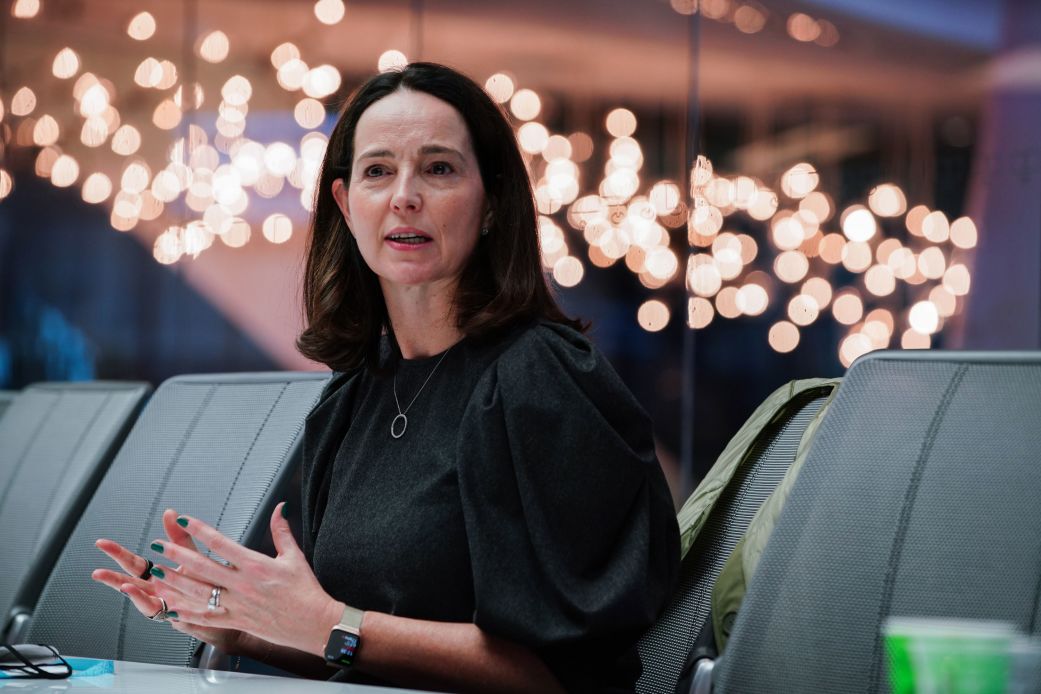
OpenAI has named 2026 the year to drive artificial intelligence into everyday global use. Chief Financial Officer Sarah Friar shared this strategy in a company blog post published on Sunday.
Friar highlighted the urgent need to connect AI’s advanced potential with practical daily applications for people, firms, and governments.
“The priority is closing the gap between what AI now makes possible and how people, companies, and countries are using it day to day,” she wrote. Key sectors like healthcare, science, and business offer immediate gains, she added, “where better intelligence translates directly into better outcomes.”
Computing capacity soared from 0.2 gigawatts in 2023 to nearly 1.9 gigawatts by 2025, matching revenue growth from two billion dollars to over 20 billion dollars annually.
“This is never-before-seen growth at such scale,” Friar noted. “And we firmly believe that more compute in these periods would have led to faster customer adoption and monetization.”

Heavy spending on data centres and chips has sparked investor doubts over returns. A major Nvidia deal pledged 100 billion dollars for 10 gigawatts of power—matching the yearly needs of eight million U.S. homes—though no firm contract was guaranteed.
“Securing world-class compute requires commitments made years in advance, and growth does not move in a perfectly smooth line,” Friar observed.
OpenAI now draws from diverse suppliers, up from one three years ago. “We can plan, finance, and deploy capacity with confidence in a market where access to compute defines who can scale,” she wrote. Revenue will expand with AI in drug discovery, energy, and finance.
“As intelligence moves into scientific research, drug discovery, energy systems, and financial modeling, new economic models will emerge,” Friar predicted.
This follows plans to trial ChatGPT ads in the U.S. and eye a public listing. “Monetization should feel native to the experience,” she concluded. “If it does not add value, it does not belong.”