

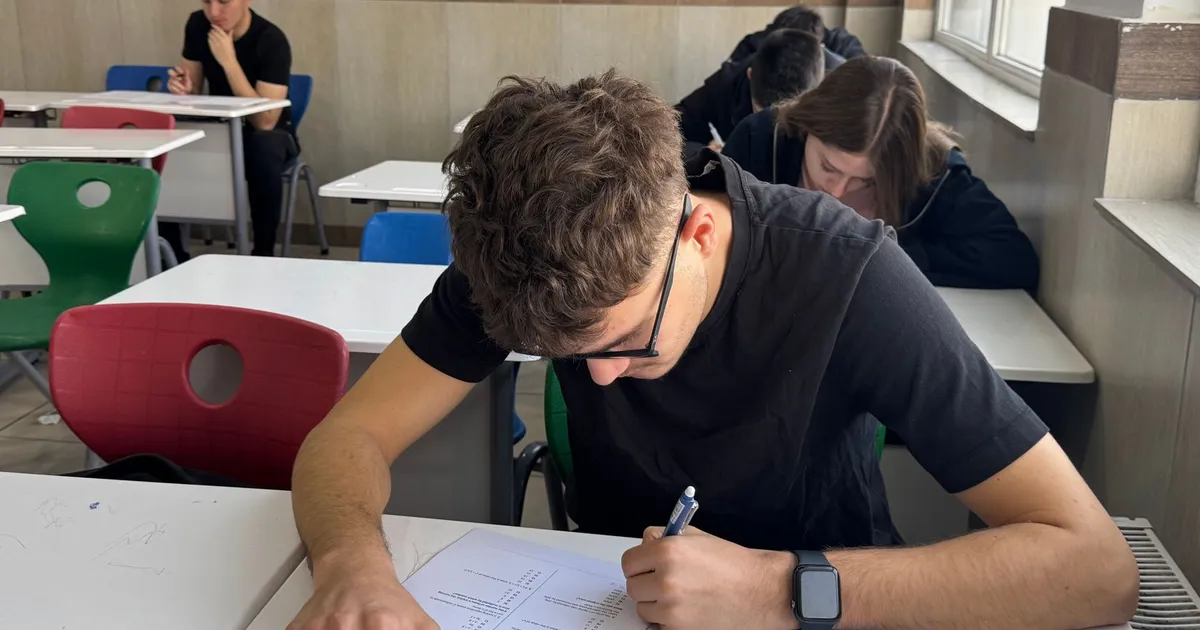
The NCEA Level 2 English exam is the most predictable event on the education calendar. It happens every November, on a known date, at a known start time, for a known number of students. On Thursday it failed anyway, hitting up to 40,000 candidates, with up to 37,500 of them on the digital platform.
This is being covered as an education story. It is really a story about whether the public sector can run digital infrastructure at scale, and about what employers can actually read into the qualification that sits on a school leaver’s CV.
A scheduled event, an unscheduled failure
NZQA says the fault was “related to the transfer of student responses from the exam platform to our marking platform overnight”, knocking the system out from the 9.30am start until roughly 10.35am. Some students lost finished work. One Carmel College student lost more than 1400 words; another was 20 seconds from submitting.
Schools photocopied paper exams and sent students home before clear guidance arrived. PPTA president Chris Abercrombie described “utter chaos”, with some teachers getting better information from NZQA’s Facebook page than from the agency directly. He also asked the obvious question: why stick with a vendor that “can’t seem to manage the system”?
Chief executive Christian Hawkesby apologised, said the platform was stable, and when pressed would not guarantee it would not happen again. Deputy chief executive Jann Marshall said the vendor had assured NZQA such glitches would not recur. That assurance has been heard before.
The post-mortem already existed
In 2023, a digital assessment failure hit 263,000 students across more than 50 subjects. The independent review by Debbie Francis, published in March 2024, found vendor platform capacity problems, non-optimal vendor management, inadequate pretesting and a defect in NZQA’s own login security software. It also found unclear accountability and optimism bias in risk management.
At the time, Abercrombie, then PPTA’s acting president, wrote that it was “incomprehensible” NZQA had not prepared for mass simultaneous logins, calling exams “NZQA’s core business”.
NZQA’s response was to go bigger. Its 2025-26 annual report shows 70% of year 11-13 students sat at least one digital end-of-year exam in 2025, up from 60% in 2024, with Level 2 participation jumping from 54% to 70%. Of 125 exams, 77 were offered digitally under a “digital first, paper by exception” strategy.
Going digital is not the mistake. Faster marking and results are a genuine gain, and Hawkesby is right that the world is becoming more digital. The mistake is scaling dependency on a model before proving the weaknesses a review had documented in writing were fixed. Any private firm that did that with a critical system would expect its board to ask hard questions.
The restructure question
The PSA’s Fleur Fitzsimons blames public-sector cuts, saying the union warned during an August 2026 restructure that changes to the Assessment Division would fragment responsibility, and that NZQA has had three restructures in three years. That is a union making a political case, and no one has shown the restructure caused this outage. The 2023 failure happened before the current cuts.
But the point does not need the partisan framing to land. Leaner agencies are a reasonable goal. Leaner agencies that lose the people who coordinate a critical delivery are not efficiency, they are deferred risk. Cutting cost and protecting core capability are both management jobs, and the review had already flagged accountability as the weak spot.
What employers should take from this
NZQA says affected students will get the higher of their actual or derived grade, with individual reviews. That is fair to students. It also means a chunk of this year’s Level 2 English results will rest on estimates rather than performance. Employers hiring school leavers or apprentices should treat NCEA as one signal among several, not a precise measure.
The wider worry is government digital delivery. If a once-a-year exam with a documented post-mortem cannot be run reliably, businesses are entitled to scepticism about larger public systems in the queue, from digital identity to health records.
No one is checking the fix
Caretaker Education Minister Erica Stanford has said students “deserve better” and demanded an action plan within 24 hours. With government formation still underway, though, the real fix rests with NZQA and an unnamed vendor. Paper backup will cover next week’s Level 1 English exam. The test that matters comes next year, when NZQA either proves the platform at full scale or quietly retreats to paper. A second review that repeats the first one’s findings would be the worst outcome of all.
Sources
- RNZ: Teachers, students devastated by major online exam glitch (2026-11-12)
- NZ Herald: NZQA chief fronts up over NCEA English Level 2 exam outage (2026-11-12)
- 1News: ‘Utter chaos’: NCEA exam outage left teachers and schools scrambling for fix (2026-11-12)
- PPTA: PPTA seeks urgent meeting with NZQA about exam issues (2023-11-10)
- Scoop: Exam Failure – Students Pay The Price For Coalition’s Cuts, Warnings Ignored (2026-11-12)
- 1News: ‘Students badly let down’ by NCEA exam failure: Stanford (2026-11-12)
Join the discussion
Add useful context, ask a good question, or challenge an idea — keep it specific and respectful.