

A media story that is really a strategy story
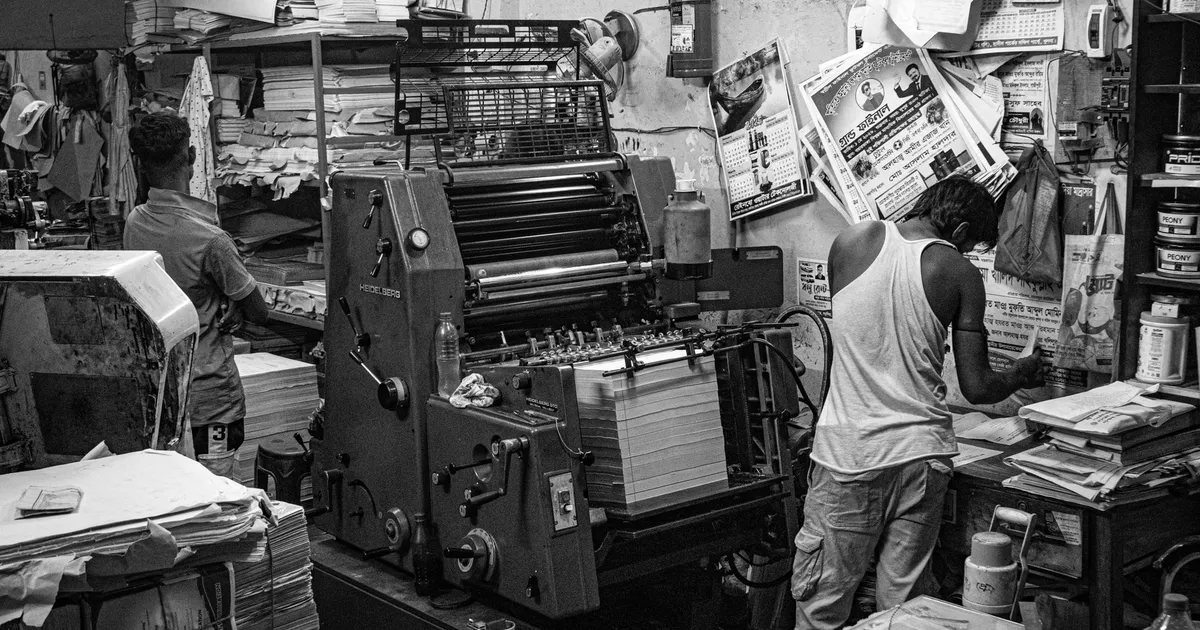
On 6 August 2026, Stuff Group announced it had sold its Petone printing press to NZME, the NZX-listed owner of the New Zealand Herald. NZME will dismantle the machine, cart it out of the Wellington suburb and reassemble it at its own site. The Petone plant will be decommissioned late this year.
The mainstream framing is decline: another print facility gone, 30 jobs on the line, the slow fade of newspapers. That reading misses the point. This is a corporate strategy story, and NZME is running a playbook that works precisely because the market is shrinking.
What NZME actually bought
NZME is not buying two storeys of printing machinery out of sentiment. Acquiring a rival’s press at distressed-asset pricing does three things at once.
First, it upgrades NZME’s own capacity for titles including the Herald at a fraction of the cost of new equipment. Second, and more importantly, it removes that capacity from the market. The press will no longer be available to Stuff, to a would-be new entrant, or to any rival publisher. In an industry with more infrastructure than demand, controlling what remains is leverage. Third, running more volume through fewer machines cuts per-unit costs, letting NZME consolidate its print runs more efficiently.
This fits NZME’s established posture. In 2024, the company ran a $6 million cost-cutting drive that Forsyth Barr analyst James Lindsay described as “commendable” given the trading conditions. NZME has spent this cycle grinding out efficiency, not chasing top-line growth. Absorbing a competitor’s press is the same discipline applied to physical assets.
The bigger deal that got away
Read this against the transaction that did not happen. NZME approached Stuff in late 2024 about buying its entire Masthead Publishing division, the arm that publishes The Post, The Press, the Waikato Times and the Sunday Star-Times. Stuff paused those talks in March 2026 amid a board challenge at NZME from Auckland businessman Jim Grenon, then withdrew entirely.
The press sale is a far smaller deal, but it delivers a slice of the same logic. NZME still ends up absorbing hard assets from its main rival and shrinking Stuff’s operational footprint in the North Island. When you cannot buy the whole business, buy the infrastructure.
Why Stuff is a willing seller
Stuff had every reason to deal. Decommissioning the Petone press would have been expensive and awkward. As the Herald’s Media Insider reported in March 2026, the machine is two storeys high and removing it would mean taking off walls and part of the roof, then rebuilding. Selling it as a going concern avoids all of that.
There was also a landlord clock ticking. The Petone site was bought by Troy Bowker’s Caniwi Capital in late 2025, and Bowker told Stuff to vacate by 30 April 2027. Stuff owner Sinead Boucher said the company had considered several options, including international buyers, and was pleased the press was retained as an operational plant in New Zealand.
The market that makes the logic work
The backdrop is brutal and well documented. In 2020, Boucher bought Stuff from Nine Entertainment for $1, a price that told you everything about the business’s condition. Treasury documents show Stuff’s annual publishing revenue fell by $95 million to $255 million between June 2016 and June 2019, a 10% compound annual decline, with EBITDA dropping from $62 million to $34 million. The wider media sector employed 25,365 people in 2023, down 1.7% from 2019.
Stuff’s own answer has been to split the business. In December 2024 it separated into distinct digital and print operations, treating them as different economic propositions. Boucher says digital is the growth engine, with digital advertising revenue on subscriber sites more than doubling and combined audiences up 8% in the year to March 2026.
The winner controls the remainder
Both companies are executing coherent strategies. Stuff is shedding expensive Wellington infrastructure, running print lean from its newest plant in Christchurch, and betting on digital. NZME is doing the opposite with the physical layer, buying capacity cheaply and consolidating.
That is the part worth naming. In a growing market, you win by expanding fastest. In a declining one, you win by controlling the most of what is left, at the lowest cost per unit, with fewer rivals able to compete on infrastructure. NZME has just taken a competitor’s press off the board. That is not nostalgia. It is discipline, and it is the move to watch as the rest of the industry decides whether to fight for scale or retreat from print altogether.
Sources
- Stuff Group sells Petone printing press to NZME (2026-08-07)
- Stuff Group announces closure of Petone printing press, 30 jobs to go (2026-03-26)
- Media Insider: Stuff to close Wellington print plant, 30 jobs up in air (2026-03-26)
- Media Insider: NZME board battle – Stuff halts discussions to sell Post, Press newspapers (2026-03-26)
- Stuff Group To Consolidate Print Operations In 2027 (2026-03-26)
- MediaRoom: Hard yards for NZME as it eyes a ‘boomer’ 2025 (2024-08-28)
- Official Information Act Response 20230438 – Sale of Stuff Ltd to Ms Sinead Boucher (2024-01)
- Media Industry Profile Report 2024 (2025-03)
- Stuff ‘consciously uncouples’ into two separate digital and print businesses (2024-12-11)