

A brown skua found dead on a remote Western Australian beach on June 14 has confirmed what biosecurity officials have been modelling for years. H5N1 clade 2.3.4.4b has reached the last holdout region on earth. Australia and New Zealand were the final corners of the planet without it. Now only New Zealand remains.
The news cycle is treating this as a preparedness story. Officials are calm, agencies are coordinating, farmers should wash their boots. That framing misses the business reality entirely. The poultry sector’s cost base is already rising. New regulations are in the pipeline. And the last time a single farm tested positive for high pathogenicity avian influenza, the bill was $300 million in trade disruption.
Hillgrove proved the sector’s fragility
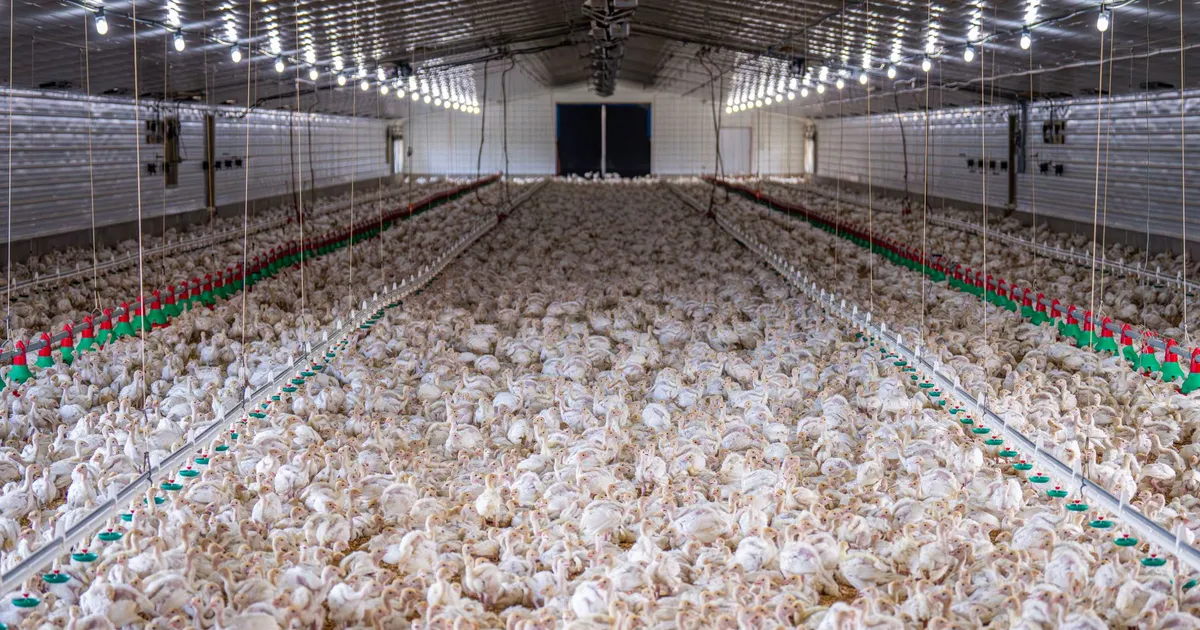
In December 2024, HPAI H7N6 was detected at Mainland Poultry’s Hillgrove farm in rural Otago. It was a different strain from H5N1, but the response was instructive. All chickens were culled. Movement controls locked down the property for nearly five months. Over 5,600 tests were carried out across 36 flocks at five linked farms. The virus was found nowhere else. It was a best-case containment scenario, and it still disrupted $300 million in poultry trade.
The infection pathway matters too. Free-range laying hens foraging outside were exposed to a low pathogenicity virus from wild birds, which then mutated into its high pathogenicity form inside the flock. Every free-range operation in the country carries that structural exposure.
MPI’s own model predicted this step
This is not a surprise. MPI’s Technical Paper 2025/01, published in mid-2025, assessed H5N1 arrival scenarios in detail. The expert panel rated the probability of H5N1 expanding to Australia as medium. Expansion to Australia plus the East and West Pacific was rated high. The Australian scenario has now materialised. The question is where New Zealand sits in the progression.
MPI chief veterinary officer Mary van Andel was careful not to overstate certainty: “We can compare with our colleagues internationally how the disease has behaved there, but of course we can’t say for sure what would happen here in New Zealand.” What she did confirm is the transmission route: the skua most likely came from Antarctica, carried by the same migratory pathways that connect to New Zealand’s coastline.
Regulation is coming whether the virus does or not
MPI has been consulting on proposed regulations that would require commercial poultry operators to develop formal avian biosecurity control programmes, submit to auditing, maintain records, and critically, bear at least partial cost recovery for those audits. Targeted consultation with the Poultry Industry Association and the Egg Producers Federation took place in March 2026.
These are not optional guidelines. They represent a material compliance and cost shift for a $2 billion sector that has operated under a lighter regulatory touch. The Australian detection will accelerate political pressure to finalise these rules. Any operator treating them as distant or theoretical is misreading the calendar.
MPI’s consultation documents contain a line that should concentrate minds: if H5N1 arrives and becomes widespread in wild bird populations, eradication is unlikely. The sector would shift from outbreak response to permanent management. That is a fundamentally different operating environment.
The industry knows it, even if the headlines don’t say it
Fiona MacMillan, executive director of the Poultry Industry Association of New Zealand, said the sector is “calmly but carefully staying across the developments in Australia”. Biosecurity Minister Andrew Hoggard said New Zealand was “well prepared” and acknowledged bluntly that if H5N1 arrives, it will likely spread in wild bird populations and cannot be eradicated.
Epidemiologist Michael Baker struck a sharper note on RNZ, arguing New Zealand needs to update its pandemic plan and reverse its rejection of the WHO’s latest health regulation revisions. His concern is primarily human health, but the underlying point applies equally to agriculture: complacency has a cost, and the bill arrives faster than the virus.
Waiting is the expensive option
The commercial maths here is not complicated. A $1.5 billion chicken meat industry and $500 million egg industry sit exposed to a virus that has now reached every continent. New biosecurity compliance costs are arriving regardless. Free-range operations carry higher structural risk. Trade partners will not wait for New Zealand to confirm a case before tightening access. And the last single-farm detection cost $300 million in disruption that took months to unwind.
Poultry businesses that are treating the Australian detection as someone else’s problem are running a timeline that has already moved past them. The regulatory costs are coming. The biosecurity investments need to happen now. The only question left is whether operators get ahead of it or get caught by it.
Sources
- 1 News: NZ ‘well prepared’ for bird flu as H5N1 detected in Australia (2026-06-20)
- Otago Daily Times: High alert in NZ after Australia records H5N1 bird flu cases (2026-06-20)
- NZ Herald: MPI, DOC officials working with poultry industry after avian bird flu detected in Australia (2026-06-20)
- RNZ: Time for NZ to prepare, epidemiologist says as bird flu reaches Australia (2026-06-20)
- MPI: A strain of bird flu (H7N6) in Otago (2025-04-28)
- MPI: High Pathogenicity Avian Influenza H5N1 Assessment of Risk to New Zealand (2025-06)
- MPI: Proposed regulations for managing high pathogenicity avian influenza H5N1 in poultry (2026-04-15)