

The deadline that decides everything
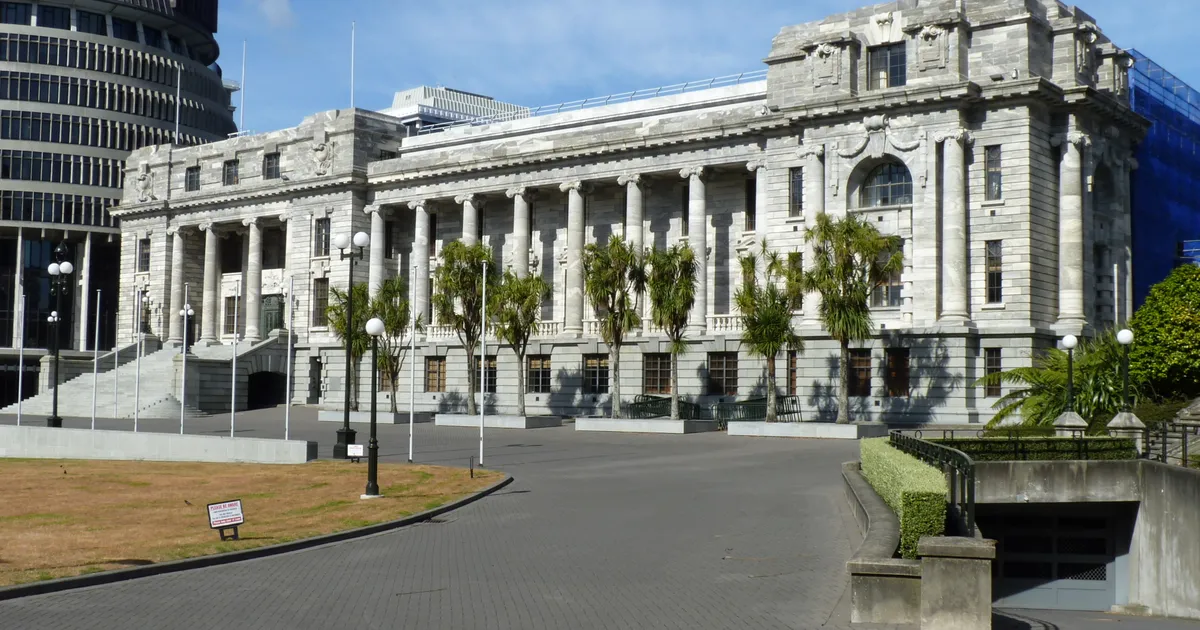
Parliament sits for the last time on September 24, 2026, fewer than seven weeks away. Whatever is not passed by then dies on the order paper and becomes a matter for the next government. That is the structural fact that turns the Government’s unfinished list from a political scorecard into an execution risk for anyone making investment, hiring, or compliance calls right now.
The agenda is not collapsing. Some things have landed cleanly. But the distance between legislation on the statute books and reform that businesses can actually rely on is where the money gets lost.
The clean win nobody should overlook
Start with the good news, because it is real. Changes to the leave and holiday pay system passed third reading in the week of August 8. For employers and payroll providers who have wrestled with Holidays Act complexity for close to two decades, this is a genuine simplification and one of the cleanest delivery stories of the final sprint. It shows the machine can produce a usable result when the policy is mature and the runway is there.
The problem is that the biggest item left on the list is neither mature nor clean to implement.
The RMA replacement is the whole ballgame
The Planning Bill and Natural Environment Bill are the Government’s most consequential unfinished business. RMA Reform Minister Chris Bishop has called the package the “single largest economic reform in a generation” and committed to passing both before the election. The mechanics matter for any firm touching development, construction, or land use: more than 100 council plans cut to 17 regional combined plans, standardised national zoning, tighter consultation, and a new planning tribunal as a cheaper alternative to the Environment Court.
Bishop’s line, “gone are the days of every man and his dog getting a say in what you do with your own property”, signals clear intent. But passing a bill and implementing it are different exercises. A reform of this scale takes years to bed in across every council in the country. Businesses waiting on planning certainty now will not feel the benefit this term regardless of whether the ink dries in September.
What has already fallen off the truck
The list of things that have been dropped or stalled tells you where the pressure is. The Government scrapped its energy strategy in April 2026 after a fuel crisis and competing priorities, with OIA documents confirming it was abandoned due to resource limits. That strategy was meant to give energy-intensive firms a framework for transition investment. Its absence is a live gap for anyone making capital decisions.
Census modernisation has also stalled. Statistics Minister Scott Simpson confirmed on August 5 that the enabling legislation cannot get through before the election, forcing Stats NZ back to a traditional 2028 census it had previously said it lacked the time and money to run. Census data underpins market sizing and workforce planning, so uncertainty about its quality is not abstract.
The pattern was flagged a year ago
This is not a new failing appearing under deadline pressure. In November 2024, Newsroom’s analysis of 84 regulatory impact statements found 75% of new laws in the Government’s first year were affected by time constraints and thin evidence, with officials flagging data problems in 57% of cases. That was year one, with more than a year of runway left. In mid-2024, then-Attorney-General Judith Collins warned that “the time needed to deliver good legislation is often underestimated”. The final seven weeks compress the same pressures further.
Money on the statute books is not money delivered
The fiscal position tightens the squeeze. The Budget Policy Statement 2026 shows core Crown expenses at 32.5% of GDP against revenue of 30.8%, an OBEGAL deficit of -2.1%, and net core Crown debt heading to $182.2 billion. A law without funded implementation is not a delivered reform. Churn has a price too: infrastructure delays over 25 years have cost taxpayers an estimated $11.8 billion, and stop-start decisions strip skilled workers out of projects that then cost more to restart.
Business has said what it wants. The EMA’s 2026 Election Policy Directives are blunt: after a decade of uncertainty, stable settings are critical for recovery, and significant reform takes time to get right. That is not an anti-reform message. It is a warning that half-delivered reform creates its own uncertainty.
The honest read heading into September is that the Government’s agenda is not falling apart. But for firms that have been waiting on policy certainty to move, the question has shifted. It is no longer whether the Government meant to deliver. It is whether rushed or incomplete delivery beats the status quo they were hoping to escape.
Sources
- Time’s running out: What’s left on the Govt’s to-do list? (2026-08-08)
- Stats NZ forced to eye census Plan B as impasse threatens overhaul (2026-08-05)
- Businesses dismayed as Govt scraps ‘bumper sticker’ energy strategy (2026-05-20)
- EMA calls for fewer policy shocks, more certainty for business in 2026 Election Policy Directives (2026-07)
- Budget Policy Statement 2026 (2025-12-16)
- Official concerns about haste and dearth of evidence in Govt’s first year (2024-11-27)
- Auckland light rail, Interislander ferries: Infrastructure delays cost New Zealand $11.8b