

Trust turned into binding law
When a Middle East conflict choked global oil flows through the Strait of Hormuz earlier this year, it exposed a vulnerability New Zealand has long preferred not to think about. The country imports 100% of its refined fuels, and roughly a third of that comes from Singapore. Singapore, meanwhile, imports 90% of its food. Two economies, each holding what the other cannot live without.
The response was the Agreement on Trade in Essential Supplies, signed by Trade Minister Todd McClay in Singapore on 4 May 2026. It legally bars either government from slapping export restrictions on an agreed list of goods: fuel, food, construction materials and medicines. Two-way trade between the countries runs at $11 billion a year, so this is mutual dependency formalised rather than a symbolic handshake.
Prime Minister Christopher Luxon put it plainly: “This Agreement turns trust into action – and right now, that’s keeping fuel flowing to New Zealand when it matters most.” Singapore PM Lawrence Wong called it “the first agreement of its kind for both our countries and also globally,” and warned that supply through the Strait of Hormuz could stay constrained “for quite a prolonged period, at least to the end of the year, perhaps even beyond.” The crisis that forced this is not behind us.
From one deal to a network
The real news is what happens next. Both Luxon and Wong signalled they would extend the arrangement to other countries meeting the same standards, building a web of trusted trading partners. That expansion took concrete shape at last week’s Future of Investment and Trade Partnership ministerial meeting in Auckland, where the food-for-fuel model began moving from a bilateral pact toward a network.
New Zealand is well placed to move quickly. It and Singapore already share six co-existing free trade agreements and have a pandemic-era supply chain agreement to build on. Australia and Singapore had already struck a gas-for-diesel deal; New Zealand watched, learned and followed with food.
The lab meets the trade desk
Here is the detail that lifts this above routine diplomacy. It is not milk powder and logs doing the enticing. The Newsroom report names NXW’s mango lassi, made from marine algae protein, as exactly the kind of product enthusing overseas partners worried about feeding themselves in a crisis. Advanced food manufacturing is now a strategic asset at the negotiating table, not just an export line.
For food technology firms and their backers, that is a policy tailwind worth noticing. The government is using innovative Kiwi food as a calling card in security negotiations, which turns novel products into instruments of statecraft.
The scale behind that pitch is genuine. MPI’s June 2026 outlook forecasts food and fibre export revenue of $64.3 billion for the year to 30 June 2026, up 6%. Dairy leads at a record $28.6 billion, meat and wool jumps 14% to $14.1 billion, and horticulture climbs 7% to $9.5 billion on record kiwifruit and apple volumes. MPI also flags that processed food growth will pause in 2026-27 as the Middle East conflict ripples through global trade, precisely the risk these pacts are built to blunt.
Diplomacy is not logistics
The cost of doing nothing shows up fast. Treasury’s Budget update estimates the fuel shock added a full percentage point to headline inflation, with CPI forecast to peak at 4.0% in the June 2026 quarter. Higher fuel feeds straight into transport, input costs and interest rate expectations.
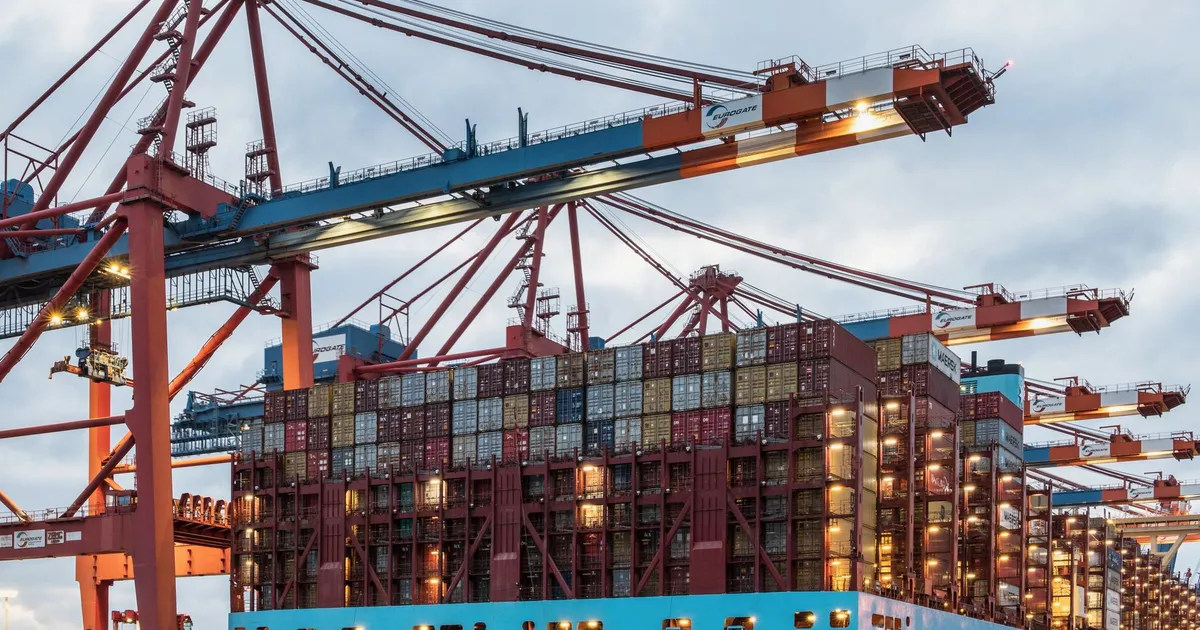
But the pacts are only half the equation. National Road Carriers chief executive Justin Tighe-Umbers warned in May 2026 that New Zealand’s supply chain problems run deeper than short-term disruption, pointing at logistics, port configuration and long-term resilience. His line is blunt: “without a supply chain that can keep up… that growth will hit a ceiling.” ExportNZ’s Joshua Tan called the deal no “silver bullet” for immediate crises.
That is the open question. Signing agreements is cheaper and faster than fixing ports. But the architecture being assembled now, agreement by agreement, will shape supply chain costs and market access for exporters, food tech firms and energy-intensive manufacturers for years. New Zealand has correctly read a harder world, and turned its groceries into leverage.
Sources
- NZ-led, food-for-fuel pacts expand to avert disruption in trade (2026-07-20)
- New Zealand signs deal with Singapore to ensure trade of essential goods (2026-05-04)
- Christopher Luxon thinks other countries may join landmark Singapore food for fuel deal (2026-05-04)
- ‘We have each other’s backs’: Luxon on NZ-Singapore fuel deal (2026-05-04)
- NZ’s diesel stocks surge, Luxon to ink Singapore fuel deal (2026-05-04)
- Situation and Outlook for Primary Industries (2026-06)
- Budget Economic and Fiscal Update 2026 (2026-05-28)
- A cheeky sidestep to the supply crisis: Asia fuels NZ, we feed Asia (2026-04-15)
- Beyond food for fuel: PM’s vision for supply chain reset (2026-05-08)