

Buying a service, not a fleet
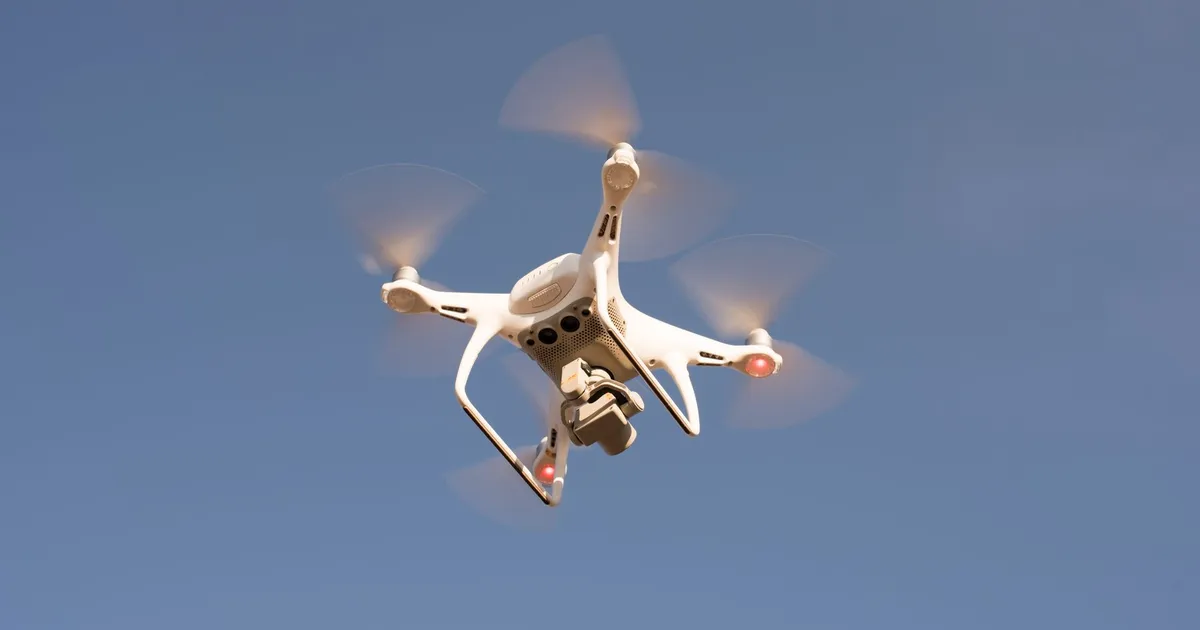
The Ministry of Defence has issued a request for information seeking commercial operators who can fly maritime surveillance missions up to 1,400 nautical miles from base for at least six hours. The RFI, published on the Government Electronic Tender Service, sets a demanding bar: high-definition imaging, maritime search radar, and near real-time imagery in all weather, day or night.
The detail that matters for business is not the range. It is the ownership model. Deputy Secretary for Capability Delivery Sarah Minson said the ministry is planning a commercially owned and commercially operated delivery model. Defence is not asking industry to sell it hardware. It is asking industry to sell it eyes over the ocean as an ongoing service.
That is a genuine shift in how New Zealand approaches security infrastructure, and BusinessDesk has framed it exactly that way, positioning commercial operators as partners in national security operations rather than vendors on the sidelines.
The threat that created the tender
This capability exists for a reason. The Defence Force wants to watch foreign navies operating near New Zealand’s shores, including Chinese forces that ran live-firing exercises in the Tasman Sea. The programme sits under the coalition government’s ‘persistent air surveillance’ function, covering long-range intelligence gathering across the Pacific and Southern Ocean.
A deteriorating regional security picture is, bluntly, a business opportunity for firms that can meet military-grade reliability. Defence is casting wide. It held three industry workshops in January with American, European and Australian firms, and it is open to any solution for monitoring the South-West Pacific and Southern Ocean, not just drones.
The headline price understates the prize
The Persistent Surveillance (Air) project carries an indicative cost of $100 million to $300 million. But that number is only the entry ticket. The Defence Capability Plan 2025 Cabinet Paper notes that for every dollar spent on new capability, three to four dollars are spent supporting it through-life.
Run the maths. A $200 million drone contract could generate $600 million to $800 million in sustainment work over the life of the programme. For any firm weighing whether to invest in bidding, the through-life tail is where the real revenue sits, and it favours operators with a durable local presence over a one-off equipment sale.
A wall of money behind it
The funding context is unusually strong. The Defence Capability Plan 2025 commits $12 billion over four years, lifting defence spending from just over 1% of GDP to more than 2% within eight years. Budget 2026 added $1.6 billion in new Defence funding, taking total new investment since the plan to $5.8 billion, and specifically funds two drone types: one for South-West Pacific long-duration missions and a polar-capable variant for Southern Ocean work launched from Navy vessels.
This is not a fashionable line item at risk of the next fiscal squeeze. It is a bipartisan-adjacent structural build-out with committed money behind it.
Where smaller firms actually fit
Most New Zealand companies cannot field a complete 1,400-nautical-mile surveillance system. They do not have to. New Zealand’s Defence industrial base already runs to roughly 800 suppliers, and over 80% of the NZDF budget already supports local economic activity through construction, maintenance and sustainment with New Zealand-based businesses.
The Technology Accelerator programme, funded at $16 million operating and $1.5 million capital, is a deliberate second door. It connects industry with Defence to solve specific military problems, opening the field to firms that can supply components, software, communications links or logistics rather than a whole platform. The RFI explicitly encourages New Zealand businesses to respond.
What happens next
The RFI is market research, not a contract. Information from the workshops will feed an indicative business case expected later in 2026. Firms that want in should treat this window as the moment to signal capability, because the shape of the eventual tender will be influenced by who shows up now.
There is a sovereignty question worth watching. Analysts note the project aligns with AUKUS Pillar II’s maritime awareness concept, and integrating surveillance into allied networks can create lasting technical dependencies. For the business decision in front of operators today, though, the signal is simpler. Defence has money, a clear need, and a stated preference for a commercial delivery model. The firms that can prove military-grade reliability now are the ones that will be watching the Pacific on the taxpayer’s behalf for the next decade.
Sources
- Defence Force eyes long-range drones to watch foreign forces in Pacific (2026-08-03)
- New Zealand Ministry of Defence requests industry info on long-range UAS for maritime surveillance (2026-07-31)
- Defence considers contracting commercial long-range drone operator (2026-08-03)
- Defence Capability Plan 2025 – Cabinet Paper (2025-04-07)
- MoD seeks industry input on long-range uncrewed aircraft systems
- Ministry of Defence seeks advice for plan to have drones scour Pacific
- Defence Force mulling how to improve surveillance of oceans
- Budget 2026 shores up maritime security
- Is NZ defence and intelligence policy aligning with AUKUS in all but name?