

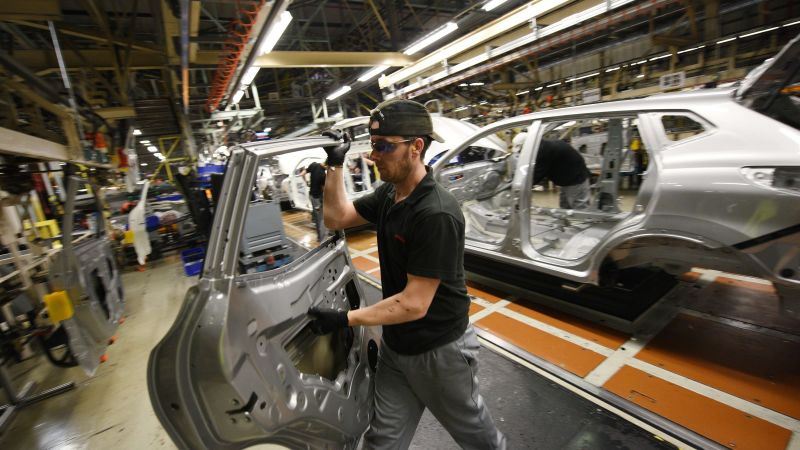
Nissan is shutting down one production line at its vast Sunderland plant and eliminating 900 jobs across Europe as part of a sweeping effort to revive its struggling operations.
The Japanese carmaker, facing intense pressure from electric vehicle rivals and a bruising £1.5 billion loss in fiscal 2025, aims to build a nimbler business amid shifting market demands.
At the Sunderland factory in north-east England, long recognised as Europe’s biggest car plant, Nissan plans to fold assembly of the Leaf electric hatchback, Juke crossover, and Qashqai SUV onto one line.
The site, which has produced millions of vehicles since opening in 1986 and supports 6,000 local jobs, now runs at less than half capacity due to weak demand. Company officials stress that no factory redundancies will result from the change, which instead opens space for potential manufacturing partners.
The wider reductions affect about 10 per cent of Nissan’s 9,000 European staff, touching UK office positions and including a partial closure of its Barcelona warehouse alongside import shifts for Nordic markets. These measures stem from the RE:Nissan recovery plan.
A Nissan spokesperson said the changes were being made under its RE:Nissan recovery plan and were designed to create a “leaner, more resilient business that adapts quickly to market changes.” The firm has begun talks with workers to streamline its setup and ensure it operates in a sustainable and profitable way.
“We have also announced that we will consolidate production from two lines to one at our Sunderland plant as we assess future opportunities to secure full plant utilisation,” the spokesperson added.
Eyes are turning to Chinese contender Chery, maker of fast-growing UK brands Jaecoo and Omoda, which exploded onto the British market in late 2024 with 25,000 sales last year, a 300 per cent jump.
Already gearing up production at a former Nissan site in Barcelona, Chery has held discussions about a possible Sunderland base. Its UK head, Victor Zhang, previously told the BBC the firm was evaluating whether to set up a manufacturing base in the UK.
Such a partnership could echo Nissan’s history of collaborations and help fill Sunderland’s spare capacity, securing its role as a UK manufacturing linchpin.