

The number that should worry farmers isn’t 39%
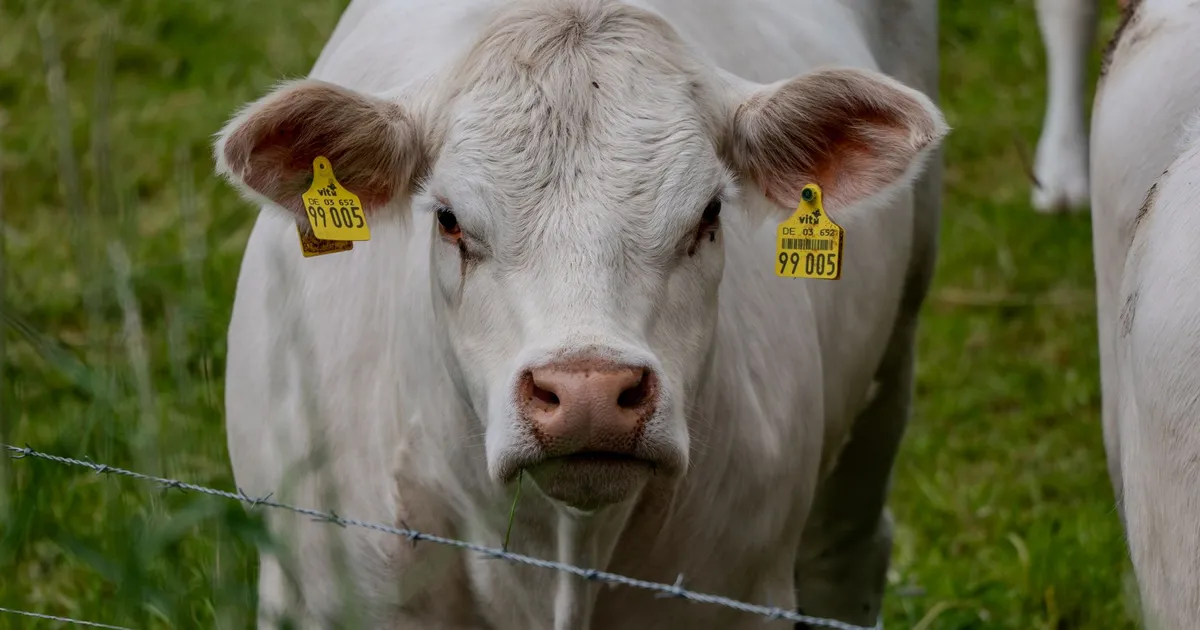
From 1 September 2026, NAIT cattle and deer ear tag levies rose 39% to $1.35 ex GST, up from $0.97, while slaughter fees jumped 28% to $1.91 ex GST per beast. For an average dairy farm, that works out to roughly $112 a year over the three-year period, on Southland farmer Nigel Johnston’s July 2026 estimate. Not ruinous.
The percentage isn’t the story. The story is what the money is being used to fix, and who broke it in the first place.
A system OSPRI already spent heavily on and wrote off entirely
OSPRI’s technology failures are not a one-off. In the OSPRI Annual Report 2023-2024, a February 2024 independent review found significant gaps in the controls, architecture and governance of the MyOSPRI platform. The system was judged overly complex, not fit for purpose, and costly to maintain. OSPRI then wrote off $16.6 million in impairment on the MyOSPRI asset and decided to rebuild from scratch.
It got worse. In October 2025, an independent review found NAIT’s bank balance had dropped as low as $1.2 million, with periods of negative working capital that risked insolvency. The review put it down to “suboptimal management” and cost overruns on the technology upgrade. A body responsible for tracking livestock disease nationwide nearly went broke chasing a software project it ultimately binned.
Against that backdrop, the $1.38 million historic under-collection of beef and dairy levies the hike also recovers looks almost like a rounding error.
Most submitters said no. OSPRI did it anyway
During the June-July 2026 consultation, 63% of 69 submitters opposed the increases, including farmers and meat processors. Their objection wasn’t just cost. It was governance, and above all a lack of confidence in OSPRI’s ability to actually deliver the technology this time. Given the track record, that scepticism is earned, not reflexive.
What gave the board cover to proceed was the backing of DairyNZ and Beef+Lamb NZ, whose support let OSPRI override the majority of individual submitters. OSPRI Deputy CE Simon Andrew acknowledged the tension, saying “there were mixed views on the levy increases itself, and that’s understandable”, while framing the decision as balancing affordability against the need to “modernise the NAIT system and maintain a fit-for-purpose and reliable traceability system”. He also conceded the current platform is “very clunky to use on your phone”.
The replacement will be built by an unnamed experienced New Zealand third-party provider chosen through procurement, integrating with tools like LIC’s MINDA herd management system. Outsourcing to a proven vendor is sensible. It’s also a tacit admission that OSPRI shouldn’t have been running the build itself the last time.
Will a better website even move the needle
Here’s the harder question. OSPRI farmer committee member Nigel Johnston, a Southland dairy farmer, warned in July 2026 that “we can’t hang our head on the hope that compliance will improve just because the website’s improved”, pointing to “a major issue with farmer apathy and farmer willingness to actually record this information”.
That matters because the scheme isn’t optional and the stakes are real. Traceability compliance sat at 78.8% at 30 June 2024, above the 75% target but still leaving roughly one in five livestock movements unrecorded in a mandatory system. There are currently 17 herds infected with TB nationwide, spread from Hawke’s Bay to the West Coast, with wildlife TB risk across 4.8 million hectares.
Who is actually paying
Under the NAIT National Operations Plan 2025/26, MPI funds 35% of NAIT and industry covers the remaining 65%, split largely between dairy and beef. So the taxpayer carries a third of the cost, and farmers carry the rest, of fixing a project that management failure and governance gaps put on the fire in the first place.
The case for the scheme itself is sound. A country that trades on disease-free status needs credible livestock traceability, and TB in 17 herds is exactly why. The case for the management that got here is not. Farmers are being asked to write a bigger cheque on trust, to an organisation that spent big, delivered little, wrote off $16.6 million, and nearly ran itself into the ground. This time OSPRI needs to deliver a system farmers will actually use, or the next levy round will be an even harder sell.
Sources
- NZ Herald: Farmers to fund OSPRI’s new NAIT software and $1.38m under collection with levy hike (2026-08-31)
- RNZ: Farmers to fund OSPRI’s new NAIT software and $1.38m undercollection with levy hike (2026-08-31)
- OSPRI: NAIT levy consultation 2026 (2026)
- OSPRI: Levies paid by farmers (2026)
- Farmers Weekly: OSPRI seeks feedback on levy increases (2026-07-03)
- Newsroom: ‘Suboptimal management’ nearly bankrupted animal disease watchdog (2025-10-09)
- OSPRI Annual Report 2023-2024 (2024)
- NAIT National Operations Plan 2025/26 (2025)
Join the discussion
Add useful context, ask a good question, or challenge an idea — keep it specific and respectful.