

A $17 million loss and a doubled loan
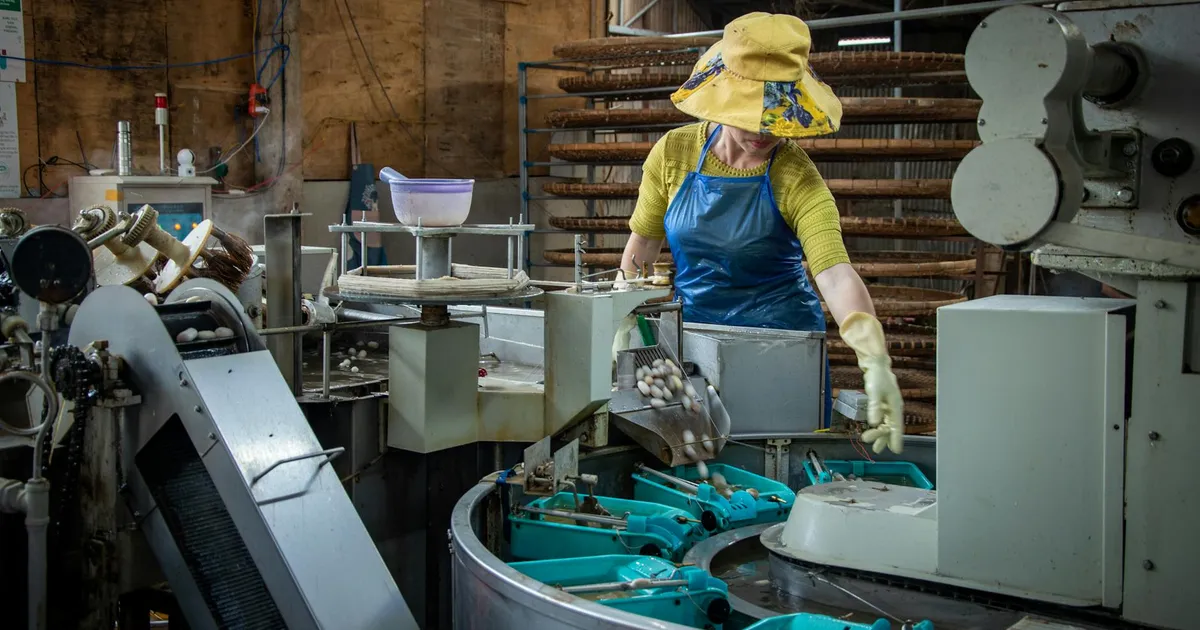
McCain Foods announced in late March 2026 that it would close its Hastings vegetable processing plant by January 31, 2027, ending a 30-year presence in Hawke’s Bay. The Canadian multinational said it was unable to find a sustainable pathway under the current model.
The financials explain why. McCain Food New Zealand reported a $16.9 million loss for the year ending June 30, 2025, with revenue falling $19.9 million to $306.7 million. This was not a single bad year. The NZ subsidiary made losses in three of the past five financial years. A related-party loan from McCain Finance doubled from $38.4 million to $76.8 million in a single year, at 1% interest with no fixed repayment terms. A separate McCain Eurocentre loan totals $59 million, with interest payments rising from $3.9 million to $5.6 million in the same period. No dividends have been paid in two years.
For anyone who has watched a multinational subsidiary get loaded with intercompany debt before the parent walks away, the pattern is unmistakable.
Two closures in one week gutted the sector
McCain’s announcement did not land alone. In the same week, Heinz Wattie’s confirmed it was shutting frozen packing lines in Hastings and closing manufacturing sites in Christchurch, Dunedin and Auckland, affecting about 300 jobs. Together, the two closures affect approximately 320 growers nationwide.
The McCain plant alone processes over 50,000 tonnes of vegetables annually. Vegetables NZ says the closure affects more than 100 growers, 21% of the process vegetable sector, and will cost the industry $18 million in lost returns annually.
David Hadfield, Processed Vegetables NZ chair, identified the common thread: “The common factors in the two closures are high energy and labour costs. Supermarkets were also prioritising the stocking of home-brand frozen vegetables while growing international competition has left one processor with unsold NZ-grown product.”
Growers built entire businesses around a buyer that was already leaving
Process vegetable farming is not a crop you redirect to the local farmers’ market. Growers invest in specialised equipment, contract to specific planting and harvest windows, and structure their land use around the processor’s requirements. Hugh Ritchie, a Central Hawke’s Bay farmer whose family has grown process crops since the 1960s, says the closure will affect half his farm’s cropping area and roughly a quarter of his income. His farm was McCain’s only carrot supplier.
McCain had already been pulling back before making it official, reducing peas by about 20% and sweetcorn and beans by 50% in the current season due to frozen stock it could not move. Growers normally receive contracts mid-year and plant through August and September, meaning the January 2027 closure date leaves almost no runway.
Ritchie put the systemic question plainly: “We need to be able to assure ourselves that there is actually a viable food-growing option in this country, and if it’s not, why not? Because it should be.”
The cost problem nobody can fix with good intentions
Joshua Tan, ManufacturingNZ executive director, framed the structural challenge: “Overseas producers often benefit from lower input costs, larger production runs, and scalability, which can lower the per-product cost and create a material price advantage over local producers.”
Dr Jacqueline Rowarth, Adjunct Professor at Lincoln University, was blunter. She raised the pork industry as the cautionary precedent: approximately 60% of pork consumed in NZ now comes from overseas, a shift that happened incrementally as domestic processing became uncompetitive. Frozen vegetables look like they are on the same trajectory.
Central Hawke’s Bay Mayor Will Foley estimated 9,000 hectares of crops were grown for McCain in his district alone. Hadfield noted that Hawke’s Bay growers could shift to apples, grapes or kiwifruit, but that pivot requires capital, time and entirely different infrastructure.
The real lesson is about concentration risk
Hastings Mayor Wendy Schollum warned of the risk of hollowing out industries underpinning the economy. She is right, but the warning comes too late for growers who built their livelihoods around a single processor.
The uncomfortable truth is that more than 100 farming businesses had no visibility into a balance sheet that was deteriorating for years. The exit decision was made in a Canadian boardroom they had no access to. Whether growers can mount a credible takeover bid for the plant, or whether the economics that defeated a $14 billion multinational will defeat them too, is the question that will define Hawke’s Bay horticulture for the next decade. The pork industry already answered it once. Nobody liked that answer either.
Sources
- McCain to close Hastings vegetable processing plant by January 2027 (2026-03-24)
- McCain plant closure at Hastings follows $17m loss and soaring related-party loans (2026-03-17)
- Central Hawke’s Bay mayor questions Wattie’s, McCain closures in ‘pretty good food producing region’ (2026-03-27)
- NZ vege sector shaken as closures leave crops without a home (2026-03-26)
- Closure of McCain’s Hastings vegetable processing business (2026-03-24)
- McCain Hastings plant closure: Hawke’s Bay growers warn of bigger crisis, say now’s the time for overhaul (2026-03-28)
- Frozen veg in New Zealand: The data behind McCain and Wattie’s cuts (2026-03-24)
- Why cheap imports are squeezing NZ’s food producers: Dr Jacqueline Rowarth (2026-03-24)
- Hawke’s Bay grower responds to McCain closure announcement (2026-03-25)
- McCain shutdown: Mayors see risk to the food basket of Hawke’s Bay (2026-03-28)