

New Zealand likes to call itself a food powerhouse. The uncomfortable truth is that the powerhouse runs on imported fertiliser, and the world’s fertiliser supply is now sitting behind one of the most contested waterways on the planet.
The chokepoint nobody plans for
In a 27 July 2026 analysis for the NZ Herald, University of Otago senior economics lecturer Murat Ungor put it bluntly. New Zealand and Australia, he wrote, “like to think of themselves as food powerhouses. The war in the Middle East and China’s fertiliser export restrictions are exposing a dangerous blind spot: their farms depend on imported fertiliser, and they have no plan for when it stops arriving.”
The structural exposure is severe. More than 80% of countries import at least 75% of the fertiliser they use, so a disruption anywhere ripples everywhere. The Gulf region dominated global supply between 2023 and 2025, and the Strait of Hormuz, which carries roughly a quarter of all seaborne oil plus large volumes of gas and fertiliser, is the acute pressure point. US-Israel-Iran tensions have put that corridor under direct threat while China restricts its own exports from the other side.
Fertiliser is not a background cost
For a New Zealand farmer, fertiliser is not a line item buried in the accounts. It is a direct input cost for dairy, beef and horticulture, and it is priced in a global market that has just become far more volatile. New Zealand is one of the world’s largest exporters of dairy, beef and veal. As Ungor noted, “without fertiliser, those exports shrink. Without exports, the entire economy will feel the impacts.”
That is the context in which one Taranaki project stops looking like a green vanity play and starts looking like insurance.
The project that changed its own story
The Kapuni Project is a joint venture between Hiringa Energy, Ballance Agri-Nutrients, Todd Energy, Parininihi ki Waitotara and MBIE, with non-recourse financing from Westpac NZ. It has reached financial close and preliminary construction is underway, with first power and hydrogen production targeted for 2027, per Todd Energy.
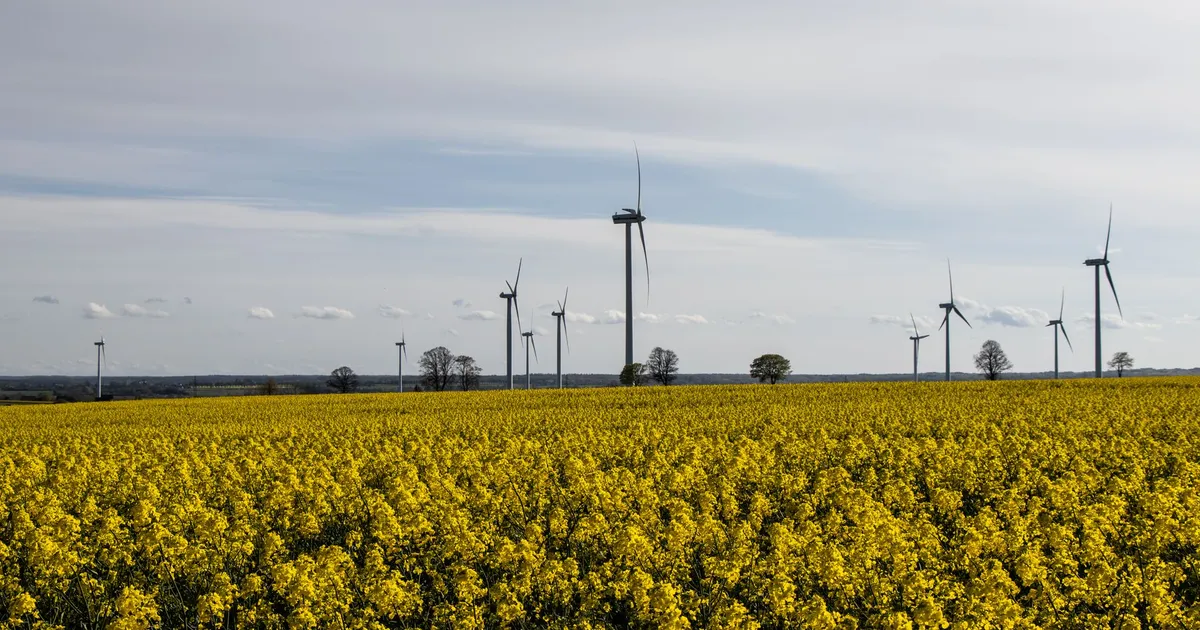
The physical build is modest but purposeful. According to Hiringa Energy, it pairs a 25.6 MW wind farm of four turbines, generating around 100 GWh a year, with a 5 MW electrolyser producing up to two tonnes of green hydrogen per day. That hydrogen is fed into Ballance’s existing Kapuni urea plant to augment its natural gas feedstock. It is New Zealand’s largest green hydrogen production capacity and Taranaki’s first such facility.
When it was conceived and funded, this was a decarbonisation pitch, one plank of the previous government’s hydrogen ambitions. That framing made it politically legible but commercially uncertain, especially in a policy environment sceptical of green subsidies. The 2026 fertiliser crunch rewrites the logic. The number that now matters is not carbon avoided but the 7,000 tonnes of urea imports the project displaces each year, urea that would otherwise arrive from exactly the Middle East and Asian routes Ungor identifies as the threat.
A hedge, not a silver bullet
Honesty matters here. At 5 MW and two tonnes a day, Kapuni is a commercially significant pilot, not a transformative supply solution. The 7,000 tonnes it offsets is meaningful but modest against New Zealand’s total fertiliser consumption. It reduces exposure to the most geopolitically fragile supply routes; it does not remove it. The Ballance figures also show a decarbonisation dividend, offsetting up to 12,000 tonnes of carbon, but that is now the secondary benefit.
The deeper point is what Kapuni exposes. As The Conversation framed it, the project is a first-of-its-kind strategic response to global fertiliser volatility. One first-of-its-kind pilot is not a national strategy. New Zealand still has no coordinated plan for what happens if the imports simply stop.
2027 is the test
The interesting shift is commercial. A project justified on emissions is fragile the moment a government’s green enthusiasm cools. A project justified on supply resilience and input-cost protection is far more durable, because that argument holds regardless of who is in power. Kapuni now carries both cases, and the second is the stronger one.
The real question 2027 will answer is not whether Kapuni delivers its two tonnes a day. It is whether a working example of domestic fertiliser production forces the broader conversation Ungor is demanding, about what New Zealand does when the Strait of Hormuz closes and the ships stop coming.
Sources
- Global fertiliser crunch puts New Zealand food security in spotlight (2026-07-27)
- Kapuni Project achieves financial close, strengthening Todd’s position in renewable energy
- Kapuni Project reaches Financial Close, unlocking integrated renewable energy and green hydrogen production
- Kapuni hydrogen project
- The Middle East crisis has exposed NZ to a global fertiliser shock: where is its plan?