

The price rise nobody can pass on
The Iran conflict is no longer just a fuel story. It is now a construction materials crisis, and it arrived on New Zealand building sites this month in the form of supplier price notices that most project budgets cannot absorb.
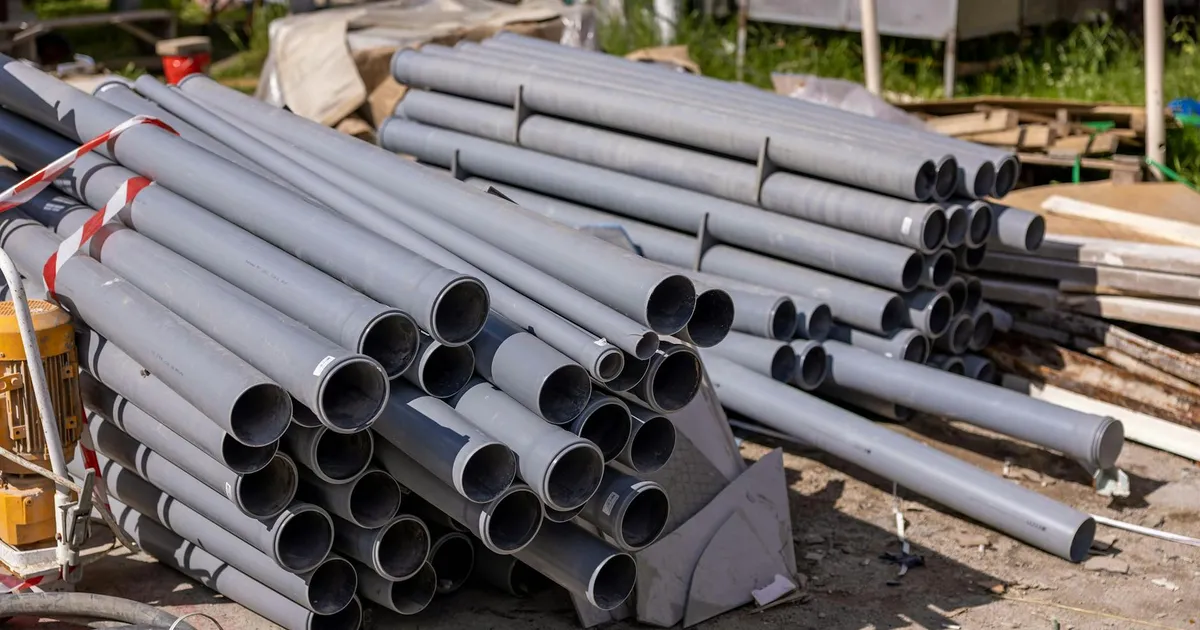
Fletcher Building-owned Iplex has notified merchants of a 25% price rise on plastic pipes effective May 1. Marley NZ has already imposed a 3.5% rise in April with further increases flagged. Allproof Industries general manager Adam Jackson says the 30% hikes plumbers are already absorbing are “just the beginning”.
The mechanism is straightforward but underappreciated. About 80% of the 3,000 products carried by plumbing merchants are petroleum-based, from PVC pipe to adhesives, sealants and even the plastic components inside metal taps. All petrochemical feedstock passes through the Strait of Hormuz, and global oil and natural gas supply has been reduced by roughly a fifth. That is not a temporary dip. It is a structural supply reduction hitting every petroleum derivative simultaneously.
Fixed-price contracts are the trap
The real damage is not the headline price increase. It is where that increase lands.
Dave Good, general manager of D L Good & Son Plumbers in Henderson, runs about 80 plumbers across sites including Auckland Airport’s new terminal and Fisher & Paykel Healthcare’s $250 million building. His position is blunt: “On those jobs we’ve already won, we can’t increase our price because we tendered on a fixed lump sum. We can’t just put our price up 25%, so we have to pay.”
He is not alone. Apollo Projects executive director Paul Lloyd has seen a 30% increase on materials that are both freighted and oil-based and warns the cascade is what kills: “Even a 2 or 3 or 4 percent increase overall, that can be the margin of a project, and then all of a sudden you’ve got contractors, and there’s subcontractors, and the whole pyramid starts to topple.”
The industry walked into this trap willingly. Post-COVID, contractors stripped cost-escalation clauses out of contracts to win work in a lean market. BDO construction sector leader Nick Innes-Jones notes head contractors are less well-prepared than in the past, having come off years of weak balance sheets with no buffer for exactly this kind of shock.
The legal window that is closing fast
Wynn Williams Lawyers have published a detailed analysis of the contractual exposure that every contractor with an active fixed-price deal should be reading. The firm notes that under standard NZS 3910 contracts, contractors may claim extensions of time where delays were “not reasonably foreseeable at the time of tendering,” and the Iran fuel crisis is likely to meet that threshold. But critically, standard NZS 3910 wording does not allow recovery of time-related costs even where an extension is granted. You get more time, not more money.
The firm’s urgent advice is that early warning notices must be issued now, before costs escalate further. Master Plumbers has gone further, advising members to refuse new fixed-price contracts entirely until product costs stabilise and to ensure all new contracts include escalation clauses.
Marginal projects will not survive this
The timing is brutal. The Cordell Construction Cost Index showed annual growth of just 2.3% in Q4 2025, and Macromonitor had forecast only 3.5% cost growth for 2025. The sector had barely found stability. A 25% shock to materials, which represent roughly half the construction cost index, blows those forecasts apart.
Jackson warned directly that marginal projects face cancellation: “Those residential and commercial projects that maybe were marginal may not go ahead.” For an industry where costs have already risen 61% since 2015 against 33% CPI growth, there is no fat left to absorb another round.
The commodity picture reinforces the problem. The ANZ World Commodity Price Index rose 4.1% in March alone, a move second only to the Russia-Ukraine outbreak. The NZD fell 2.8% in March, pushing the NZD Commodity Price Index up 6.4% to a record high, a double hit for import-dependent sectors. Aluminium jumped 9.8% after a large UAE smelter was damaged, with repairs expected to take months.
What to do before the next price notice arrives
If you are commissioning, contracting or investing in a construction project right now, the playbook is simple. Review every active contract for escalation provisions. Issue early warning notices under NZS 3910 immediately. Reassess any feasibility study completed before April. And do not sign a fixed-price contract without an escalation clause until this resolves.
Civil Contractors NZ chief executive Alan Pollard warns diesel is now well over double pre-conflict levels and fears it could take as long as five years for costs to normalise. Five years is longer than most project pipelines. The firms that survive this will be the ones that stopped pretending it was temporary.
Sources
- NZ Herald: NZ plumbers face 25% plastic pipe price rise due to Iran conflict
- Newsroom: Plumbing price hikes warned as just the beginning (2026-04-15)
- RNZ: ‘It’s going to get messy’: Construction costs to jump
- RNZ: The global oil crisis is turning into an everything crisis
- RNZ: Cost of building a new house set to rise
- RNZ: Commodity prices reaching record highs amid Iran war
- RNZ: Iran conflict hitting building costs
- Mondaq/Wynn Williams: Fuel crisis – how rising fuel costs affect construction projects and contracts
- Builders & Contractors: NZ construction cost trends – Macromonitor
- Elevate Magazine: Construction costs eclipse inflation