


A U.S. ceasefire halted the 21-month Gaza war last October, shifting Hamas’s focus from battling Israel to securing internal dominance. Its forces shattered and leaders lost, the group now oversees a ruined enclave with over 72,000 dead per its health ministry.
Four months on, residents note Hamas resuming security, tax, and service control, questioning its disarmament under Trump’s phase two plan.
“Hamas regained control of more than 90% of the areas where it is present,” said Gaza activist Mohammed Diab.
“Its police and security agencies have returned, and are now present in the streets, controlling crime and pursuing those it labels as collaborators and people with opinions. Citizens must go to the Hamas authorities for identity cards or health procedures, and it is also reasserting control over the judiciary and courts.”
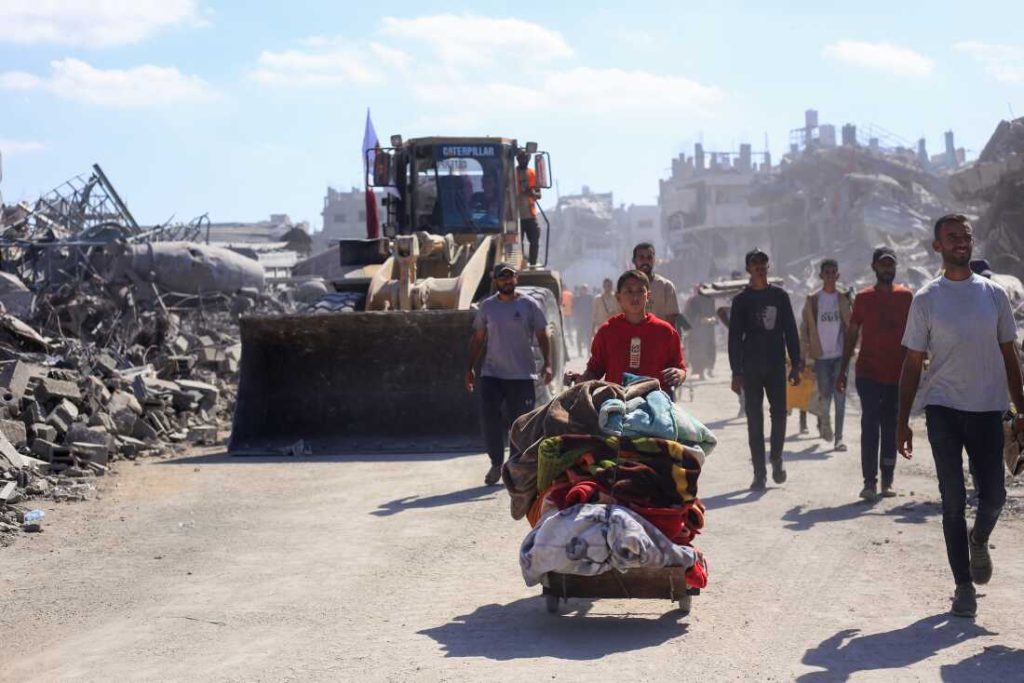
Market traders face daily fee demands. “The markets are quiet, but the municipality keeps pursuing us for rent,” one said anonymously. “Every single day they come to us aggressively. They’re asking for 700 shekels—none of us can afford that.”
A displaced vendor from Shujaiya added, “Every day, the municipality comes. Should I pay them, or feed my children?”
Traders report steep import taxes enforced by force. “The taxes imposed by Hamas start at 20,000 shekels and above,” one said. “If a trader refuses to pay, force is used.”
Spokesman Hazem Qassem defended it as governmental. “Some traders maintain links with the [Israeli] occupation. This is purely a governmental matter and has no relation to Hamas.”
Israel cites four post-truce soldier deaths; Hamas claims 603 Palestinians killed. Trump’s Board of Peace meets Thursday, with reconstruction tied to disarmament.
U.S. housing near Rafah aims to lure residents, but Gaza’s people hold the key to Hamas’s future grip.