

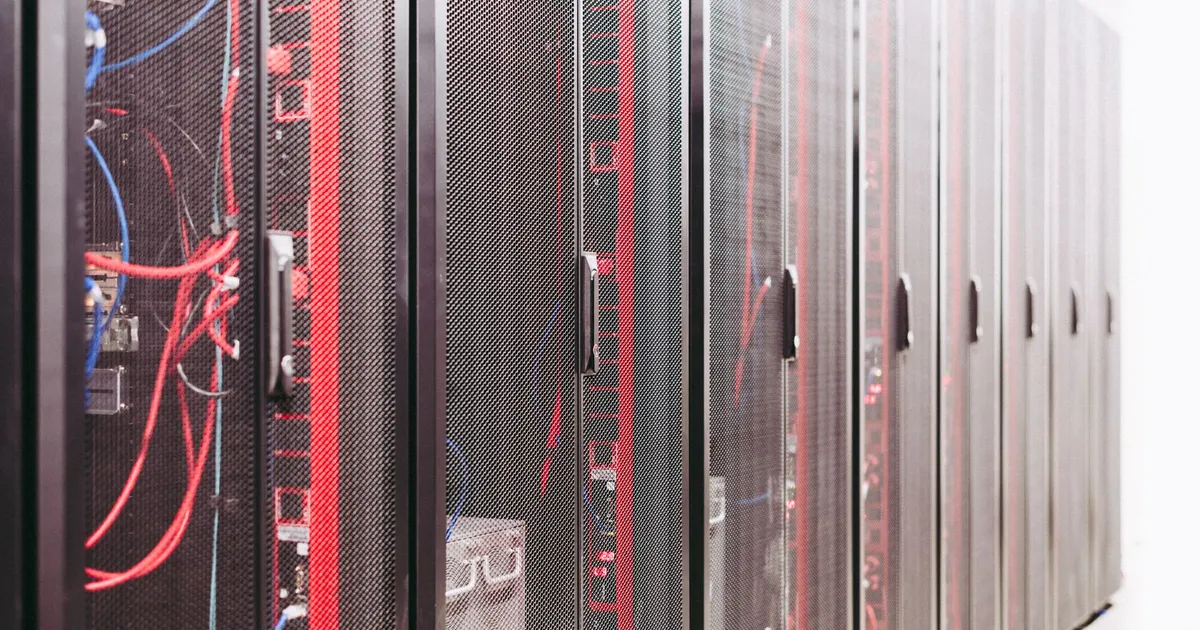
Five towns, one very big ambition
Invest New Zealand has named five South Island towns as possible homes for high-energy data centres, according to details revealed by the Otago Daily Times. Twizel, Ohau, Geraldine and Cromwell sit alongside the already-consented Datagrid facility near Invercargill, with the Central Otago and Mackenzie District towns designated as ‘advantaged data centre zones’ thanks to existing grid capacity, fibre backhaul and renewable potential.
This is not a whiteboard exercise. The Crown agency is actively pitching $25 to $30 billion in offshore investment into data centres over five years, projecting up to $160 billion in broader economic activity over a decade if 1.3 gigawatts is added by 2035. For regional economies that have long watched capital flow to Auckland, this is a rare thing worth taking seriously.
The anchor is Datagrid’s $5 billion facility at Makarewa, 15 minutes north of Invercargill, covering 78,000 square metres. It was the first New Zealand data centre consented without public notification, approved in March 2026, and it comes with the first international subsea cable connection to the South Island, which Invest New Zealand calls the catalyst for everything that follows.
The regulator is planning for a fraction of the load
Here is where the marketing gets ahead of the machinery. Datagrid’s phase one needs 280MW at peak, with a stated goal of scaling to 1GW. An internal MBIE briefing described that 1GW as almost double the consumption of the Tiwai Point smelter, currently the country’s single largest electricity user.
Yet the Electricity Authority has formally accounted for only Datagrid’s 280MW in its planning. It logged 12 other likely data centres but told the ODT it had not been informed of Datagrid’s final capacity and could not say which were AI facilities or where they sat, citing confidentiality. The regulator responsible for matching supply to demand is planning for a sliver of what the government’s own agency is selling.
And the most significant hurdle remains open. Transpower is still in its investigative phase on the Datagrid grid connection. The most optimistic timeline had construction starting in July 2026. That now looks unlikely.
The dry winter problem
On paper the generation exists. Eight consented South Island renewable projects total 857MW across five solar and three wind farms, theoretically enough for the five planned centres, if everything gets built on time and no other demand grows.
The catch is hydro storage. University of Waikato research associate Earl Bardsley put it bluntly to the ODT: if there is a dry winter, hydro lakes must draw down faster to firm all that new load, translating to higher winter wholesale prices as coal or gas kicks in. He added it would be ‘rather ridiculous’ to import LNG for expensive power that runs data centres employing only a handful of people. That sits awkwardly next to the clean-energy pitch being sold offshore.
Right now the system is in good shape. MBIE’s March 2026 quarter showed renewables at 94.5% of generation, with solar up 50.2% and gas generation down 67.4%. But MBIE’s 2024 scenarios report already flagged large-scale data centre build as a key uncertainty, with upper-end demand reaching 4.6 TWh by 2030, comparable to the entire Tiwai load.
The jobs and pricing reality
The employment case needs honesty. Invest NZ pitches ‘one job per 1MW’, but Datagrid’s $5 billion phase one delivers just 75 permanent jobs against roughly 1,000 at Tiwai. The real regional story is construction, with a peak of 3,500 workers in 2029-2030. Substantial, but temporary.
Then there is pricing. New Zealand’s wholesale market sets the price of all electricity at the marginal cost of the most expensive generator, usually fossil fuel. So consumers already pay fossil-pegged prices despite 94.5% renewable supply. Consumer NZ has warned that data centres should fund the generation they require rather than eat into existing capacity, a fair point for any business already watching its power bill.
What would make it work
There is a genuine win here. Mercury has signed a 140MW, 15-year power purchase option with Datagrid, and CEO Stew Hamilton said such deals give the company confidence to keep investing in renewable generation, which builds resilience and keeps downward pressure on prices. That is the model that makes the cluster credible: new demand paired with new build, not bolted onto the grid we already have.
The investment is worth having. Regional New Zealand rarely gets offered $30 billion. But the pitch is running well ahead of the planning, and the sequence matters. Get Transpower’s sign-off, force new generation to accompany new load, and fix the pricing distortion before adding baseload demand. Do that and the South wins. Skip it, and the first dry winter sends everyone’s power bill up to subsidise a handful of jobs in giant refrigerators.
Sources
- More data centres planned for South (2026-07-18)
- Crown agency pushes for $30 billion investment in new data centres (2026-07-17)
- Datagrid’s $5 billion Southland ‘AI factory’ still faces three huge hurdles (2026-07-17)
- Great southern data centre: Is this the end of the world as we know it? (2026-06-11)