

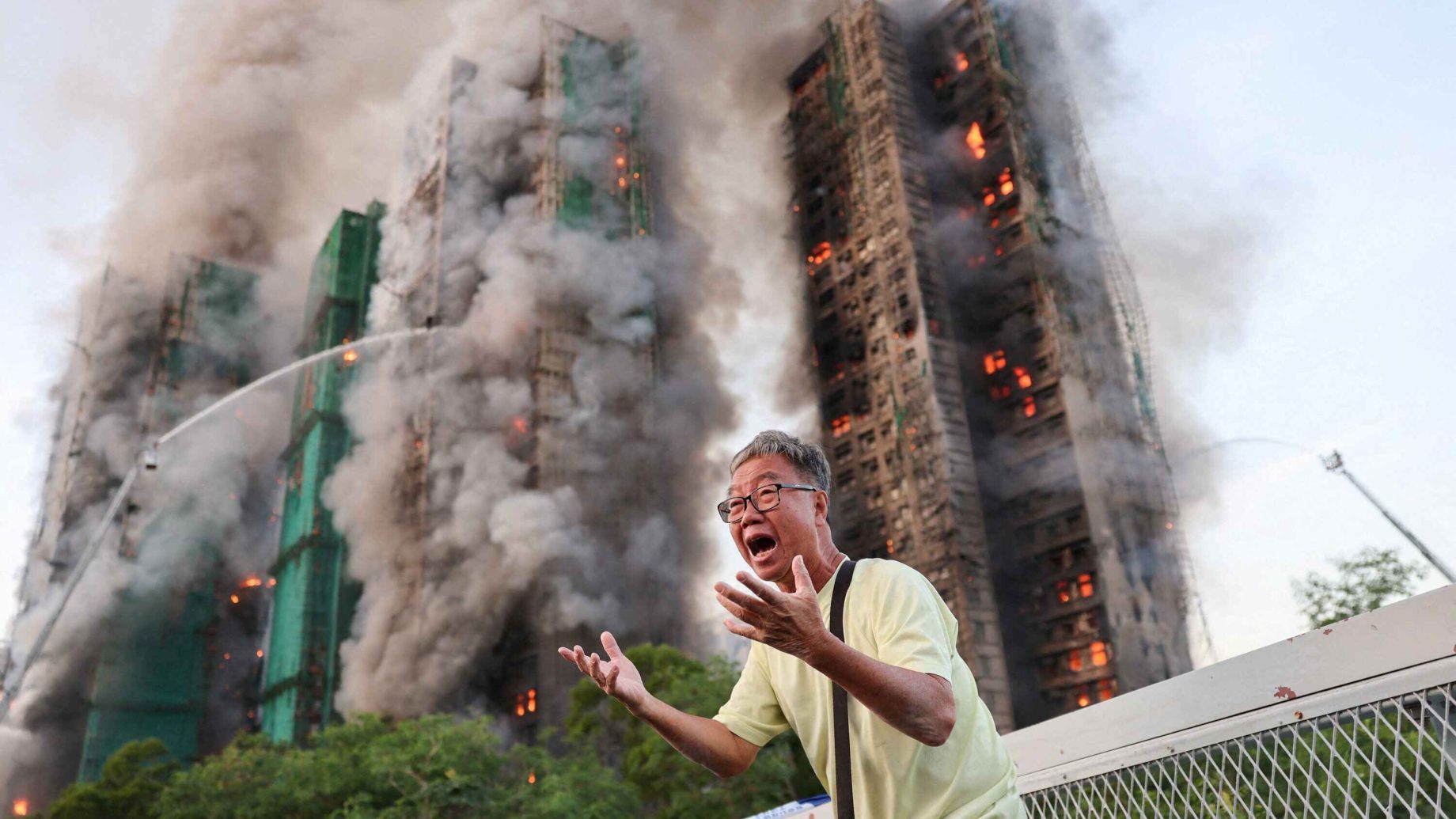
A devastating fire at Wang Fuk Court in Hong Kong’s Tai Po district has claimed at least 44 lives, including a firefighter, and left nearly 300 residents missing.
The blaze, which started on Wednesday afternoon, rapidly spread across seven of the estate’s eight high-rise blocks that are wrapped in traditional bamboo scaffolding and green mesh, materials under scrutiny for safety issues. Firefighters battled intense heat and thick smoke through the night, struggling to reach those trapped on upper floors.
Police investigations suggest the fire’s swift spread may have been exacerbated by non-compliant protective mesh and foam materials used during maintenance, with three construction company officials arrested on suspicion of manslaughter.
“We have reason to believe that the company’s responsible parties were grossly negligent, which led to this accident and caused the fire to spread uncontrollably, resulting in major casualties,” Superintendent Eileen Chung stated.
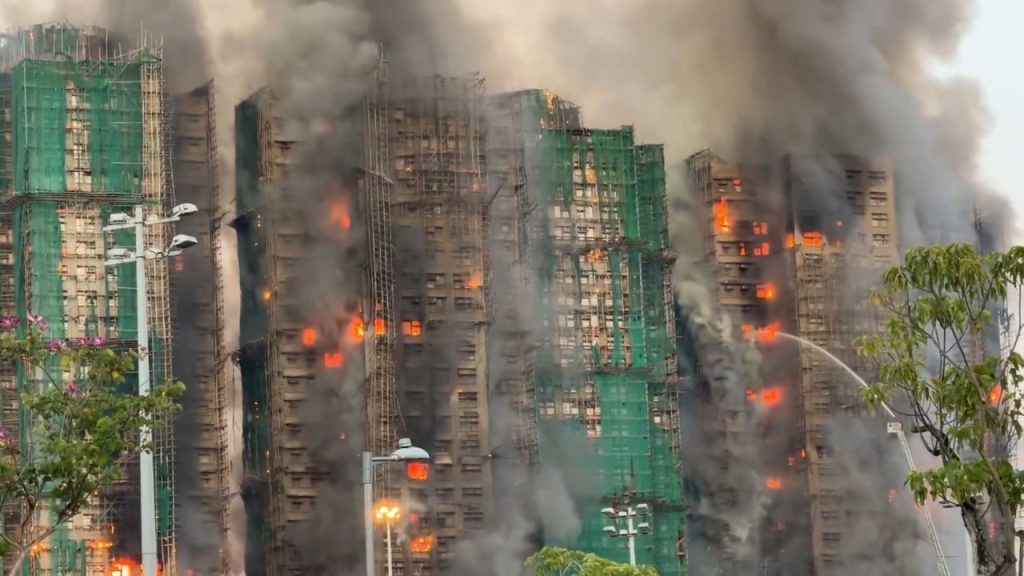
This tragedy is the deadliest fire in Hong Kong since World War II, surpassing the 1996 Kowloon commercial building fire. The government has been phasing out bamboo scaffolding due to safety concerns after numerous worker fatalities, mandating the use of metal framing in public projects. However, many buildings, including Wang Fuk Court, continue using bamboo in renovations.
Hong Kong Chief Executive John Lee stressed the government’s priorities: extinguishing the fire, rescuing trapped residents, supporting the injured, and launching a thorough investigation. Around 900 people have sought shelter in community halls, while 279 remain uncontacted.
Public outcry has intensified over perceived negligence and cost-cutting, with social media sharing videos of construction workers breaking safety rules. Chinese President Xi Jinping called for an “all-out effort” to minimise casualties. Meanwhile, roads around the affected area remain closed, bus routes diverted, and several schools have suspended classes due to disruptions.
Wang Fuk Court, part of Hong Kong’s subsidised home ownership scheme since 1983, has been undergoing HK$330 million renovations with contributions from residents.