

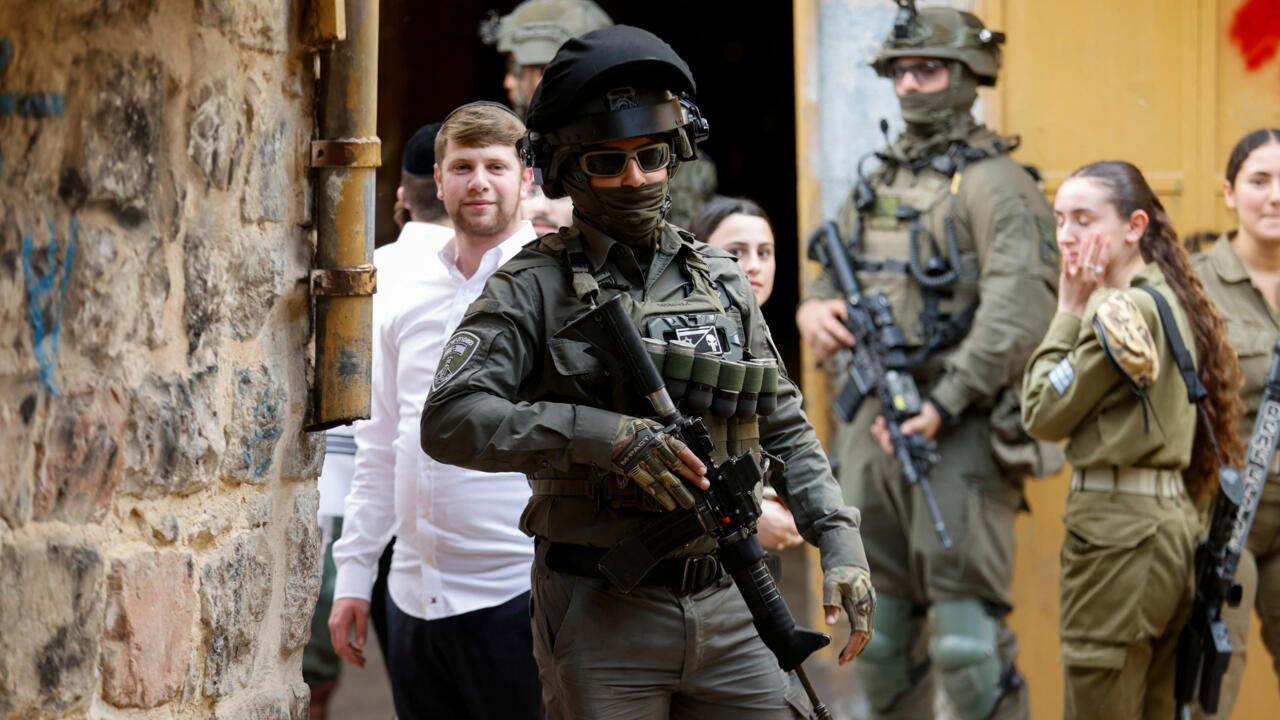
The European Union has agreed on a new set of sanctions targeting Israeli settlers and settler-linked organisations, in response to rising violence against Palestinians in the occupied West Bank since the outbreak of the Gaza war in October 2023.
The decision was reached by the bloc’s 27 foreign ministers after months of political deadlock, with EU officials saying the measures still need to undergo technical and legal steps before they are formally adopted.
United Nations monitoring has reported a sustained increase in settler-related attacks over the past year and a half, particularly following the escalation of conflict in Gaza. The West Bank, along with East Jerusalem, has been under Israeli occupation since 1967, and settlements there are considered illegal under international law, a position supported by the United Nations and most of the international community.
EU foreign policy chief Kaja Kallas said it was “high time we move from deadlock to delivery… extremisms and violence carry consequences.”
The breakthrough came after Hungary lifted its long-standing opposition to additional sanctions, removing a key obstacle that had previously stalled EU-wide agreement under its former leadership.
France’s foreign minister Jean-Noel Barrot said the bloc was “sanctioning today the main Israeli organisations guilty of supporting the extremist and violent colonisation of the West Bank.”
Israel rejected the move outright. Foreign minister Gideon Sa’ar described the decision as “arbitrary and political” and said Israel would continue to “stand for the right of Jews to settle in the heart of our homeland.”
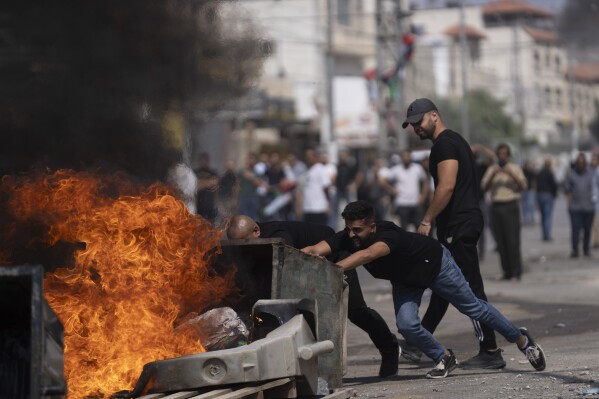
Settlement expansion has been supported by successive Israeli governments, but it has accelerated in recent years, particularly since Prime Minister Benjamin Netanyahu returned to office in 2022 at the head of a right-wing coalition. The pace of expansion has also increased since the start of the Gaza war, triggered by Hamas’s attack on Israel on 7 October 2023.
EU officials said the sanctions will initially target seven individuals or organisations linked to the settler movement, alongside additional measures against selected Hamas representatives.
While the list has not been officially published, Israeli media reports suggest it includes prominent settler activists and groups involved in promoting and sustaining settlement activity.
Among those reportedly affected is Daniella Weiss, a long-standing settler figure already sanctioned by the United Kingdom. Other organisations said to be included are Nachala, Regavim, HaShomer Yosh, and Amana, which are linked to settlement advocacy, land development efforts, and financial or logistical support for outposts considered unauthorised.
Reports also indicate that senior figures such as Meir Deutsch of Regavim and Avichai Suissa of HaShomer Yosh are among those listed.
Since 1967, Israel has established around 160 settlements in the West Bank and East Jerusalem, now home to roughly 700,000 Israelis. The United Nations and other monitoring groups have documented repeated incidents of violence in the territory, including property destruction, arson attacks, and assaults on Palestinian communities.
UN figures show more than 1,800 settler-related incidents in 2025 alone that resulted in casualties or damage across hundreds of villages.
Recent cases cited by UN agencies include allegations of grave disturbances in Palestinian burial sites, fatal shootings during settler-related clashes, and coordinated attacks involving the burning of homes, vehicles, and farmland.
Several EU member states have also advocated for restrictions on goods produced in West Bank settlements, although no bloc-wide agreement has yet been reached.