

A milestone with a big number attached
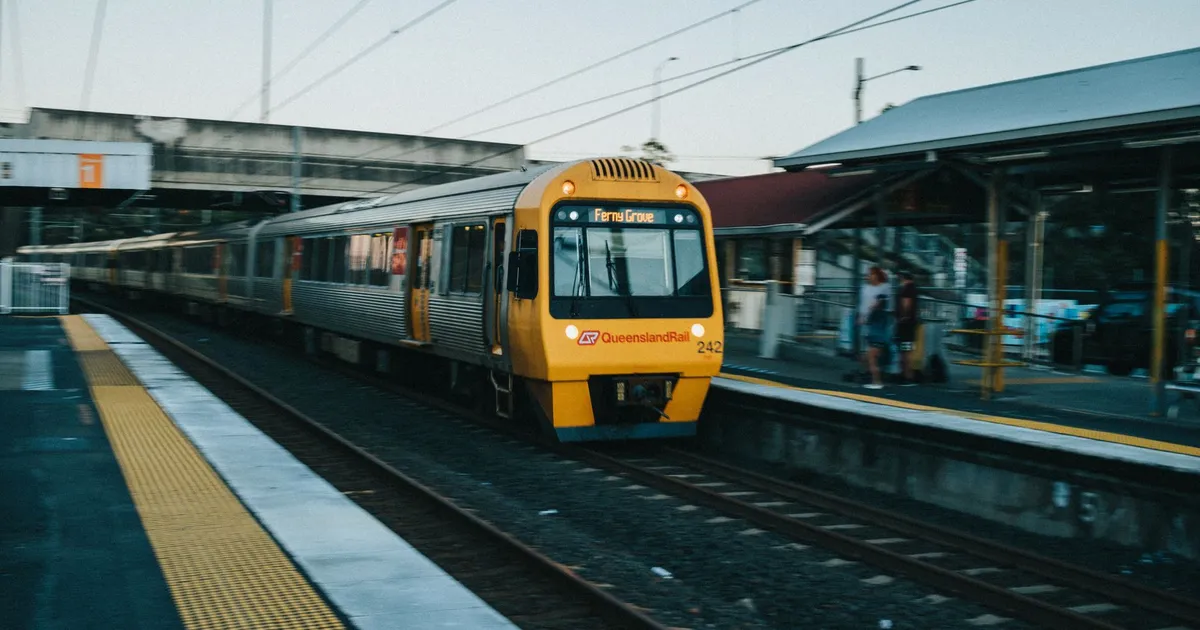
On Sunday the first new train stations in the Auckland region in more than 50 years opened at Drury and Paerātā, restoring passenger rail to the south for the first time since 1972. It is a genuine milestone. It is also expensive. The two stations come in at around $300 million combined, with the full three-station programme, including land and the still-unbuilt Ngākōroa station, running to roughly $450 million.
Each station offers two platforms, 350 car parks and bus connections, with peak trains every 10 minutes towards the city centre. On a straight division that is roughly $150 million per station, in a national land transport programme where every dollar of the $32.9 billion forecast spend involves trade-offs.
On budget, but against which budget?
Rail Minister Winston Peters was emphatic at the opening. “We set aside the money in 2020, and it’s coming in under budget … on time and under budget. That’s great,” he said. It is a good line, and largely true, but it deserves an asterisk. The pre-construction estimate four years ago was $495 million, but that figure covered a narrower scope, two stations and no access roads. The current $450 million covers three stations plus land. KiwiRail concedes the two are not directly comparable, which makes “under budget” a claim resting on shifting foundations.
KiwiRail has also declined to break out individual station costs on commercial sensitivity grounds while contracts remain unsettled. That is legitimate. It also means the public is asked to accept a half-billion-dollar programme without the line-item scrutiny that number ordinarily attracts.
The accountability gap the timing exposes
Six weeks before the ribbon was cut, Massey University researcher Thomas Nash published analysis that lands squarely on this project. He found infrastructure for central-city housing can cost seven times less than comparable development on city fringes, against a national $210 billion infrastructure deficit.
His diagnosis of the governance failure is blunt. “It’s nobody’s job to do it. Nobody owns the outcome of redeveloping and building up around our railway stations,” Nash said, describing responsibility as fragmented across NZTA, councils and private landowners. His conclusion is that New Zealand has the policies and long-term plans but nobody with a dedicated mandate to make them happen.
That is the crux for Drury and Paerātā. The entire economic case rests on around 130,000 more people and more than 40,000 new homes arriving in the corridor over coming decades. If they arrive as low-density lifestyle blocks rather than transit-oriented housing, the per-capita cost of this rail blows out. Nash’s own numbers show the risk is real, with only a quarter of new Auckland homes located within walking distance of rapid transit despite those corridors being priority growth zones.
Who captures the value
The 350 car parks per station tell you something. That is a park-and-ride commuter model, not the dense, walkable development Nash argues is the only way rail investment ever pays for itself. Auckland University urban planning lecturer Tim Welch supports building rail first, but warned rail alone is not enough. “We need good water infrastructure. We need schools. We need healthcare. We need groceries,” he said, or the corridor becomes a bedroom community rather than a place people can actually live.
Here is the harder question for anyone who cares about public spending discipline. The taxpayer funds the stations. Private landowners along the corridor pocket the land-value uplift the stations create. There is no recapture mechanism to claw any of that back. Peters framed the philosophy as “infrastructure must come before growth, not years afterwards”, and signalled ambitions stretching to quadruple tracking and an Avondale-Southdown line in the 2040s. Bold visions. But sequencing infrastructure ahead of growth only works if someone is contractually on the hook for the growth actually turning up.
What happens next
The stations become materially more valuable once the $5.5 billion City Rail Link opens, confirmed as imminent and before the election, connecting the south directly into the city loop. That is the multiplier. But Nash called the CRL itself a “missed opportunity” for the same reason, it was not set up to capture the social and economic return around its stations. Drury and Paerātā risk repeating the pattern. The trains are running on time. Whether the $450 million was money well spent is a question that will not be answered for a decade, and right now nobody has been given the job of making sure the answer is yes.
Sources
- Half-billion-dollar price tag on new rural Auckland train stations (2026-08-02)
- Two new Auckland stations part of $2.4b rail spend (2026-08-02)
- New Drury and Paerātā railway stations open in South Auckland (2026-08-01)
- Why New Zealand should build cities around train stations – report (2026-06-15)
- NZ’s billion-dollar development opportunity to build our cities around public transport (2026-06)
- 2024-27 National Land Transport Programme (2024)