

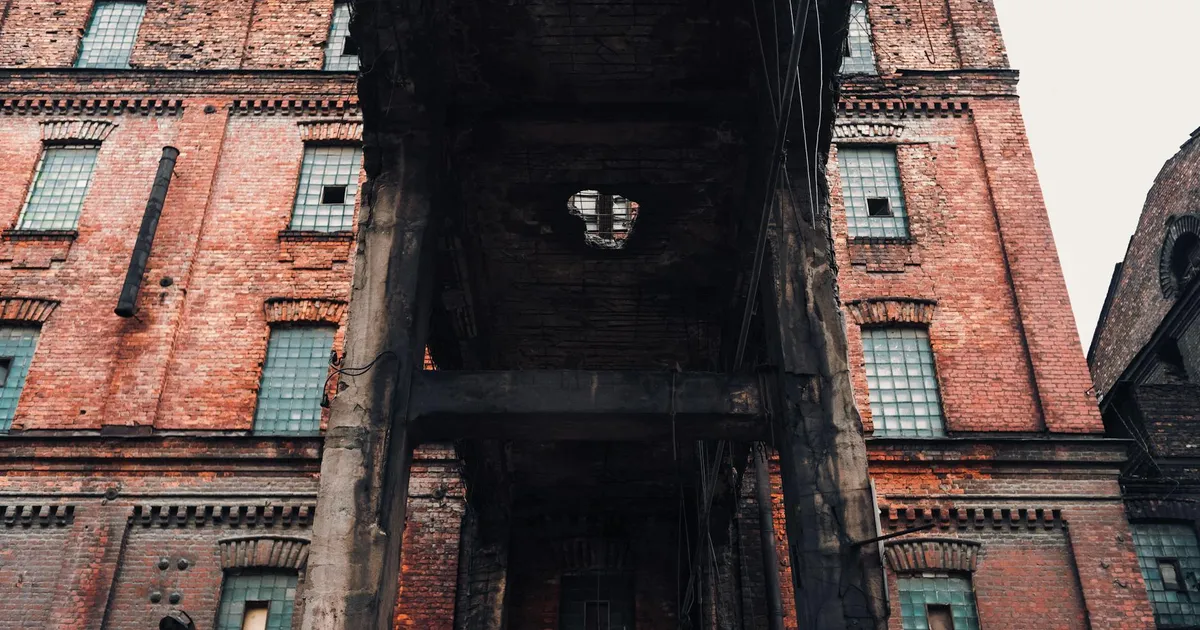
A century-old asset nobody can use
The Bruce Woollen Mill in Milton has been many things since it was built in 1901: a leading manufacturer for over a century, a failed revival project, a liquidation case study, and now a slowly decaying building that nobody can economically touch. It is a near-perfect illustration of how heritage regulation, designed to protect provincial New Zealand’s built history, instead produces the opposite outcome.
The mill’s modern story is one of serial failure. After closing its original operations, it was reopened in 2012 by a consortium including Wool Equities Ltd. By 2015, the venture was reporting a group loss of $890,000, with the Bruce Mill as the biggest contributor. Shareholders voted down proposals to write off a $574,253 interest-bearing loan to the mill. Receivership followed in 2015, then liquidation in March 2016.
When PricewaterhouseCoopers wrapped up the liquidation in October 2020, the picture was bleak. Plant and equipment raised just $350,000 for secured creditors, while nearly $400,000 went to running expenses and fees. A $4.3 million shortfall remained owing to all creditors. Approximately 66 unsecured creditors were left short of $882,042.
The buildings now sit idle. And because the mill dates from 1901, it falls within the automatic protections of the Heritage New Zealand Pouhere Taonga Act 2014, which classifies structures associated with human activity before 1900 as archaeological sites requiring authority before any modification or demolition. The mill’s pre-1900 origins (the original 1897 building burned down, the replacement was built in 1901) place it squarely in the regulatory crosshairs.
The law that stops owners from acting
Milton already has a case study in what happens when heritage rules meet economic reality. In September 2022, McGill’s Flour Mill owner Ezra Eini began demolishing a derelict three-storey brick building built in 1887. Heritage NZ halted the work immediately. The building had been unused for roughly 50 years and was in serious disrepair. Eini’s plan was straightforward provincial redevelopment: relocate car wreckers from the highway frontage and build new construction on the road.
Heritage NZ archaeologist Nikole Wills stated in 2022 that “demolition cannot resume without an archaeological authority.” That authority requires archaeological assessment and recording before any work proceeds, imposing costs and delays regardless of a building’s condition or safety status.
The telling detail came from a heritage advocate, not a developer. Tokomairiro Historical Society’s then-president Nancy Allison acknowledged the building’s poor condition and said “it has been a disaster zone for 20 years.” When the people who want preservation admit a building is a disaster zone, the regulatory framework protecting it deserves scrutiny.
The financial penalty nobody chose
In April 2024, TDB Advisory published analysis of heritage designation impacts on property owners. The documented costs are substantial: a 10-30% decrease in property value, insurance premium increases of 25% or more with higher excesses, and expensive council approval processes for any modification.
TDB Advisory noted that “across the country, councils are increasingly assigning heritage status to homes and buildings against the wishes of property owners” and recommended that “a property may only be added to a Council’s District Plan as heritage-designated with the express written consent of the property owner.”
This is the core economic argument. Heritage designation transfers the cost of a public good onto private property owners. In Auckland or Wellington, where demand is strong, owners can sometimes absorb that cost or find adaptive reuse that works commercially. In Milton, population roughly 2,000, there is no queue of developers with heritage restoration budgets. The economics do not support it.
Provincial towns pay the highest price
The pattern repeats across the lower South Island. In Dunedin, the nearest major centre to Milton, heritage buildings are deteriorating at scale. Owners who cannot meet council demands for heritage-compliant maintenance or earthquake strengthening have, in some cases, simply locked up their buildings and walked away.
This is the mechanism by which heritage rules produce the opposite of preservation. Faced with costs they cannot meet and restrictions they cannot work around, owners do nothing. Buildings decay. Towns get neither a preserved heritage asset nor a productive redeveloped one. They get a ruin.
The Bruce Woollen Mill lost $890,000 a year when operating, left $4.3 million in creditor losses when it closed, and now cannot be sold for redevelopment because the buildings carry heritage protections. TDB Advisory’s recommendation to require owner consent before heritage listing sits with the government’s broader RMA reform agenda. Until that reform arrives, provincial New Zealand will keep accumulating buildings exactly like this one: too old to demolish cheaply, too marginal to restore profitably, and too encumbered to sell. Milton does not have a heritage asset. It has dead capital with a plaque on it.