

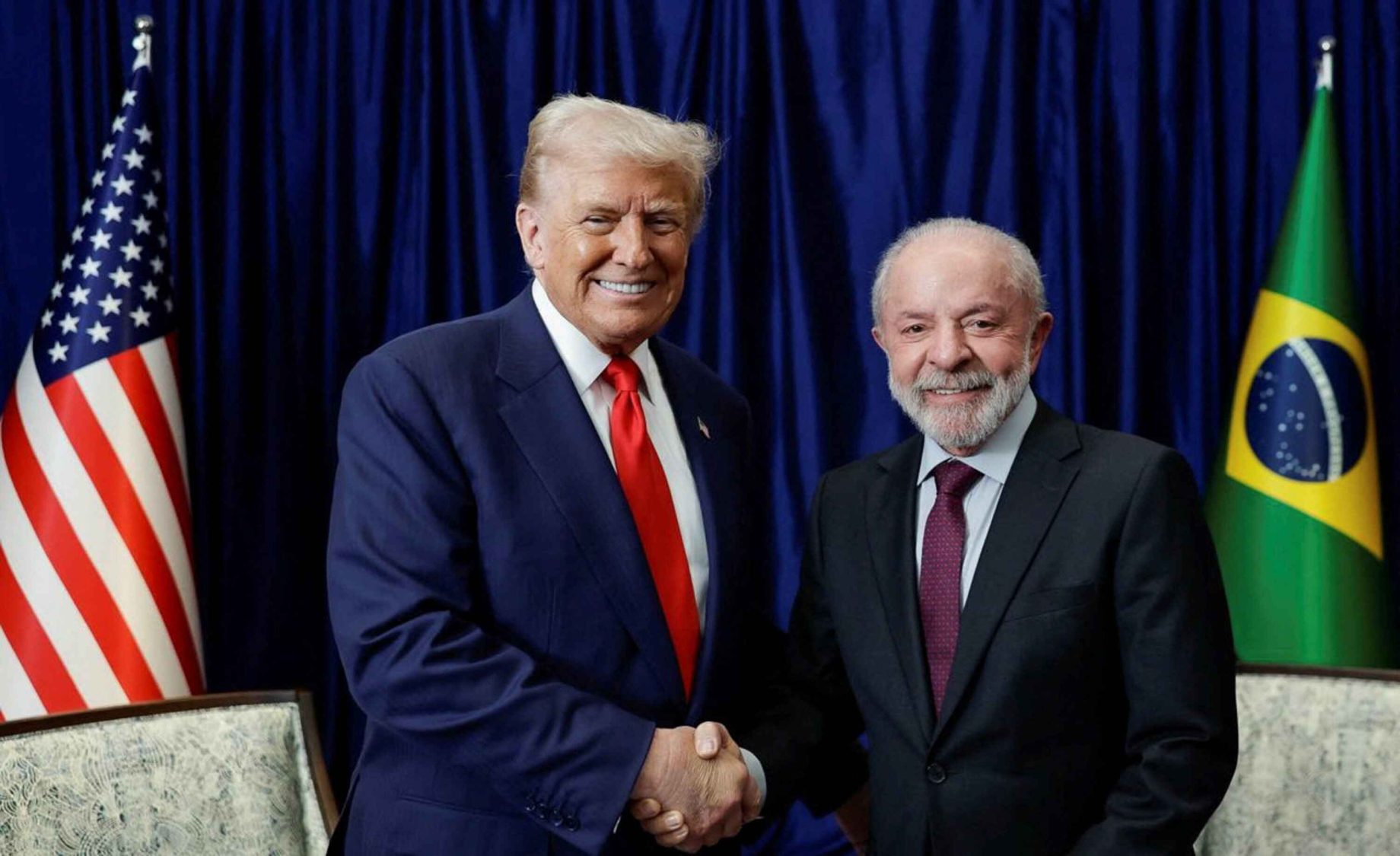
Brazilian President Luiz Inácio Lula da Silva announced a positive exchange with U.S. President Donald Trump on Sunday, with both leaders agreeing that their teams will immediately begin talks to resolve tariff disputes.
The discussion took place during the ASEAN summit in Kuala Lumpur, aiming to ease tensions after the U.S. raised tariffs on most Brazilian imports from 10% to 50% in August.
“We agreed that our teams will meet immediately to advance the search for solutions to the tariffs and sanctions against Brazilian authorities,” Lula posted. Trump linked the tariff hike to a “witch hunt” against former Brazilian President Jair Bolsonaro and sanctioned several officials, including Supreme Court Justice Alexandre de Moraes.
Trump said ahead of the meeting, “I think we should be able to make some pretty good deals for both countries.” Lula had previously called the tariff increase a “mistake,” pointing to the $410 billion U.S. trade surplus with Brazil over 15 years.
Brazil’s Foreign Minister Mauro Vieira confirmed negotiations would start immediately and that Brazil requested a suspension of tariffs during talks, though no U.S. response has been made public. U.S. Treasury Secretary Scott Bessent, Secretary of State Marco Rubio, and Trade Representative Jamieson Greer attended the talks.
Vieira expressed hope that discussions would conclude swiftly: “We hope to conclude bilateral negotiations that address each of the sectors of the current American (tariffs on) Brazil in the near future, in a few weeks.” Bolsonaro was not mentioned during the talks, said Marcio Rosa of Brazil’s ministry of commerce.
U.S. tariffs have already affected global beef markets, increasing U.S. prices and rerouting Brazilian exports through third countries like Mexico, while Brazilian beef exports to China continue to grow.
Brazil’s beef association Abiec welcomed the progress, noting it could preserve Brazilian competitiveness and expand its presence in the U.S. market. Brazilian beef exports earned $1.92 billion in September, a 49% increase in value year-on-year.
Brazil’s coffee industry, represented by ABIC, also expressed optimism about the improved dialogue. “The recent meetings between the presidents of the United States and Brazil have been more positive, and at ABIC we are optimistic,” said president Pavel Cardoso.
This diplomatic engagement marks a hopeful step towards resolving trade disputes that could benefit both economies.