

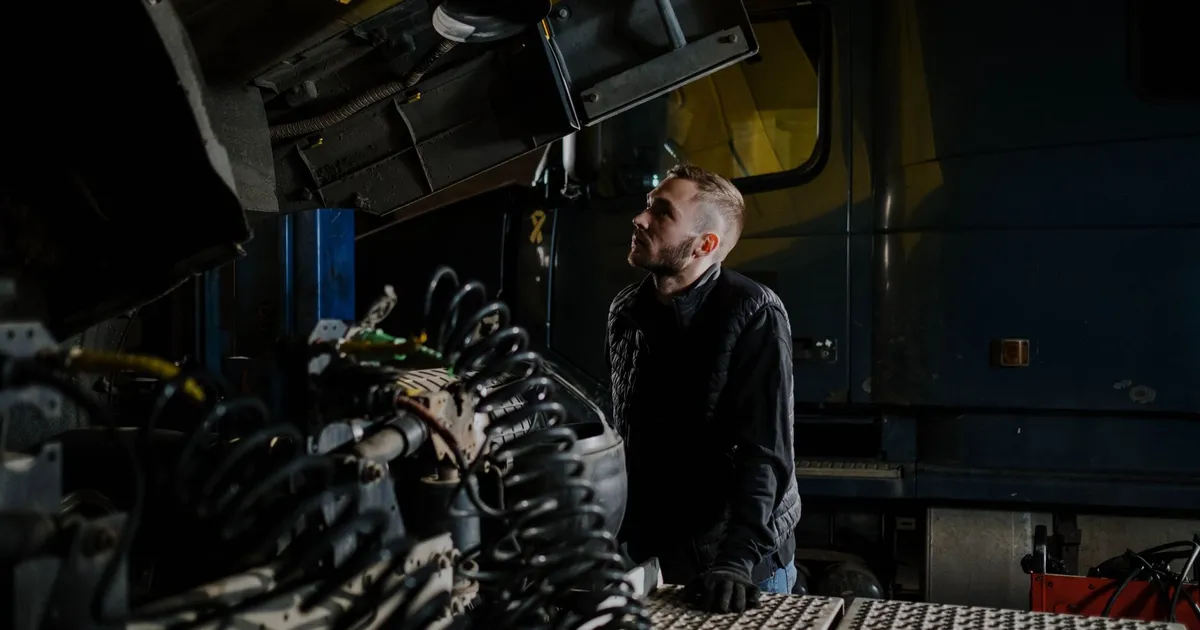
A week-long, round-the-clock Police and NZTA operation at the Bombay Commercial Vehicle Safety Centre in southern Auckland has delivered a blunt message to the freight sector. If your trucks are not maintained, you will be found, fined and parked up.
The Commercial Vehicle Safety Team ran the operation 24/7 over a week in early August, with 22 officers inspecting 520 heavy commercial vehicles. Of 309 inspection reports, 196 resulted in infringement or enforcement action, almost two-thirds. Officers issued 273 infringement notices and 41 formal written warnings, began nine prosecutions and handed out 40 non-operation orders, the green and pink stickers reserved for serious safety defects. Of 92 oral fluid tests, none came back positive for alcohol.
That last figure matters. This is not a story about drunk or reckless drivers. It is a story about brakes, lights, tyres, logbooks and paperwork, the things operators control.
A fully loaded rig with brakes that did not work
The standout case was a pink-stickered truck and trailer combination. “We had one truck and trailer combination that was fully loaded that failed the brake roller test, which basically means the brakes are inefficient,” said Sergeant Gareth Davis of the Commercial Vehicle Safety Team. The vehicle could only be driven to a repair shop. Police also confirmed similar 24/7 operations will be repeated with NZTA.
A heavily laden combination with failing brakes on Auckland’s southern motorway is not an administrative lapse. It is a liability event waiting to happen, and the kind of finding that sends insurers and principal contractors looking hard at who they hire.
The same numbers, year after year
What should worry the industry most is how unsurprising this is. In November 2025, Operation Triangle in the central North Island inspected 910 vehicles and found 165 defects, an 18% defect rate, with 141 infringements from 482 inspection reports. Roller brake testing of 58 vehicles at Turangi and Te Kuiti found 15, or 26%, had faulty brakes. Police noted at the time that many faults, lights, brakes and wheels, would have been caught by a basic daily walk-around check.
Go back to December 2020 and a Police operation on freight moving from Northport to Auckland found almost one in five of 534 trucks unroadworthy, with 11 ordered off the road on the spot. By early 2021, NZTA was investigating 18 trucking companies and threatening licence revocation. In 2018, NZTA suspended a certifying engineer after three trucks were ordered off Auckland roads, with then-chief executive Fergus Gammie warning more suspensions were likely.
Six years, multiple regions, the same pattern. This is not a few cowboys. It is a structural maintenance problem in part of the fleet.
Detection is about to become the default
The difference now is the machinery behind enforcement. NZTA’s Commercial Vehicle Safety Programme is replacing manual weigh-pit checks with a national network of safety centres, where in-road scales and cameras screen passing trucks and divert suspect vehicles for inspection. Auckland’s Stanley Street centre opened in 2025, designed to automatically check certificate of fitness status, road user charges and weight.
Inspection findings also feed the Operator Rating System, so defects accumulate against a company’s record rather than vanishing once a ticket is paid. Back in 2021, Road Transport Forum chief executive Nick Leggett complained that 80 to 90 specialist officers nationwide was not enough to police the sector. Technology is closing that gap without needing hundreds more officers, which is the kind of efficient, targeted enforcement a fiscally careful government should want.
The bill lands on the balance sheet
For operators already absorbing higher fuel, insurance and driver costs, this is not a compliance footnote. A non-operation order means a truck goes to a workshop, not to a customer. Missed delivery windows, idle drivers, hired-in replacement capacity and damaged client relationships cost far more than the infringement itself. Repeat findings drag down an operator rating, inviting more stops and, eventually, licence scrutiny.
There is a genuine upside for the operators doing it properly. Cut-price competitors who skimp on brakes and tyres have been able to undercut on rates while pushing risk onto the public road. Wider, data-led enforcement erodes that advantage. Firms that already budget for maintenance are about to find the playing field tilting their way.
The sensible move is obvious. Treat daily walk-arounds, brake servicing and logbook discipline as a fixed operating cost, audit the fleet before the cameras do, and ask subcontractors for their compliance record. The next Bombay-style operation will not need a week-long roster and 22 officers. It will simply be running every day the centres are switched on.
Sources
- 1News: Hundreds of infringements issued from week-long truck sting (2026-10-21)
- NZ Police: Infringements issued to commercial vehicles in Operation Triangle (2025-11-06)
- RNZ: Northport-Auckland freight, almost one-in-five trucks found unroadworthy (2020-12-15)
- RNZ: Trucking industry says NZTA, police must investigate non-compliant operators (2021-02-19)
- RNZ: Unsafe trucks ordered off the road in Auckland (2018-10-15)
- NZTA: About the Commercial Vehicle Safety Programme (CVSP)
- NZ Trucking: Stanley Street commercial vehicle safety centre opens (2025-04-04)
- NZ Police: Commercial Vehicle Safety Team (CVST)
Join the discussion
Add useful context, ask a good question, or challenge an idea — keep it specific and respectful.