


Australia’s consumer inflation rose notably in October 2025, with the Consumer Price Index (CPI) climbing 3.8% year-on-year—the fastest increase since April and above economists’ expectations of 3.6%.
This was the first full monthly CPI release by the Australian Bureau of Statistics (ABS) as the government transitions from quarterly to monthly inflation reporting, offering a more detailed and timely picture of price movements across all expenditure categories.
The main driver of inflation was the housing sector, rising 5.9% amid higher costs for electricity, rents, and new home construction. Electricity prices surged 37.1% following the expiry of government rebates.
The trimmed mean inflation measure, which excludes volatile items, edged up to 3.3% from 3.2%. Although headline CPI was flat month-on-month in October, it outperformed expectations of a slight decline.
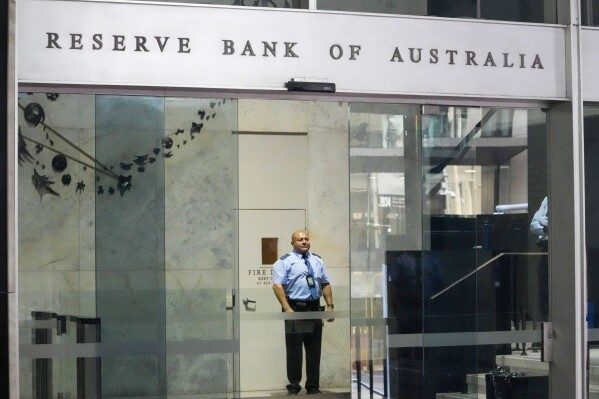
In response, the Reserve Bank of Australia kept interest rates at 3.6% in November. Governor Michele Bullock noted that the current cycle of rate cuts “could be close to an end” with inflation expected above the 2–3% target range well into next year.
“It’s possible that there are no more rate cuts. It’s possible there’s some more. But as I said earlier, we didn’t go as high, so we might not have to come down as far,” she said.
The RBA forecasts headline inflation to peak at 3.7% by mid-2026 before easing towards the target midpoint near the end of 2027. The October data supports continued persistent inflation, likely postponing monetary easing until later in 2026.
Economic indicators remain positive, with business conditions improving to a post-March 2024 high in October. Australia’s economy grew 0.6% quarter-on-quarter in Q2 2025, propelled by household and government spending. The S&P/ASX 200 index rose 0.73% following the inflation data, while the Australian dollar dipped 0.36% against the U.S. dollar. Meanwhile, yields on 10-year government bonds increased by four basis points to 4.474%.
Housing markets are expected to continue pushing inflation higher, with projections of further price rises into 2026, intensifying affordability pressures already reflected in inflationary trends.