

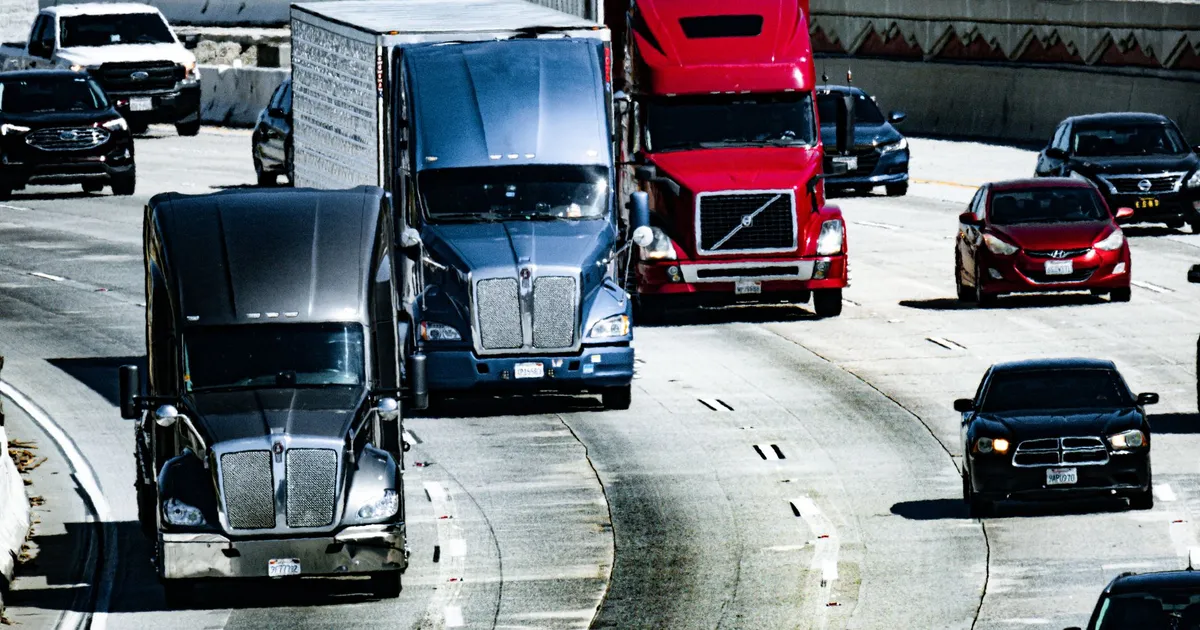
A $2.6 billion problem with an unpopular fix
Auckland’s congestion is not in dispute. Auckland Transport’s own numbers put the annual cost at $2.6 billion by 2026, split between $1.9 billion in core social costs and $707 million in wider economic drag. Aucklanders collectively lose 29 million hours a year sitting in traffic, and an average weekday motorway trip now takes almost 10% longer than four years ago. AT programme director Graeme Gunthorpe noted in January 2026 that peak commuters lose about 66 hours each year to the crawl.
So the case for doing something is airtight. The case for the specific something now on the table is much shakier.
What the new strategy actually does
The joint NZTA and Auckland Council motorway strategy published on 21 August 2026 does not introduce charges. It identifies congestion pricing and adaptive motorways as potential tools for the next 30-plus years. The legal machinery already exists: the Land Transport Management (Time of Use Charging) Amendment Act passed in November 2025 and takes effect on 18 November 2026. It is enabling legislation, allowing regulations to set vehicle classes and charge ratios, but it imposes nothing on its own.
AA policy director Martin Glynn told 1News the central city corridor linking the southern, northern and northwestern motorways is the most likely candidate, with a charge the AA understands would be “quite high at peak times”, somewhere between $5 and $7. A well-designed scheme could shave 13,900 hours per day off Auckland’s collective travel time.
Auckland is not Singapore
The cheerful international comparisons don’t hold. Singapore and Stockholm cut traffic 30 to 50% with congestion pricing, but both charge for access to dense city cores served by high-frequency rail. Auckland’s congestion sits on the motorway, and its bus-dependent public transport is poorly suited to the cross-regional, suburb-to-suburb trips that fill those lanes.
Glynn called charging Auckland’s motorway “unprecedented” and was blunt about the risk: “There aren’t as many alternatives for people on the motorway network… People are pretty wedded to their motorway trips, and it’s often the only way they’ve got to get to work or education.” University of Auckland geographer Dr Hyesop Shin warned in January 2026 that modelling showed drivers rerouting to dodge a cordon, creating fresh bottlenecks and pushing traffic onto roads never built for it.
The political trap in one survey
An AA survey of 2,300 members captures the bind exactly. 87% call congestion a major or moderate problem, yet 85% fear it would make travel unaffordable for some and fewer than 20% think it’s the only realistic fix.
But support flips under conditions: 84% would back it if travel times demonstrably improved, and 89% if every dollar was reinvested in transport. Those are precisely the things the scheme cannot guarantee at launch, and the enabling legislation does not require revenue to fund public transport alternatives. That is the double-payment problem stated plainly: motorists have already funded these roads through fuel tax, road user charges and rates, and are now asked to pay again for access to infrastructure that visibly underperforms.
What it means for freight and business
For businesses this is not an abstract commuter debate. Trades, field services and freight operators run mobile workforces whose lost hours are a direct cost. Freight is worse: proposals to charge trucks at multiples of the car rate would function as a tax on goods movement, and hauliers cannot shift to off-peak because their timing is set by customers. That overhead flows straight through to retailers, distributors and construction firms running just-in-time delivery, with no offsetting gain unless travel times actually fall.
The City Rail Link opening within weeks of the strategy will help some CBD-bound trips, but it does nothing for South-to-North Shore or West-to-Manukau journeys that dominate motorway demand.
The narrow window
With the legislation live in November 2026 and an election looming, the design window is tight. Emeritus Professor Tim Hazledine argued in November 2023 that pricing congestion externalities is economically efficient and could raise roughly $500 million a year. The economics are sound. But a badly designed scheme that fails to move traffic while adding a per-trip cost would confirm every driver’s suspicion that they are paying twice for nothing, and poison congestion pricing in New Zealand for a generation. Get it wrong once and there is no second attempt.
Sources
- Motorway congestion: How would overhaul impact drivers? (2026-08-21)
- Auckland congestion charge: AA survey finds drivers wary but open if it works (2026-08-21)
- Congestion charges could help Auckland – but only if alternatives exist (2026-01-23)
- Auckland’s Cost of Congestion (White Paper) (2025-01)
- Auckland Time of Use Charging programme update (2025-07)
- The true costs of road congestion (2023-11-30)
Join the discussion
Add useful context, ask a good question, or challenge an idea — keep it specific and respectful.