

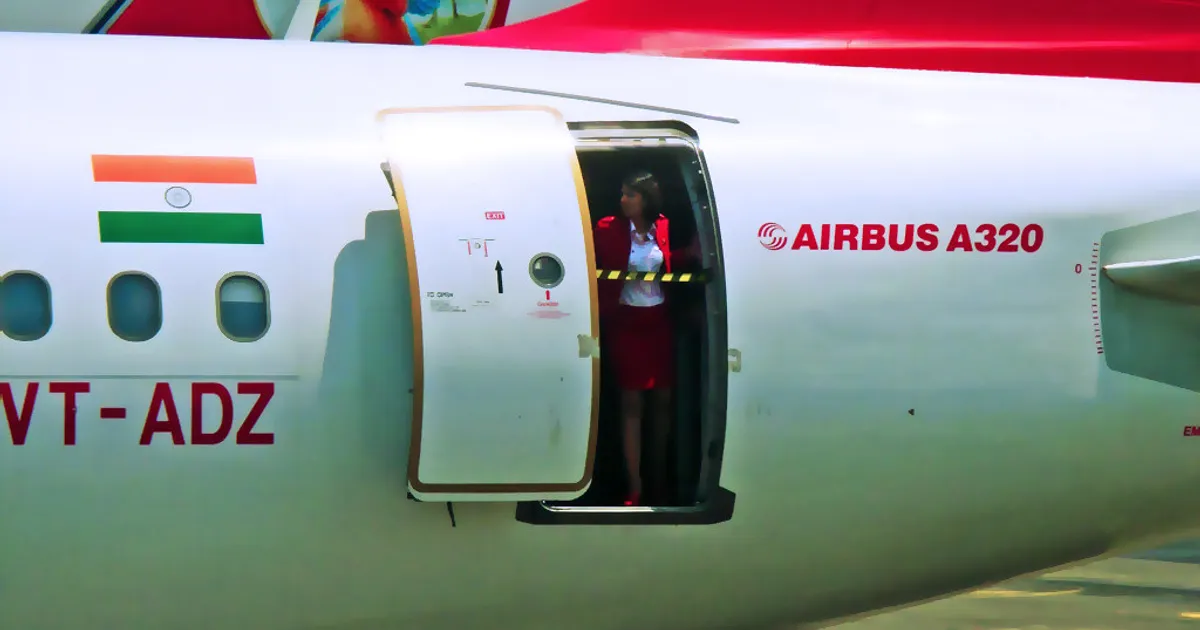
Campbell Wilson’s departure from Air India is being dressed up as a graceful handover. It was anything but. The Christchurch-born executive resigned in April 2026, roughly 15 months before his contract was due to expire, calling it a “natural juncture” in a letter to staff. The Financial Times reported the resignation came as a surprise to those close to the airline, though Tata Group had already begun searching for a successor earlier in 2026. Read into that what you will.
What Wilson left behind is an airline that, four years after its celebrated privatisation, remains deeply in the red, operationally troubled, and now leaderless at the worst possible moment.
A billion dollars in losses and counting
Air India and Air India Express lost US$1.05 billion (NZ$1.74 billion) in the 2024-25 financial year. The Tata Group bought the airline from the Indian government in early 2022 with a clear thesis: private capital and professional management could fix what decades of state ownership could not. Wilson, who had run Singapore Airlines’ low-cost subsidiary Scoot, was the man hired to execute it.
The money was never the problem. Tata committed to a $400 million cabin retrofit programme and one of the largest aircraft orders in commercial aviation history. Wilson launched the Vihaan.AI transformation plan, merged Vistara into Air India to create a stronger full-service carrier, and brought Singapore Airlines in as a 25.1% shareholder. On paper, the ingredients were all there.
In practice, the retrofit programme is running up to two years behind schedule. Aircraft delivery delays and refurbishment issues hit service quality on long-haul European and North American routes. Global supply chain disruptions, engine shortages, and Boeing and Airbus delivery bottlenecks hit Air India particularly hard given the ambition of its fleet renewal.
Then came the crash
On 12 June 2025, an Air India Boeing 787-8 crashed after takeoff from Ahmedabad bound for London Gatwick, killing 241 people. India’s aviation regulator, the DGCA, subsequently identified over 80 regulatory lapses at the airline, including flying aircraft without airworthiness certificates and operating planes without emergency equipment checks. The DGCA issued show-cause notices to senior officials including Wilson.
Wilson then made it worse. He faced criticism for a post-crash speech that contained passages nearly identical to one delivered by American Airlines CEO Robert Isom after a separate fatal crash months earlier. Government officials reportedly began bypassing Wilson to engage directly with Tata Group chairman N. Chandrasekaran. When a CEO loses the confidence of both the regulator and the government, the contract expiry date becomes academic.
Credit where it is due
Fair accounting matters. Aviation analyst Brendan Sobie told Reuters: “Over the last four years, Campbell did a good job in very tough circumstances.” The Vistara merger was complex and executed smoothly. The airline briefly outpaced market leader IndiGo on select metro routes. The structural groundwork was real.
But CAPA, the Centre for Aviation, notes a broader pattern: both Wilson and IndiGo CEO Pieter Elbers were hired from overseas carriers in 2022, and both are now gone. “Public opinion can turn quickly against executives brought in from overseas carriers,” CAPA observed. For any foreign executive leading a nationally significant Indian institution, the structural headwinds are fierce.
Why New Zealand should care
This is not just a profile piece about a Kiwi abroad. Air India’s international expansion plans, under the Vihaan.AI strategy, included new long-haul markets. Direct India-NZ connectivity has been discussed for years, and India is a growing inbound market. International visitor arrivals to New Zealand grew 12% in the year to December 2024, with total spending up 23% and median spend per visitor reaching $2,764.
Leadership instability at this juncture typically means international route planning gets deprioritised while a new CEO finds their feet. Sobie warned that “finding the right candidate to complete Air India’s transformation will not be easy.” For NZ businesses in tourism, education, and professional services that have been waiting for direct India connectivity, Wilson’s departure adds another 12 to 18 months of strategic drift to an already delayed programme.
The Tata acquisition was supposed to prove that deep pockets, clear strategy, and experienced management could overcome decades of institutional dysfunction. Four years later, the capital was there, the strategic intent was there, and a capable international executive was there. It was not enough. That is a lesson that travels well beyond aviation.
Sources
- NZ Herald: New Zealander Campbell Wilson resigns as Air India chief executive (2026-04-07)
- LiveMint: Fifth day of a test match – Air India chief on fleet overhaul as retrofit runs two years late (2026-02-07)
- Hindustan Times: Tata Group starts hunt for Campbell Wilson’s Air India successor (2026-01-06)
- Tribune India: Air India in turmoil – Why did CEO Campbell Wilson resign? (2026-04-07)
- Aviation A2Z: New Zealand-Born Air India CEO Resigns, But Why? (2026-04-07)
- CAPA: Foreign leadership at a crossroads – IndiGo and Air India face a pivotal succession test (2026-04)
- MBIE: International Visitor Survey – Year end December 2024 (2025-03-04)