

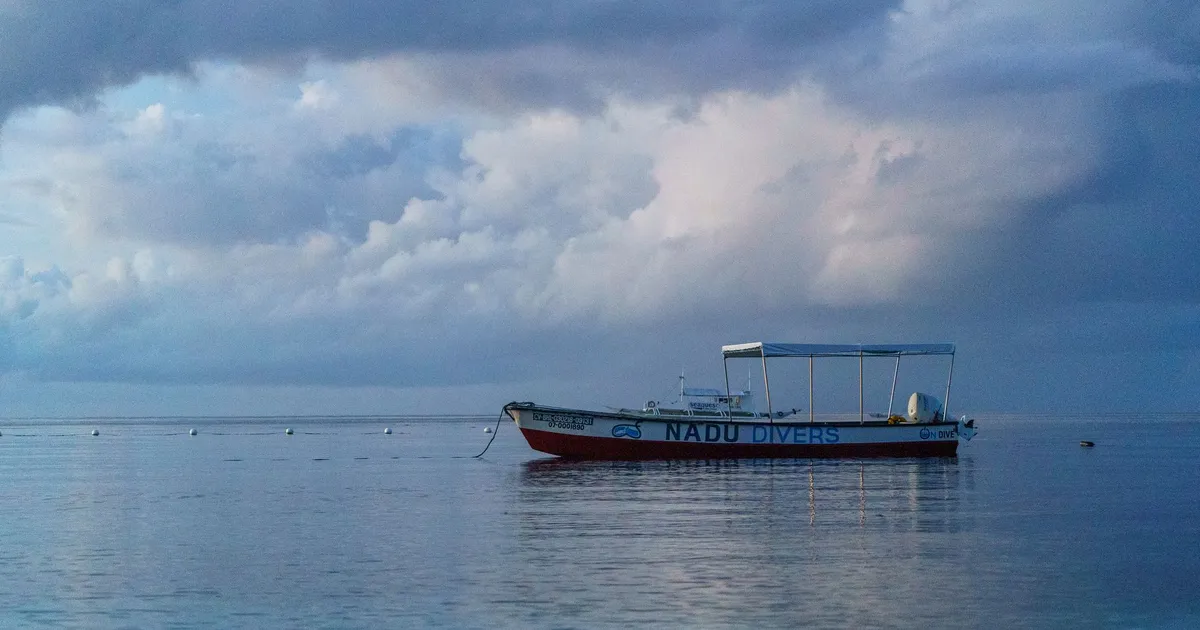
Auckland dive operator Neil Bennett won his case against Maritime NZ. It took six years. A judge has dismissed the prosecution over a December 2019 accident, and Bennett, the company director and skipper, is now seeking compensation for the financial and emotional losses of defending it.
That is the problem in one sentence. A regulator can lose and the defendant still pays. For a small operator, the process is the penalty, and nobody in the system is accountable for how long it runs.
A rogue wave and a broken back
None of this diminishes what happened. The commercial dive boat Midnight Diver was hit by a rogue wave crossing the Mangawhai bar, throwing a female passenger from her seat on a pontoon. She fractured a vertebra and suffered two prolapsed discs, injuries Judge Evangelos Thomas noted have left her with ongoing physical consequences, according to the Herald.
A serious injury on a commercial vessel warrants investigation. What it does not warrant is a prosecution that drifts for six years. Discovery revealed a witness lined up for the prosecution had told investigators he couldn’t remember what happened on the day, “but I’ll make stuff up if needed”. Bennett maintains he did nothing wrong.
That a regulator carried a case that far with a witness volunteering to invent evidence should worry anyone who runs a business under its jurisdiction.
Maritime NZ normally moves faster than this
The agency’s own numbers make the Bennett case look like a serious outlier. In its 2023/24 annual report, Maritime NZ said it opened 100 investigations, concluded 52, and that every active prosecution at year-end had been concluded within 12 months of being opened. In its 2024/25 report, it opened 53 investigations, closed 102 and had 32 active prosecutions at year-end, though that year carried no equivalent 12-month claim.
A 2024 Official Information Act response also described a generally 12-month limitation window for incidents, and a formal Compliance Intervention Panel that decides whether to prosecute at all. The machinery exists to filter weak cases early. Against a benchmark of roughly a year, this one ran about six times longer before collapsing.
When the regulator gets it right
This is not an argument against maritime enforcement. When operators genuinely fail, Maritime NZ has secured proportionate outcomes. In August 2026, Cascade Charters was ordered to pay $25,000 in fines, $130,362.49 in reparation and $60,000 towards prosecution costs after passengers were thrown overboard, including a 79-year-old who spent two days in intensive care with hypothermia.
Back in 2021, after a trawler sinking killed three crew, the High Court ordered Ocean Fisheries to pay a total of $783,325.25 in reparation and fines. Those are real consequences for real failures.
But look at the asymmetry. Even in that win, the court in 2022 awarded Maritime NZ just $4,000 plus $716.34 in disbursements against the $9,081.34 it sought. Courts scrutinise what a winning regulator can recover. What a losing regulator owes a cleared defendant for six years of legal bills, lost work and reputational damage is a far murkier question, and that is exactly what Bennett is now testing.
The bar for operators keeps rising
The stakes for owners are climbing. Gibson v Maritime NZ is, in the words of Reuben Brooker, principal consultant at Health and Safety Consultants Auckland, the first time “a regulator has successfully prosecuted a senior individual, not just the company”. He says regulators now have “a proven pathway to go after the person at the top”.
The EMA warns that health and safety “is no longer judged on effort or intention; it is judged on effectiveness”. Fair enough. But law firm McElroys flags the other side of that ledger, noting prosecutors must particularise the steps they allege a defendant failed to take “to fully and fairly inform the defendant”.
That is the right standard, and it cuts both ways. If owners must prove their systems work, regulators should have to show early, with evidence that holds up, that a case is worth bringing.
What happens next
Bennett’s compensation claim will test whether a cleared operator can be made whole. Business owners should watch closely. A one-boat dive company does not have a compliance department or a litigation budget, and six years of uncertainty can sink it without any court finding it at fault.
The fix is not weaker enforcement. It is accountability for delay: firm timeframes, earlier scrutiny of weak evidence, and a realistic path to costs when the Crown loses. Until then, the most powerful sanction a regulator holds is not a fine. It is time.
Sources
- NZ Herald: Diving skipper seeks compensation after six-year Maritime NZ case dismissed (2026-10-04)
- Maritime New Zealand: Annual Report 2023/24 (2023-2024)
- Maritime New Zealand: Annual Report 2024/25 (2024-2025)
- FYI.org.nz: Maritime NZ Official Information Act decision letter (2024-04-22)
- RNZ: Charter company to pay fine and reparations after passengers thrown overboard on fishing charter (2026-08-09)
- Health and Safety Consultants Auckland: The Gibson verdict, NZ’s first CEO health and safety conviction (2026-08-31)
- EMA: What Gibson v Maritime NZ means for business leaders (2026-05-20)
- McElroys: HSWA officer duties (2026-05-01)
Join the discussion
Add useful context, ask a good question, or challenge an idea — keep it specific and respectful.