

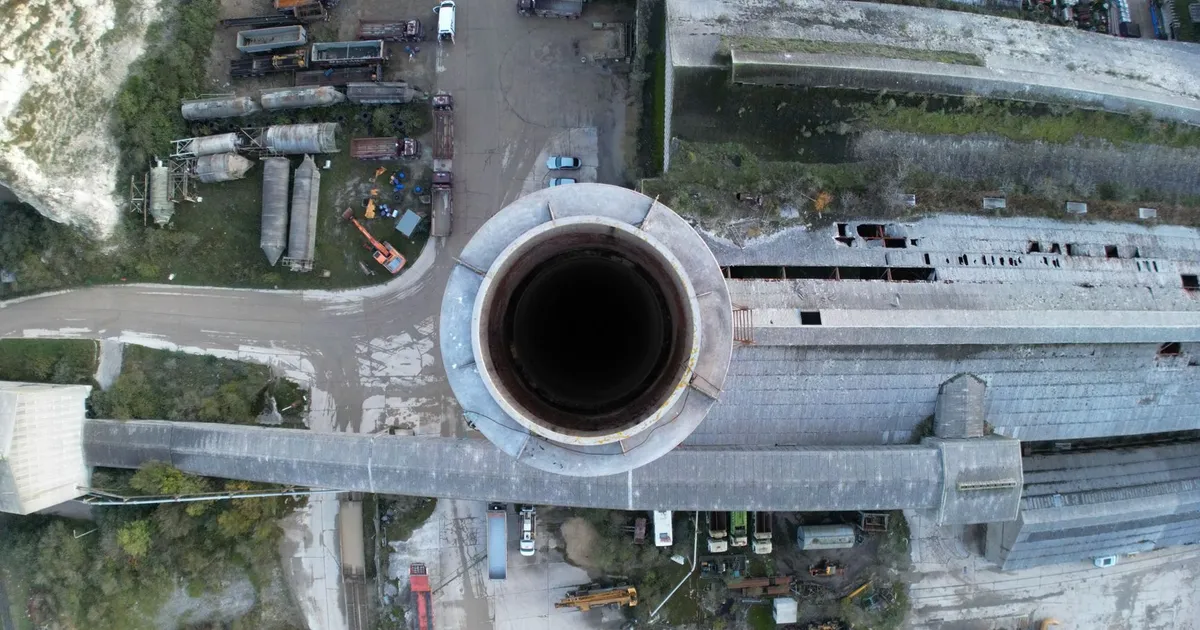
The government’s $60 million lifeline for Fletcher Building’s Golden Bay Cement was never sold as easy. It was sold as exceptional. Official documents now show that Cabinet’s own economic and regulatory agencies didn’t buy that framing. Treasury, the Ministry of Foreign Affairs, MBIE and the Ministry for the Environment all favoured inaction, and their central worry was the one critics raised in July. Pay one firm and others will line up.
That changes the story. This is no longer commentators speculating about floodgates. It is the formal advice of the agencies best placed to judge the risk, set aside by ministers.
Officials agreed on the problem, not the fix
The awkward part for opponents of the deal is that officials accepted the underlying diagnosis. Both the agencies and independent Deloitte analysis acknowledged the ETS punishes domestic cement production because overseas competitors don’t pay the same carbon costs. Fletcher’s Northland plant is now the country’s only domestic manufacturer, supplying around 60% of New Zealand’s cement.
They still said no. Propping up an emissions-heavy operation, officials warned, would likely create expectations of similar concessions across other companies and industries. The Ministry for the Environment described its position as an on-balance judgment and conceded a different weighting could produce a different answer. Only the Ministry for Regulation did not oppose intervention.
Ministers saw the conga line and chose it anyway
In July, Economic Growth Minister Nicola Willis said the government had weighed the precedent risk and concluded this was “an exceptional case, which meets the very high bar needed to justify taxpayer support.”
The irony is that ministers used the precedent argument themselves, just aimed elsewhere. Willis said at the time that changing the ETS was rejected partly because it could “create a conga line of others asking for exceptions.” Officials simply applied the same logic to a cash grant. A cheque to a listed company is no less visible to the next lobbyist than an ETS carve-out.
Newstalk ZB’s Nick Mills put the question bluntly in July: “where does it stop? What about every other manufacturer battling high energy prices?” Steel, wood processing and food manufacturing now have a documented template, and it shows that four agencies saying no is not the end of the conversation.
Not the first subsidy either
The “one-off” framing sits uneasily with the numbers. BusinessDesk reported in July that Fletcher already received 488,575 free NZUs in 2024 under industrial allocation, down from 663,120 in 2022. At roughly $56 a unit, the 2024 allocation alone was worth about $27 million. The $60 million sits on top of an existing carbon subsidy, which is why critics called it “yet another subsidy.”
NZ Initiative chief economist Dr Eric Crampton said in July the deal was “a mess” that patched rather than fixed the flaw in how industrial allocation works. The Herald’s Kate MacNamara made the same point at the time, noting Golden Bay can’t compete with imports from Vietnam and Japan that don’t carry equivalent carbon costs. That design problem remains exactly where it was.
The case for the defence
The deal is not a pure handout. Fletcher committed at least $150 million of its own capital into the plant through to 2040, with claw-back provisions if targets are missed. ACT, the EMA and union E tū all backed it, and RNZ’s Corin Dann framed it as part of a recognition that New Zealand must be smarter about self-reliance amid oil shocks and Trump tariffs.
The EMA went further in July, calling it a possible “Road to Damascus moment” and pushing for a critical industry framework modelled on Australia’s sovereign capability approach. Losing the only domestic cement supply would leave construction exposed to shipping shocks, and that is a legitimate concern.
But a strategic argument needs a strategic framework. Right now there is one plant, one cheque and a ministerial assurance that the bar is very high. That is not policy, it is discretion.
What business should watch
The disclosure hands every emissions-intensive exporter and import-competing manufacturer a lobbying brief. If cement qualifies despite Treasury’s objections, the next firm facing carbon leakage will ask why it doesn’t. Ministers have two credible options. They can publish clear, narrow criteria for what counts as critical, or fix the ETS allocation design that created the problem. Doing neither guarantees that the queue officials warned about forms outside the Beehive, one bespoke deal at a time.
Sources
- NZ Herald: Fletcher Building cement plant: Officials advised against $60m Government help (2026-09-29)
- RNZ: Government moves to keep cement production in NZ with up to $60m in financial support (2026-07-20)
- interest.co.nz: Behind the $60m cement deal: Self-reliance over ETS exception (2026-07-21)
- Newstalk ZB: Nick Mills: The Government’s $60 million hand out will open the flood gates (2026-07-21)
- BusinessDesk: Fletcher Building’s $60m cement lifeline dubbed yet another subsidy (2026-07-29)
- Newstalk ZB: NZ Initiative Chief Economist on Government’s $60m cement plant bailout (2026-07-20)
- NZ Herald: Government’s $60m handout for Fletcher Building’s NZ cement production is a quick fix, but not a good one (2026-07-21)
- RNZ: Finance Minister Nicola Willis had little option but to protect local cement supply (2026-07-21)
- The Post: Is the Golden Bay Cement bailout NZ’s Road to Damascus moment on manufacturing? (2026-07-25)
Join the discussion
Add useful context, ask a good question, or challenge an idea — keep it specific and respectful.