

A decision that ran out of runway
The government’s plan to sign a contract for a billion-dollar LNG import terminal before the November 7 election is dead. On 24 September, Associate Energy Minister Shane Jones told Mike Hosking the coalition still agrees gas should be the energy buffer, but that “Father Time has snatched the opportunity away, because for the next six weeks people need to concentrate on the election.”
That framing, an inevitable casualty of the calendar, papers over what actually happened. The day before, both minor coalition partners moved to kill the timeline. ACT leader and Deputy Prime Minister David Seymour declared it “irresponsible” to sign a contract before polling day. NZ First leader Winston Peters confirmed that “no contract is going to be signed before the election” and that “the Cabinet position was not to make a decision today.”
Energy Minister Simeon Brown, who as recently as 16 September was insisting that “the Government is the Government until the election” and would deliver on its commitment, retreated to the line that “ultimately the process will, to some extent, dictate the timing.” When the responsible minister goes from certainty to process-speak in eight days, the coalition, not the calendar, is the story.
What the terminal was meant to fix
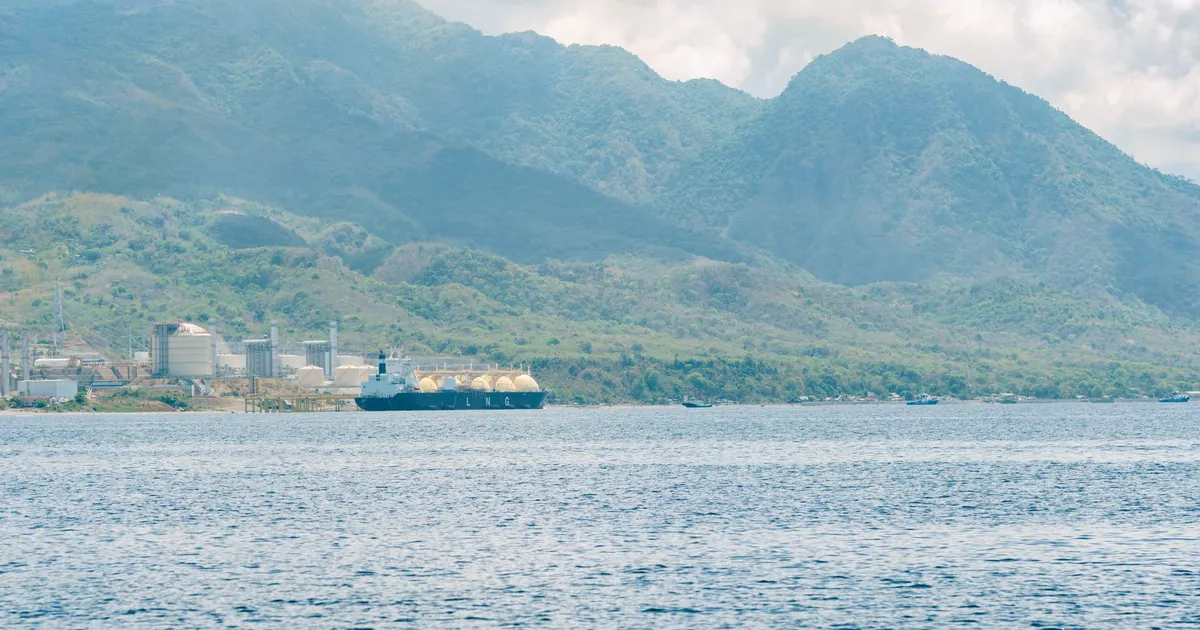
The project is a floating storage and regasification unit moored at Port Taranaki, essentially a specialised ship that turns imported LNG back into gas. Two providers had been shortlisted, both proposing FSRU solutions. It was designed as a backstop for gas-fired electricity generation in dry years, when hydro lakes run low and domestic gas production, from fields all in structural decline, falls short. The terminal was expected to cost at least $1 billion and be operational by mid-2028.
The cost of not having it is not theoretical. MBIE data puts the dry-year hit to the economy at $5.2 billion in GDP in 2025 alone, with household spending down 1.65%, real wages down 1.4%, and $275 million knocked off the trade balance. A risk premium of $30 to $50/MWh is currently baked into forward wholesale electricity prices.
The signal that already delivered
Here is the part that makes the delay genuinely expensive. The government’s mere commitment to LNG had already moved the market. Forward wholesale prices for 2028/2029 had fallen by $20/MWh, a shift MBIE valued at roughly $800 million a year and about $140 a year off the average household power bill. That gain came before a single contract was signed, driven entirely by the market believing the backstop was coming.
That belief is now fragile. If traders conclude the terminal lacks durable political backing, the $20/MWh gain can unwind as quickly as it appeared. Confidence is the whole asset here, and confidence is precisely what an unresolved procurement heading into a coalition-negotiation election destroys.
The legislation that was never written
The procurement was already awkward. Cabinet had agreed fast-track consenting would not be enough and that a dedicated Enabling Liquefied Natural Gas Bill was needed. That bill was never introduced, and Attorney-General Chris Bishop confirmed no legislation would pass before Parliament rose.
Brown’s camp argued signing first was actually the responsible sequence “because the legislation can then be written for a known facility in a known location.” Karen Boyes, chief executive of the Major Electricity Users Group, said it would “seem sensible to sign the contract and pass the legislation in tandem.” That logic needed the coalition to agree. It did not.
NZ First had been hedging for weeks. Jones had earlier called the project “very tricky” and said the party was “not as yet fully committed to the investment.” The government also had to back down on a levy on power companies to fund the terminal, a mechanism that had raised awkward questions against National’s no-new-taxes pledge.
Where this leaves business
Brown pointed to Genesis Energy’s gas contracts running from March 2027 to December 2029 as offering “some relief.” But that is one generator’s commercial deal, not a system-wide backstop, and it does not replicate what the terminal was for.
The practical result is that the 2028 target is now effectively unreachable, the enabling bill must clear a Parliament that does not yet exist, and any revival requires either the current coalition to reconstitute and prioritise it, or a Labour-led government to adopt a policy it has never endorsed. Heavy industrial users and electricity-intensive manufacturers are back to operating without a credible medium-term supply backstop. The government’s answer to a $5.2 billion problem just moved, at best, a year further away, and possibly much further.
Sources
- Election campaigning seemingly puts LNG import terminal decision on hold (2026-09-24)
- Decision on LNG terminal delayed (2026-09-23)
- Act leader David Seymour kiboshes pre-election LNG terminal decision: ‘irresponsible’ (2026-09-23)
- LNG contract could be signed before law is passed to build the terminal (2026-09-17)
- Shane Jones suggests LNG terminal would be ‘very tricky’ project (2026-09-22)
- Simeon Brown says LNG contract will be signed before election despite Opposition protests (2026-09-16)
Join the discussion
Add useful context, ask a good question, or challenge an idea — keep it specific and respectful.