

Private capital made its call
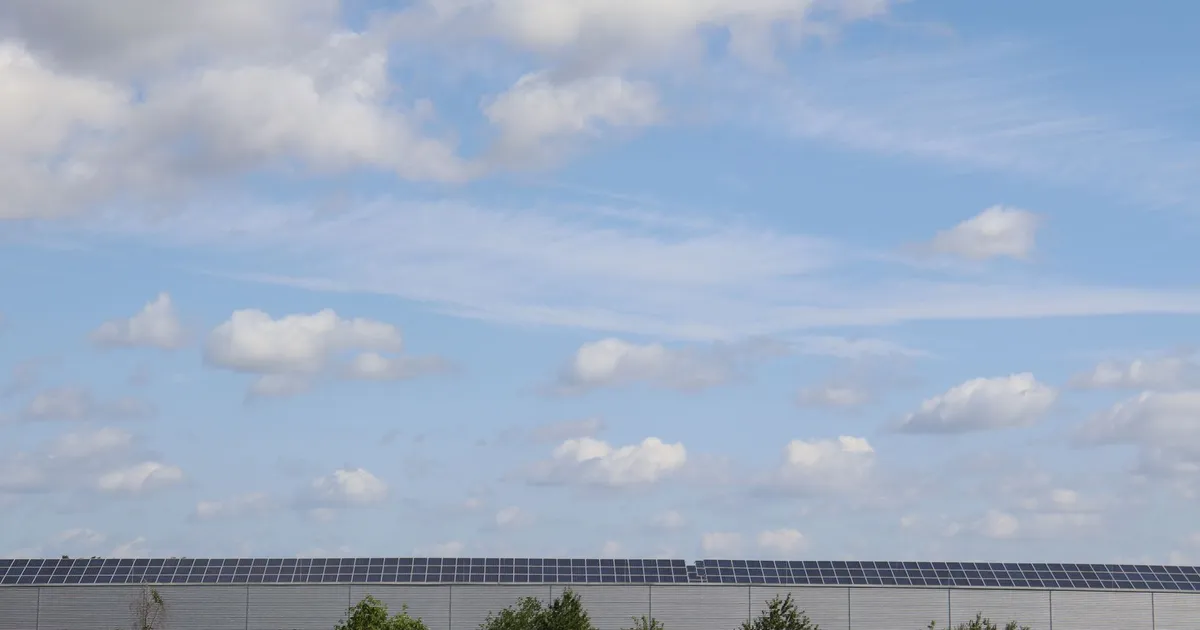
New Zealand’s behind-the-meter solar hit 1,000 MW of installed capacity in May 2026, a fivefold jump since January 2022, backed by $2 billion of private investment. Of that total, around 450 MW sits on residential rooftops and the rest is commercial and industrial. This is generation infrastructure the country needs, funded without a cent of taxpayer subsidy.
The trajectory is steep. MBIE’s data shows solar PV capacity grew 51 percent from 2023 to 2024, with residential solar alone rising 29 percent over 2024, from 251 MW to 323 MW. Renewables now supply a record 45.5 percent of the country’s total primary energy. The market has spoken. The regulatory system is the laggard.
Six sign-offs, five site visits, four entities
The rules were not built for this. A July 2026 Ministry for Regulation review found that installing a small-scale system can require up to six different sign-offs, five site visits and approval from four different entities before the panels can even be switched on. The problem is systemic. Regulation spans building consents, planning rules, network connections, metering and inspection, each governed by a different body with different rules, unclear requirements and unpredictable timelines.
The result is a lottery. As RNZ reported in July 2026, one homeowner watched his daughter and son-in-law wait around seven weeks on red tape, while he was connected within 48 hours because his installer did preparatory work. Same system, wildly different outcomes depending on location and luck.
Minister for Regulation David Seymour published 15 recommendations to fix it, including amending the Building Act, creating nationally consistent resource management rules and standardising connection procedures. The Ministry’s own analysis puts the package at $28 million in net benefits over 10 years under a conservative scenario, rising to around $50 million if the reforms drive extra installations.
The economics are not in doubt
Solar industry policy director Dave Karl said the recommendations would “unlock choice for more than 90 percent of households to get solar on board”. Consumer NZ’s power switch manager Paul Fuge noted installations typically pay themselves back in under a decade, with grid power running at 35 to 40 cents per kWh against solar’s roughly 15 cents including capital. For any business under a large roof, that spread is the whole argument.
The debate is looking at the wrong roofs
Most public attention has landed on households, but the best returns sit elsewhere. Writing in the NZ Herald, John Harman argued the strongest economic benefits are in businesses with large roof areas and heavy daytime use such as farms, cool stores, factories, warehouses and shopping centres. Commercial operators running through the day are ideally placed to match generation to consumption, which is where solar economics are sharpest.
Harman’s diagnosis of what blocks these projects is blunt. “Too many viable projects are slowed or constrained by connection requirements and limits on how much power can be exported,” he wrote, adding that access to low-cost, long-term finance for commercial and rural solar would change the equation.
The pricing fight and the stability warning
Beyond installation lies a separate battle over how lines companies price network access for distributed generation. The Business and Economic Council, in a May 2026 submission, backed reforms to strengthen cost-reflective pricing and reduce cross-subsidisation, while calling for clear guidance and adequate transition periods. Electricity Networks Aotearoa, the lines companies’ body, submitted in November 2025 that it supports consumers maximising the value of their investments but warned against rushing dynamic export limits.
There is a harder warning underneath all of this. A July 2026 watchdog review flagged “catastrophic consequences” if the sector cannot adapt to an expected tenfold increase in solar over three years, with Transpower and the Electricity Authority admitting their “apprehension and uncertainty” about managing grid stability.
The $2 billion already committed proves the private sector has decided distributed solar is worth the money. Whether Seymour’s recommendations get implemented, whether pricing reform rewards rather than penalises generation, and whether the grid can be managed through tenfold growth will decide how much more capital follows. Right now the rules are the bottleneck, not the business case.
Sources
- Helping homes and businesses discover solar power hidden behind the meter (2026-09-23)
- Solar recommendations could speed up installations, lower household bills – industry (2026-07-31)
- Improving the solar installation process (Ministry for Regulation full report) (2026-07-01)
- Official watchdog warns of ‘catastrophic consequences’ if electricity sector can’t adapt (2026-07-14)
- The solar debate is looking at the wrong roofs (2026-09-08)
- Electricity Networks Aotearoa submission on maximising benefits from local electricity generation (2025-11-19)
- BEC submission on reforming network pricing for distributed generation (2026-05-19)
Join the discussion
Add useful context, ask a good question, or challenge an idea — keep it specific and respectful.