

A quiet win worth banking
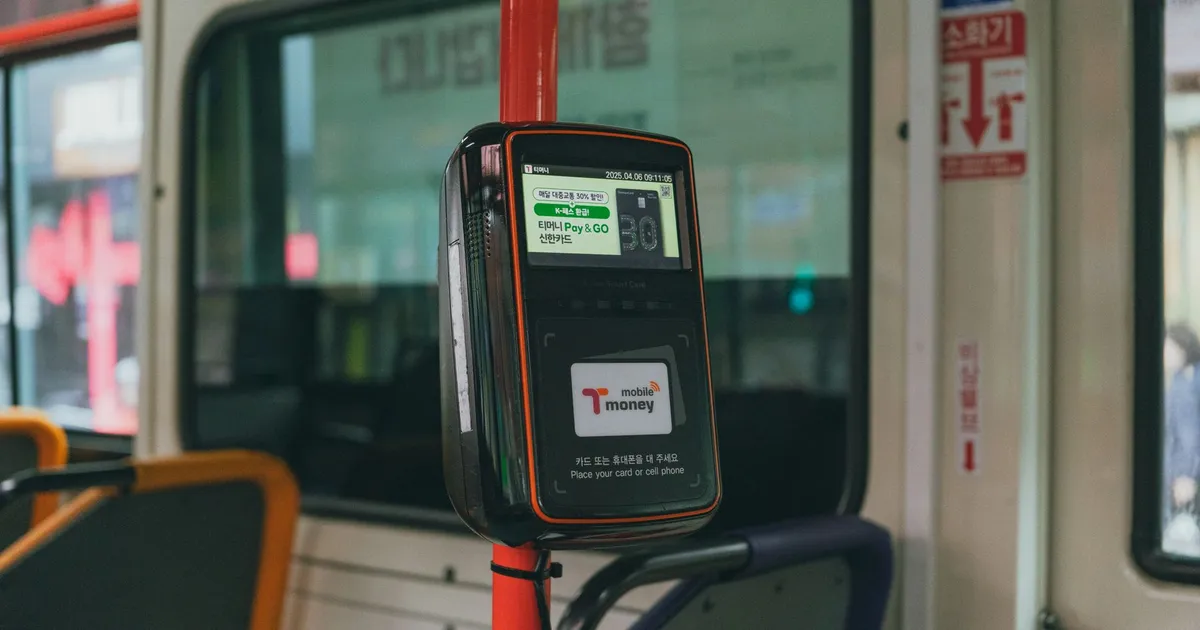
For a project that became a byword for government IT failure, Motu Move has started delivering. The National Ticketing Solution launched in Greater Christchurch in November 2025, covering 300 buses across Christchurch, Waimakariri and Selwyn. By the time Transport Minister Chris Bishop and Associate Minister James Meager spoke from Christchurch on 22 September 2026, 1.5 million trips had been taken with no major defects reported.
That matters because the whole point is boring reliability. One contactless payment platform covers buses, trains and ferries. Passengers tap a debit or credit card, Apple Pay, Google Pay or a Motu Move prepaid card. A December 2024 pilot on the Airport to City bus gave the early signal: more than a third of adult passengers used contactless payment, well ahead of expectations. When you make payment friction disappear, people use it.
Seventeen years to get here
None of that erases the record. NZTA first signed off the NTS concept in 2009, which makes this a 17-year journey to a partial rollout. The project missed three launch targets in nine months across 2024 and 2025, the planned Timaru and Temuka launch was scrapped, and the whole programme was reset in 2025. An independent review found a ‘very high likelihood of further significant delays’, and a March 2026 follow-up called the revised, slowed timeline still ‘ambitious’.
Bishop has been unusually blunt about why. In April 2026 he told Morning Report it was ‘probably a mistake’ to build every concession into the system: ‘The mistake was trying to build every concession into the system as well… it is different for every single council.’ In June 2026, with the Prime Minister slamming government IT as ‘abysmal’, Bishop defended the project as ‘too far gone’ to abandon: ‘My job is basically to fix it and try to make it work.’
The maths says finish it
Here the arithmetic is unambiguous. The total NTS budget is $1.358 billion, split between $530 million for design and build and $830 million for ten years of running costs. By May 2026, $271 million had been spent. Walking away is worse: maintaining the legacy Snapper, HOP, Metrocard and Bee Card systems over ten years would cost $1.1 billion, some $300 million more than completing NTS, and all those systems are near end of life. An independent review found cancellation would not be cost effective, and the 2024 Government Policy Statement locked the direction in by funding only NTS-aligned ticketing through the National Land Transport Fund.
For employers, the payoff is concrete. Workers who commute across city boundaries no longer juggle different cards, apps and top-up points. The concession-linking feature, which ties senior, student and community card entitlements to a standard debit card and charges the best available fare automatically, is more sophisticated than most systems globally. New Zealand will become only the third country with a truly national ticketing system, after the Netherlands and Singapore.
The hard yards are still ahead
The catch is that Christchurch was the easy part. Wellington is next, with full national coverage targeted for the end of 2027. But Wellington and Auckland are where commuter volumes are highest and the business case strongest, and they are also the biggest risk. Greater Wellington Regional Council and Auckland Transport were both flagged for insufficient commitment in the most recent independent review. Auckland’s transition is more complex again, layered on top of the Open Loop contactless system it stood up in November 2024.
The bigger lesson buried in the win
There is a sharper critique worth sitting with. Digital Identity NZ executive director Andy Higgs argued in June 2026 that the country built ‘a $1.36b silo’ rather than open infrastructure: ‘We’ll rebuild the same plumbing again for age verification, health, libraries.’ His point is that proving someone is a senior or student is an identity problem that other government services could have reused. He was careful to call it a cross-party failure, conceived under Labour and rescued under National, treated as transport IT rather than national infrastructure.
That is the real takeaway for business. Motu Move looks like the right answer to the transport problem, and the case for finishing it is solid. But the same pattern, bespoke government systems that talk to nothing else, is the root of most major IT cost blowouts. The system now works in Christchurch. Whether it works in Wellington and Auckland on time, and whether anyone learns the platform lesson, is what happens next.
Sources
- Full video: Govt speaks about national public transport ticketing system (2026-09-22)
- National ticketing system on public transport rolls out in Christchurch (2025-11-10)
- PM slams ‘abysmal’ govt IT as Bishop defends $1.4b ticketing project (2026-06-29)
- ‘Probably a mistake’: Transport Minister on building concessions into national ticketing system (2026-04-14)
- Probe into $1.3b national ticketing project finds delayed timeline still ‘ambitious’ (2026-03-30)
- Why getting the national ticketing project back on track was the only option (2026-06-29)
- The long, winding road to the $1.36 billion National Ticketing Solution (2026-06-27)
- We are spending $1.36 billion proving we’re climbing the wrong digital infrastructure mountain (2026-06-29)
- Government Policy Statement on land transport 2024/25-2033/34 (2024)
Join the discussion
Add useful context, ask a good question, or challenge an idea — keep it specific and respectful.