

From cash-burner to profit-maker
For years 2degrees was the plucky third player, the one that dragged prices down and lost money doing it. That story is over. The company has swung to a net profit of $17.2 million for the year to June 2026, reversing an $18.2 million loss the year before.
Revenue rose 5.5% to $1.46 billion, the fourth consecutive year of growth in a flat economy. Mobile revenue climbed 4.3% to $603.3 million and broadband 1.1% to $437 million, while EBITDA lifted 6% to $421.1 million. NBR reported a higher $27.4 million net profit after tax, reflecting different treatment of non-cash items, but either way the direction is unambiguous.
The swing largely comes down to the merger finally paying off. FY2026 was the first full year without integration costs since the 2022 tie-up with Orcon and Vocus. Chief executive Mark Callander told the Herald the company was “seeing the benefits of the merger flow through” with “increased scale” from combining workforces and consolidating platforms.
Doing it without the axe
What is striking is how 2degrees got here. Staff numbers sit around 1,600, down 80 to 90 over the year with no formal restructure. Contrast that with Spark, which cut 627 staff in FY2025 alone, dropping to 3,416. One telco is growing into profit; the market leader is shrinking to defend it.
The business segment posted the strongest percentage growth, which matters for a company pushing harder into enterprise connectivity. Callander said the last six to eight weeks had “felt pretty good” with the Apple launch and “a lift in enterprise and business decision-making”, pointing to tailwinds heading into FY27.
The broadband quiet coup
The mobile numbers get the headlines, but broadband tells the more revealing story. Between the 2023 and 2024 Commerce Commission monitoring periods, 2degrees moved from third to second place, lifting from 18% to 20% market share and overtaking One NZ on 19%. Spark still leads at 35%, but 2degrees is now taking share off the incumbents, not scrapping for the crumbs.
That repositioning changes how regulators should read what comes next.
The network deal that tests everything
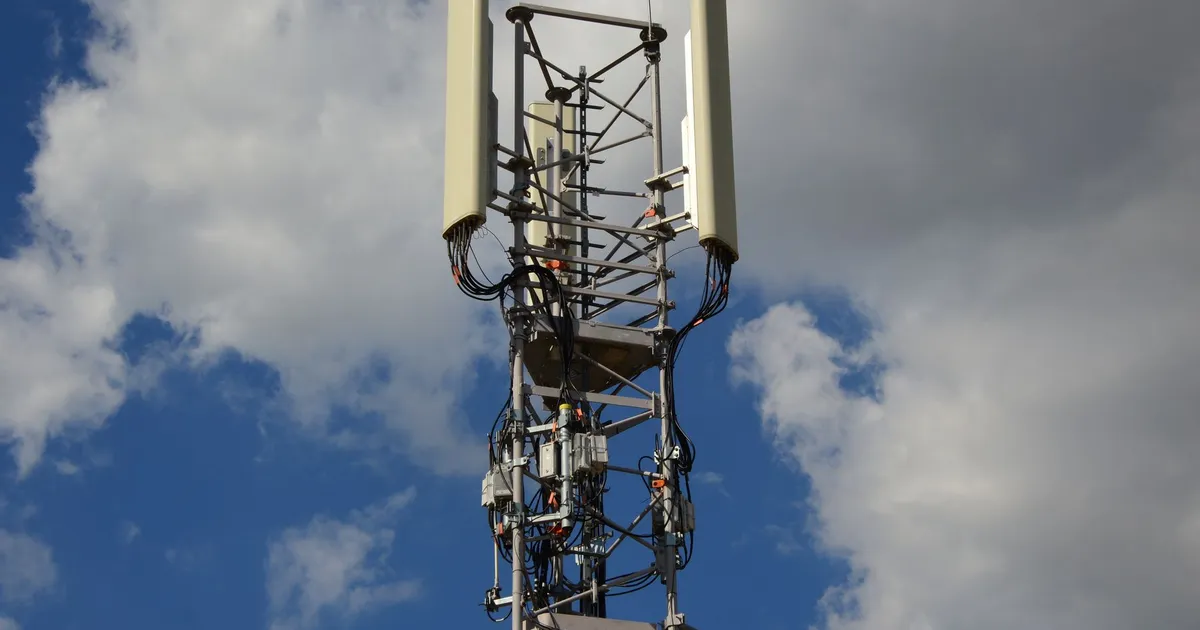
In August 2026, 2degrees and One NZ announced a plan to combine their Radio Access Network infrastructure, the physical antennas and base stations, into a jointly owned 50/50 wholesale company dubbed RANCo. Both would buy capacity back from it while staying independent retail and wholesale competitors, each keeping its own spectrum, core network and backhaul.
Incoming One NZ chief executive Nick Judd said the proposal would deliver “real benefits for customers” including faster access to 6G and improved network resilience. The deal needs Commerce Commission and Overseas Investment Office sign-off, targeting completion in the first half of 2027.
And this is where the profit turnaround becomes politically load-bearing. New Zealand’s three big carriers already control 97.5% of the residential mobile market, a share that has slipped just 1.1% in five years. MVNOs have grown but remain marginal, up from 1.6% to 2.5%, with subscribers rising 61% to 171,000. Merging the physical networks of the second and third players is not an obviously pro-competition move in a market that concentrated.
Scale versus competition
A loss-making 2degrees would have been a sympathetic applicant, a struggling challenger that needed a leg up to survive. A profitable one, growing revenue across every segment and gaining broadband share, is a harder sell. Nor is One NZ entering from weakness. Its parent Infratil’s 2026 investor day claimed roughly 58% of total mobile market growth over two years.
The counter-argument is legitimate. RAN sharing is common internationally, and for a small country, separating physical towers while competing on spectrum, pricing and service may simply be the rational structure. The three operators already share remote towers through the Rural Connectivity Group. The question is whether the Commerce Commission reads RANCo as sensible efficiency or as two of the three big players stitching their networks together.
What happens next
There is a second competitive front the regulator cannot ignore either. 2degrees is advancing a satellite-to-mobile service with AST SpaceMobile from a Marton ground station, tested in August 2026, squaring up against Spark and One NZ’s Starlink offerings for blackspot coverage.
The irony is that 2degrees has spent 15 years proving a third mobile player can compete, and it has finally proved it commercially. Now it wants to share a network with a rival. Whether the Commission decides scale or competition matters more will shape the connectivity bills of every business in the country for the next decade.
Sources
- 2degrees swings to $17.2m profit, analyst sees potential big gains in One NZ mobile partnership (2026-09-22)
- 2degrees posts fourth year of revenue growth amid flat economy (2026-09-23)
- 2degrees and One NZ plan shared mobile network (2026-08-28)
- 2025 Telecommunications Monitoring Report (2025-06-30)
- One NZ and 2degrees propose new mobile network infrastructure sharing platform (2026-08-27)
- Infratil Investor Day 2026 – One NZ Update (2026)
- 2degrees edges toward profit as revenue and market share rise (2025-09-29)
Join the discussion
Add useful context, ask a good question, or challenge an idea — keep it specific and respectful.