

The price is the message
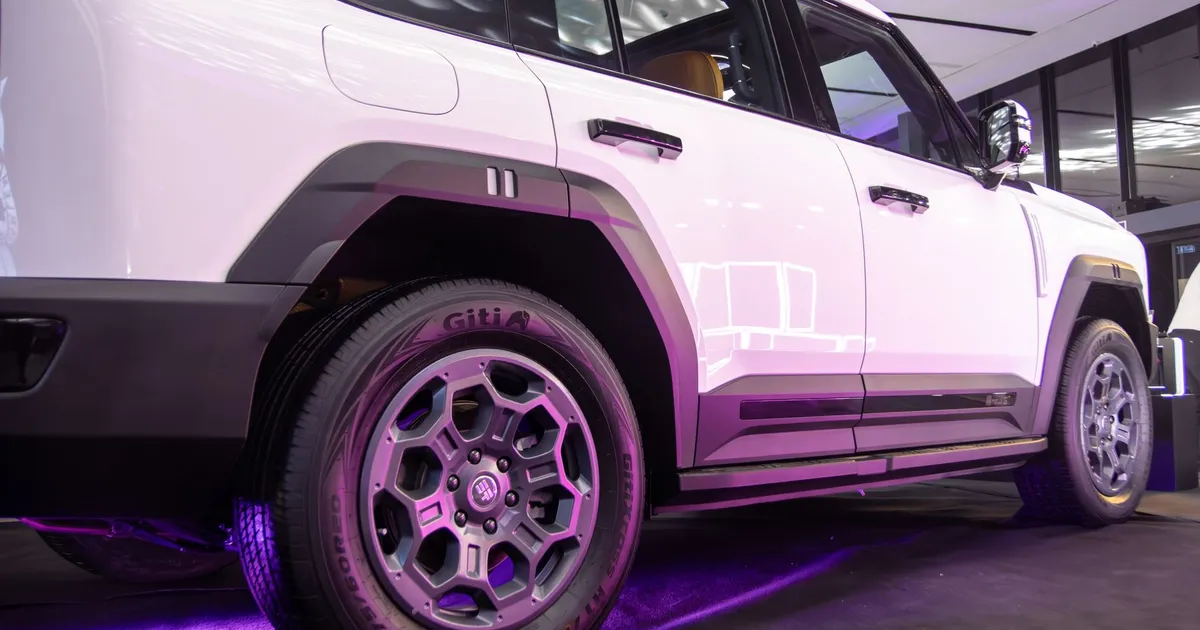
GWM has confirmed the Haval H7 will launch in New Zealand in mid-October, priced from under $50,000. Two electrified variants only: a hybrid with 240kW combined output and a plug-in hybrid producing 320kW, both with all-wheel drive as standard. Standard kit includes a 15.6-inch touchscreen, 360-degree camera, rear differential lock, over-the-air updates and a panoramic sunroof.
What makes the number aggressive is not that it undercuts legacy brands. It undercuts GWM’s own range. The Haval H6 Ultra PHEV tops out at $50,990 plus on-road costs, meaning the newer, larger H7 slots in below the top of the existing lineup rather than above it. That is a deliberate volume play. GWM is not building a halo product. It is chasing the mainstream mid-size SUV segment where the RAV4, CX-5 and Tucson have long lived.
GWM New Zealand country manager Cameron Thomas said the H7’s under-$50,000 starting price “ensures it remains accessible to Kiwi families looking for a distinctive and highly capable SUV”. Read that through a fleet lens and it says something sharper.
Nearly half the market buys on cost, not badge
Here is why this is a fleet story, not a consumer one. Company buyers accounted for 43% of new vehicle registrations in August, according to Motor Trade Association data. That is close to half the new market making decisions on total cost of ownership rather than brand loyalty. A warranted, electrified, all-wheel-drive SUV with a full tech suite under $50,000 does not appeal to sentiment. It rearranges a spreadsheet.
Chinese brands are already reshaping that spreadsheet. They reached 18.7% of new vehicle registrations in August, roughly a threefold rise since 2024, with BYD, Chery, Jaecoo and GWM all posting gains. Total new light vehicle registrations hit 11,716 units in August, up 5.5% year-on-year. This is no longer a niche. It is a fifth of the market and climbing.
The electrification tide runs GWM’s way
The H7’s hybrid-and-PHEV-only lineup sits in the fastest-growing import category, and the numbers are stark. Stats NZ reports the value of passenger motor vehicle imports reached $6.1 billion in the year to June, up 23%. Reduced-emission vehicles made up $2.9 billion of that, up 33% and now 48% of total passenger vehicle import value. The gap between petrol and electrified import values has collapsed from $4.5 billion in June 2019 to just $202 million.
For a fleet manager, the ICE default is getting harder to defend. When the electrified alternative is a 320kW AWD PHEV at a lower entry price than the petrol incumbents, the burden of proof flips.
This is a product blitz, not a one-off
The H7 is one launch in a wave. GWM has confirmed it will launch up to eight new vehicles in New Zealand before the end of 2026, spanning SUVs, utes, EVs, hybrids, PHEVs and diesels. After a record first half, the company is targeting more than 5,000 local sales this year and a top-five brand position by end of 2027. The H7’s rear diff lock and PHEV powertrain are aimed squarely at the fleet and retail channels where the Ford Ranger and Everest have dominated.
Where the squeeze actually lands
Three groups feel this. Legacy dealers lose the specification-versus-price argument they used to win by default; when the competitive floor drops, margin compression follows. Lease and fleet operators face a live residual value question, because if Chinese brands keep taking share and used Japanese imports lose their price edge, residuals on existing fleet vehicles come under pressure, which feeds directly into lease rates and replacement cycles. And used import dealers get squeezed from below, when a new warranted SUV starts competing with a used one on price.
The irony worth noting is that even the legacy response is Chinese-built. Ford’s answer in this space, the Bronco Basecamp, is itself a China-sourced hybrid. Fighting Chinese pricing increasingly means buying from China.
The unresolved question is service. When a fifth of the new market has an established parts, repair-information and technician network behind it, the newer entrants have to build that trust fast, because fleet buyers who commit on cost will judge just as coldly on downtime. Get that right and GWM’s top-five ambition looks conservative. Get it wrong and the pricing advantage evaporates the first time a fleet is grounded waiting for parts.
Sources
- Aggressive NZ pricing detailed for GWM’s boxy Haval H7 (2026-09-18)
- 2027 GWM Haval H7: Boxy five-seat RAV4 rival nears NZ launch (2026-08-24)
- GWM confirms biggest NZ expansion yet with up to eight new utes, SUVs and EVs (2026-07-07)
- August Vehicle Sales Strong, Chinese Brands Continue Surge (2026-09-01)
- Reduced-emission vehicle annual imports up in June 2026 (2026-07-20)
Join the discussion
Add useful context, ask a good question, or challenge an idea — keep it specific and respectful.