

The move that reset the global money price
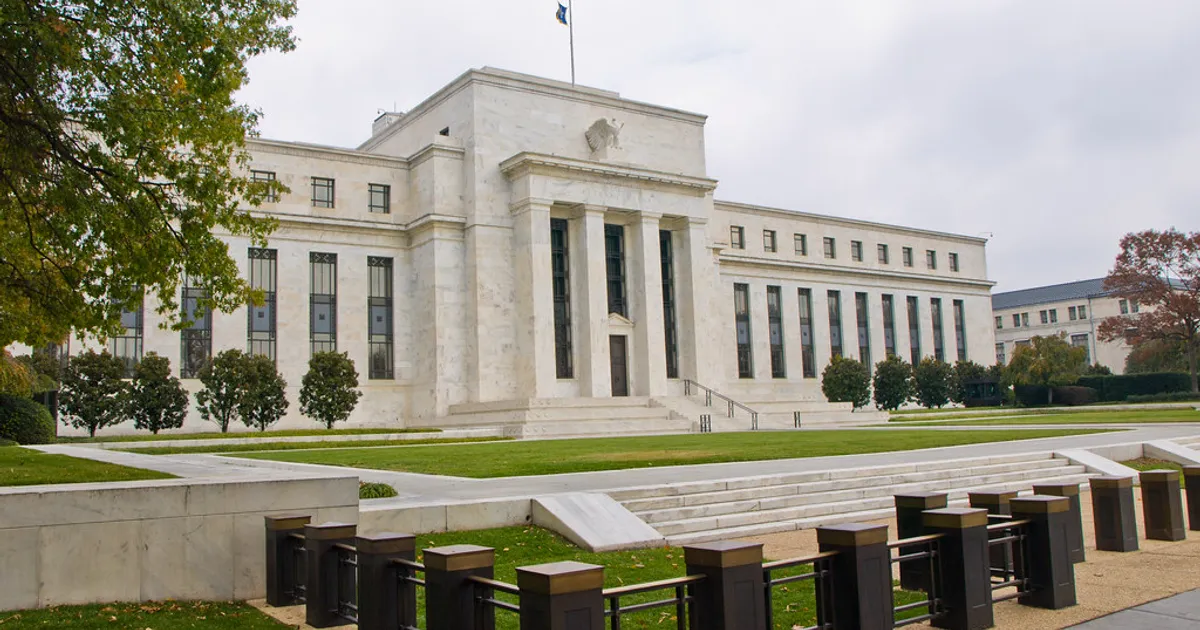
The US Federal Reserve raised its target range by 25 basis points to 3.75-4.00% on 16 September 2026, its first hike since 2023 and a unanimous FOMC vote. The Fed pointed to resilient spending and strong investment but stubborn inflation, saying the action would “support a timelier return” to its 2% goal. Wall Street sold off, with the Dow dropping 631 points, the US dollar rose, and the kiwi slipped to US57.12c.
This is not a one-off. Fed forecasts signal at least one more hike before year end, with the funds rate expected to sit around 3.50-3.75% as late as 2029 and the median PCE inflation projection lifted to 3.7% for 2026. The world’s benchmark rate is going up and staying up.
The fragile cycle the Fed just complicated
New Zealand was already tightening, but cautiously. The RBNZ raised the OCR to 2.75% on 2 September, its second back-to-back hike, delivered by a six-member committee that reached consensus but was clearly nervous about pace. Westpac chief economist Kelly Eckhold noted the RBNZ “remains resolved to adjust the OCR higher” but that the next move looked “more like a discussion for December” than one certain to happen in October.
Markets agreed the pace was slow. The 2-year swap rate fell 8 basis points after the meeting, with only a 30% chance priced for an October hike. The Fed’s move quietly reshapes that calculus.
Three channels straight to the balance sheet
First, funding. New Zealand banks borrow heavily in offshore US and Australian wholesale markets and swap the proceeds into kiwi. When US rates rise, that funding gets dearer, and the cost flows through to business lending regardless of what the RBNZ does. It is the transmission mechanism borrowers never see but always feel.
Second, the currency and imported prices. Tradable inflation, covering fuel, imported food and fertiliser, was already running at 4.9% in the year to June, nearly double the 2.5% recorded in March. A weaker kiwi makes every import dearer and directly worsens a component the OCR cannot easily touch. Non-tradable inflation, which the OCR can influence, was largely stable at 3.4%. The problem is external.
Third, bond yields. Global yields were already rising on oil pressure and government debt, and the hike reinforces that. Economist Prasanna Gai, cited in Westpac’s analysis, suggested recent geoeconomic shocks may have raised New Zealand’s neutral interest rate. Westpac now forecasts the RBNZ reaching 4% by September 2027.
The oil problem underneath everything
Both the Fed hike and New Zealand’s inflation surge trace back to the same source. Annual CPI hit 4.1% in the year to June, up from 3.1% in March, with petrol up 27.5% and other vehicle fuels up more than 70%. Strip out petrol and diesel and CPI rose just 0.5% in the quarter.
The RBNZ’s September assumptions are already stale. BNZ noted the bank assumed Dubai crude averaging US$83.70 across the September quarter when the actual price was almost 17% higher, and calculated fourth-quarter inflation could reach 4.2%. That was before the Fed pushed the kiwi lower.
The awkward truth for the Reserve Bank
Not everyone thinks hikes are the answer. Kiwibank’s Jarrod Kerr and Simplicity’s Shamubeel Eaqub have argued the inflation is supply-driven and not amenable to demand-side tools. ASB acting chief economist Kim Mundy called the RBNZ’s vague timing “appropriate given the fragile economic recovery”. The MPC itself is split: all members see downside risks to growth even as a majority worry about persistent inflation.
What it means for business
The June quarter business data showed total sales of $214 billion, up 8.9%, and operating profit of $29 billion, up 7.9%, but purchases rose 10% and wages rose just 3.7%, below inflation. The recovery is real but thin, and debt servicing costs are now rising from both ends: the domestic OCR and global wholesale rates.
Exporters get some relief from a softer kiwi on USD receipts, but that erodes if US tightening slows world demand. Importers and fuel-heavy firms face the full brunt with no hedge. With an OCR review on 28 October and an election on 7 November, the comfortable story that the RBNZ peaks at 3% and holds just got harder to believe. The Fed is not done, the oil price is not co-operating, and the kiwi is heading the wrong way.
Sources
- US Federal Reserve raises interest rate 25 basis points in first hike since 2023 (2026-09-16)
- Federal Reserve forecasts see latest hike followed by another before end of year (2026-09-17)
- Reserve Bank hikes official cash rate to 2.75% (2026-09-02)
- Are oil price hikes putting a pre-election OCR increase back in play? (2026-09-14)
- Reserve Bank hikes OCR – what it means for the prices we pay (2026-09-03)
- RBNZ raises official cash rate 25 basis points to 2.75%, delivering back-to-back hike effort (2026-09-02)
- Annual inflation at 4.1 percent in June 2026 (2026-07-21)
- Business financial data: June 2026 quarter (2026-09-08)
- NZ First Impressions: RBNZ September 2026 Monetary Policy Statement (2026-09-02)
- Is the Reserve Bank dancing with its own reflection? (2026-09-06)
- An appropriately balanced statement (Westpac MPS bulletin) (2026-09-02)
Join the discussion
Add useful context, ask a good question, or challenge an idea — keep it specific and respectful.