

Business owners tend to file defence spending under “government problem” – a budget line that competes with hospitals and roads, argued over by people in uniform and Wellington. Major General (Retired) John Howard, MNZM, a senior fellow at the New Zealand Initiative who advises boards and executives, wants that instinct dismantled.
In a column published on 16 September 2026, Howard argues that defence, diplomacy, intelligence and economic security “rise or fall together”, and that an economy “as exposed as ours, dependent on access to sea lanes and distant markets, has a direct stake in a credible military, whether exporters realise it or not.”
That last clause is the whole story. Most exporters don’t realise it.
The number that should worry every exporter
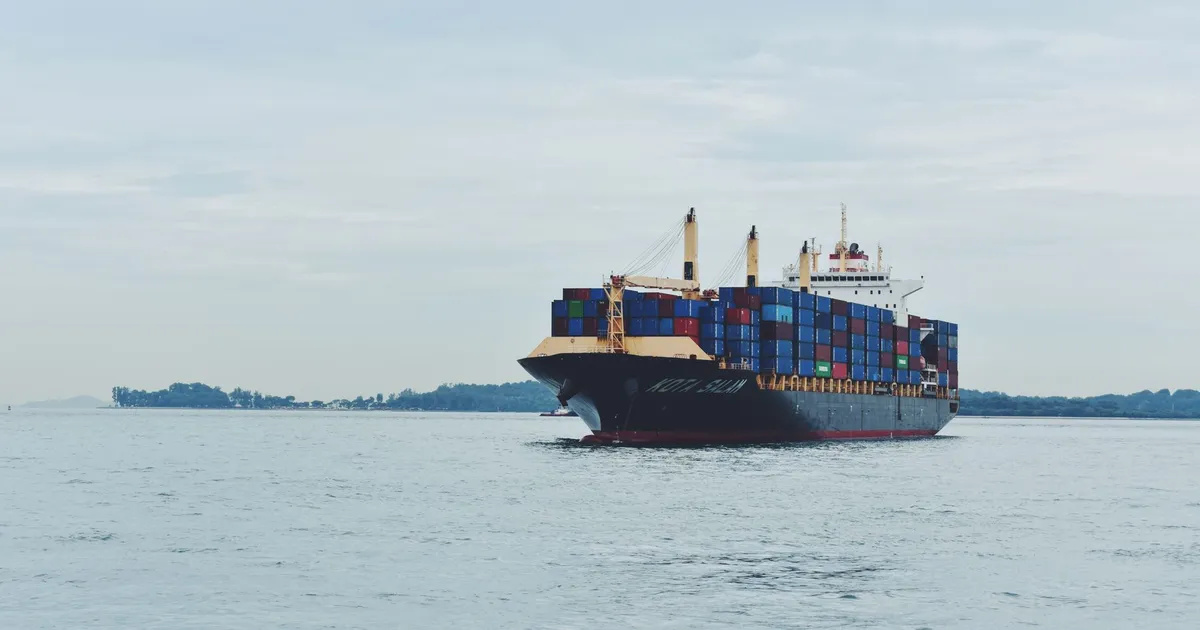
Start with the trade exposure. Around 85% of New Zealand’s goods exports and 73% of goods imports travel by sea, and the country ships roughly $82.7 billion of goods annually, with nearly a quarter bound for China through some of the most contested waters on the planet.
The vulnerability runs the other way too. Since Marsden Point stopped refining in 2022, all of New Zealand’s fuel arrives by sea. Every fertiliser ingredient is sourced offshore. If the ships stopped, Howard warns, the economy would grind to a halt within weeks. That is not an abstract defence scenario. It is a business continuity risk sitting on the balance sheet of every importer and exporter in the country.
A serious start that everyone agrees is not enough
The government has moved. The Defence Capability Plan commits $12 billion over four years, including $9 billion in new baseline funding, and Budget 2026 delivered $1.6 billion as the second instalment. Finance Minister Nicola Willis framed it against “the most adverse and contested geostrategic environment in the past 80 years”.
Howard calls the plan “the greatest commitment to upgrading the military uplift this country has attempted” in his lifetime, but adds that “it is just a downpayment on what is necessary.”
The numbers explain his caution. New Zealand currently spends about 1.2% of GDP, or $5.49 billion in 2026/27, and is targeting 2% by 2032/33. But at the Shangri-La Dialogue in May 2026, US Secretary of Defense Pete Hegseth declared 3.5% the new allied norm and, asked directly about New Zealand’s 2% goal, said “two percent is not enough and so two percent is freeloading.” The gap between where New Zealand is heading and where its most important security partner wants it is wider than the headline figures suggest.
The commercial pipeline hiding in plain sight
Here is the part business owners have missed. The April 2026 Briefing to the Incoming Minister of Defence records 31 active acquisition projects worth $6.4 billion, with $1.4 billion still to be spent as of February 2026.
And this is not just about ships and aircraft bought offshore. The Defence Capability Plan Cabinet Paper sets out a domestic industrial base of roughly 800 suppliers, notes the NZDF spends almost $1 billion a year on maintenance, training support and engineering with about two-thirds landing locally, and flags the key ratio for suppliers: for every dollar spent on new capability, three to four dollars follows through-life. The long tail of logistics, IT, cyber and services is where New Zealand firms actually compete. A Defence Industry Strategy released in October 2025 exists specifically to align procurement with domestic economic benefit. Cybersecurity alone carries a $100-300 million allocation in a sector where local capability is ready to scale.
2027 is the crunch
The test case is the frigate replacement. New Zealand’s two ageing Anzac-class frigates are near end of life, and Budget 2026 extended their operational life as a stopgap. The NZ Initiative’s Adrift report identifies the 2027 decision as the point that determines whether New Zealand can operate in contested waters alongside allies for a generation, or spends years without a warship that can. Get it wrong and the skills base takes a decade to rebuild.
Howard has been sounding this alarm for months. In March 2026, amid the Iran conflict, he described NZDF capability as at “extreme risk” and said the country’s national security policy, last updated in 2023, had “lost currency as the world has changed.” The Lowy Institute’s Suzannah Jessep, writing in April 2026, framed the moment as a shift from a nation that assumed shelter to one confronting a stormfront, citing fuel disruption, undersea cable attacks and economic coercion as live risks.
The bill lands on business either way
The pattern Howard warns against is a national habit. Defence spending fell from a Cold War high toward 1% by the mid-1990s, and in 2001 the air combat force was disbanded on the assumption of a benign world. Treasury’s 2025 Long-term Fiscal Statement confirms the 2% target while noting countries closer to conflict have set more ambitious intentions.
The honest conclusion for business owners is that the cost of getting defence wrong is not absorbed by the military. It lands on exporters who can’t move product, importers who can’t get fuel or fertiliser, and every firm downstream of a functioning economy. The upside is that the same $12 billion is a live procurement pipeline most owners have never engaged with. Defence has stopped being a Wellington abstraction. It is now a supply chain risk and a commercial opportunity on the same spreadsheet.
Sources
- NZ Herald: Why New Zealand can no longer treat defence as discretionary (John Howard) (2026-09-16)
- NZ Herald: China missile test highlights New Zealand’s fragile trade lifeline (John Howard) (2026-07-15)
- RNZ: NZ’s defence spending is doubling, but the US says that’s not enough (2026-06-09)
- NZ Herald: Budget 2026 boost to defence spending as surge to 2% of GDP continues (2026-05-22)
- 1News: ‘Extreme risk’ – retired general’s warning about NZDF amid Iran conflict (2026-03-22)
- Lowy Institute: New Zealand’s defence reckoning – from shelter to stormfront (2026-04-09)
- April 2026 Briefing to the Incoming Minister of Defence (2026-04)
- Defence Capability Plan 2025 – Cabinet Paper (2025-04-07)
- RNZ: Defence spending is like insurance – how will NZ pay the higher premiums? (2025-07-10)
- Treasury: He Tirohanga Mokopuna – Long-term Fiscal Statement 2025 (2025-09)
- NZ Initiative: Adrift – A Trading Nation, an Ageing Navy and the 2027 Frigate Decision
Join the discussion
Add useful context, ask a good question, or challenge an idea — keep it specific and respectful.