

Fast is fine, careless is not
The Environmental Defence Society has taken the government’s flagship consenting regime to court, and business should pay attention to why. On 4 September 2026, EDS filed High Court documents appealing the fast-track approval of the Haldon Station solar farm, the first solar project approved under the Fast-track Approvals Act. EDS chief executive Gary Taylor’s argument, laid out in a pointed piece for Newsroom, is not that solar is bad. It is that renewable energy is not environmentally benign simply because it is renewable, and that the Mackenzie Basin is being carved up project by project with no assessment of the cumulative damage.
For investors and developers, this is a story about durability. An approval that gets overturned in court, or that triggers a political reversal, is worse for the energy sector than a slower consent that holds.
What actually got built
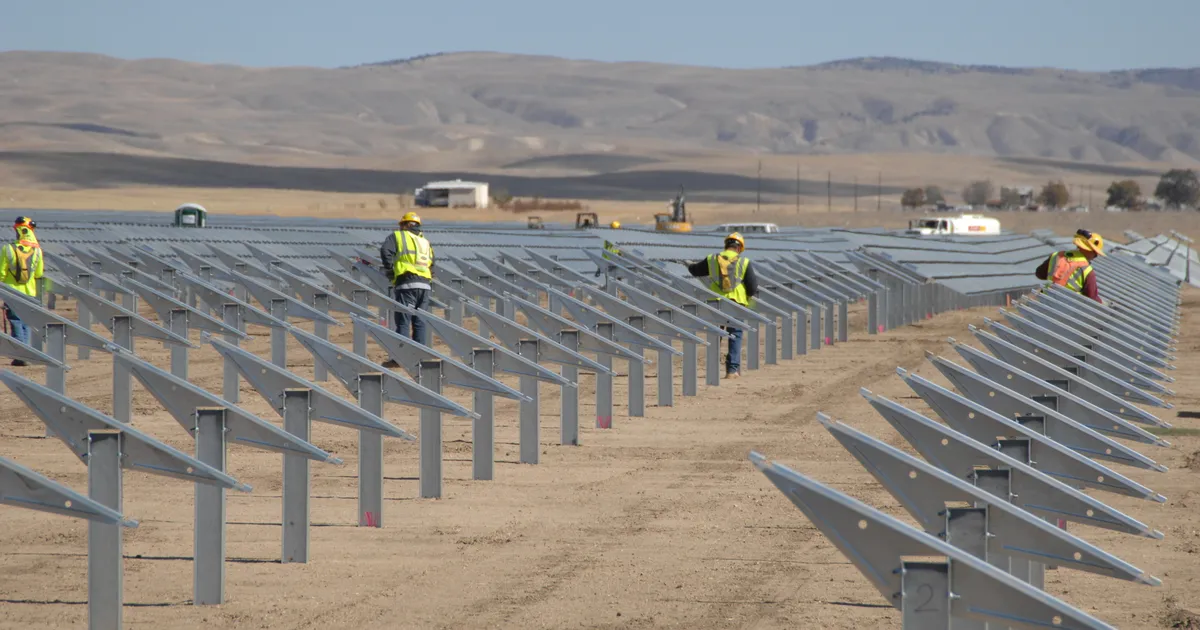
The Haldon Station solar farm, a Lodestone Energy project near Lake Benmore, is a 220MW installation covering 320 hectares with roughly 360,000 panels, generating 370 GWh a year, enough for 45,000 homes. Lodestone lodged its fast-track application in September 2025 and got official approval in August 2026, about eight months. According to Scoop, it was the 29th project overall and the seventh renewable energy application through the mechanism.
That speed is exactly what fast-track was designed to deliver. The problem is what is queued behind it.
Nine projects, 6,000 hectares, one sensitive basin
Kāi Tahu has identified nine large-scale solar developments proposed across Te Manahuna with a combined footprint exceeding 6,000 hectares. Landscape evidence for one proposal concluded that five solar farms together could have moderate-high to high adverse cumulative effects on the basin’s outstanding natural landscape values.
This is not spare paddock. Much of the Mackenzie is a confirmed outstanding natural landscape, home to threatened plants, endemic invertebrates and lizards, and the kākī, or black stilt. Fewer than 200 adult birds survive in the wild, with about 40 breeding pairs, all in the Mackenzie. The Department of Conservation’s kākī breeding centre sits near the proposed site of The Point.
Scale matters here too. In 2024, the EPA noted an earlier Far North Solar Farm proposal was roughly 1.5 times New Zealand’s entire installed solar capacity of 284MW in 2022. Transpower has projected up to 7,360MW of new large-scale solar nationally by 2030. Concentrating a large slice of that in one fragile basin is a planning question no single panel can answer.
Two models, two outcomes
The contrast between developers is the commercial lesson. Lodestone strengthened its Haldon proposal substantially: a fixed $1 million upfront payment to DoC for kākī recovery, a roughly 180-hectare conservation compensation area, a predator-exclusion fence, bird-strike monitoring and long-term ecological research. It got its decision.
Far North Solar Farm’s 450MW project, The Point, has been the opposite. Its fast-track panel, chaired by former judge Raynor Asher, warned the ecological risks remained unacceptably high and the safeguards notably deficient, and said the project could contribute to a national decline of threatened birds. FNSF has paused twice and still not supplied key crash-risk evidence.
Even Haldon was not clean. Carbon News reported the Lodestone panel accepted the effects package could not achieve no net loss for the most sensitive values, including a critically endangered outwash gravel ecosystem, but found the residual harm not disproportionate to the renewable benefits. Under the Fast-track Approvals Act, panels weigh whether adverse effects are out of proportion to a project’s regional and national benefits, a more directed test that instructs them to facilitate projects unless harm is disproportionate.
Half-baked applications are the real threat
Taylor’s sharper structural point, made in The Press, is that Haldon arrived with significantly incorrect ecological assessments, forcing new consultants and reassessments mid-process. He wants the EPA to turn deficient applications away and panels to be readier to decline rather than use further-information powers to resuscitate an application that was never ready.
On the ground, about 125 Mackenzie residents met at Twizel in August 2026 over the wave of proposals, raising landscape, ecological and construction-workforce concerns, including existing businesses losing staff to construction wages.
The fix is not to slow fast-track down. It is to make it disciplined. Panels can only assess the project in front of them, so the government needs basin-wide spatial planning that decides how much solar the Mackenzie can absorb and where it goes. Get that right and developers who do the ecological homework, like Lodestone, get durable consents. Get it wrong and every approval becomes a High Court coin toss, which is the fastest way to make investors treat New Zealand renewables as sovereign risk.
Sources
- Fast-tracking solar in the Mackenzie Country is a mistake (2026-09-12)
- Advocacy group heads to court to challenge fast-tracking of solar project in Mackenzie (2026-09-12)
- Huge solar farm approval in doubt after grave warning on rare birds (2026-09-10)
- Fast-track can’t work on half-baked applications (2026-09-12)
- Carbon News: faster consenting, harder trade-offs (2026-09-12)
- First Solar Farm Fast-Tracked (2026-08-01)
- ‘We have to push back’: Mackenzie residents meet over solar expansion (2026-08-17)
- EPA Advice and Recommendation – Mackenzie Solar Farm (2024-06-04)
Join the discussion
Add useful context, ask a good question, or challenge an idea — keep it specific and respectful.