

The biggest retail cheque ever written
Botany Town Centre has hit the market in what Colliers and JLL are pitching as potentially the largest single-asset retail transaction New Zealand has ever seen. Colliers capital markets director Richard Kirke told 1News he expects it to fetch “in the vicinity of $450 million”, with international bids closing 14 October 2026. No public price guide has been set by the Canadian pension fund that owns it.
This is not just another listing. After years of soft consumer spending, higher funding costs and drifting valuations, a half-billion-dollar asset going under offer is a live pricing test. Whatever Botany achieves becomes the benchmark for how institutional capital is currently valuing New Zealand retail income.
What half a billion buys
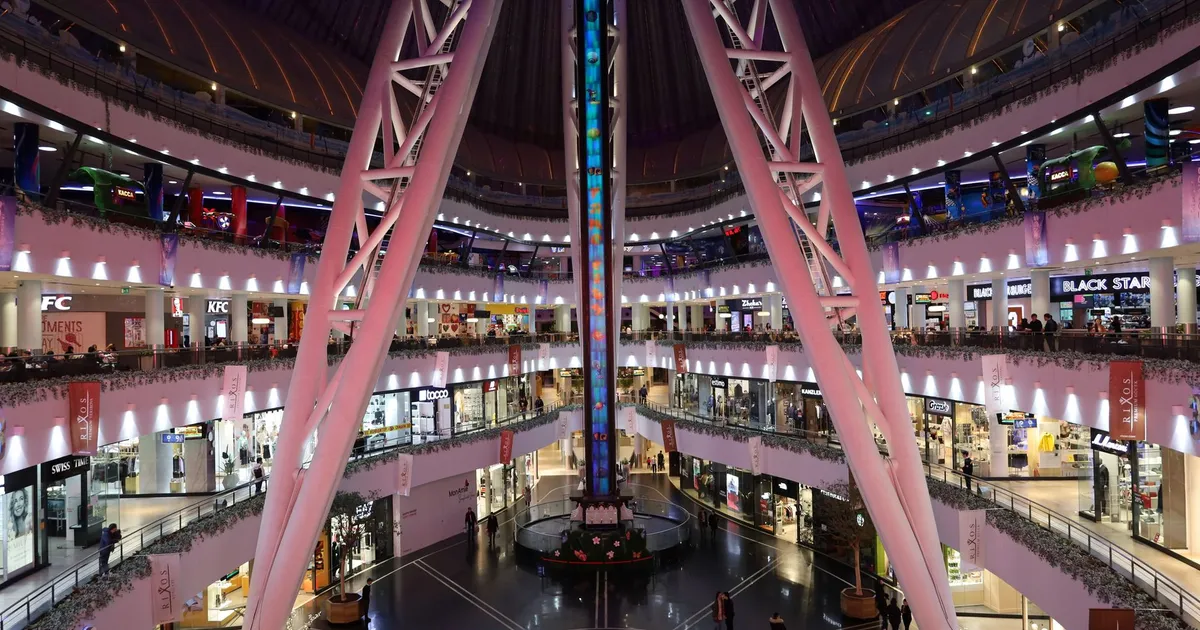
Botany is New Zealand’s fourth-largest shopping centre at 60,825sqm, 18.5km south-east of the Auckland CBD, with 200 tenancies anchored by Farmers, New World and Hoyts alongside H&M, JB Hi-Fi and Mecca. It opened in 2001 and had a $78 million redevelopment in 2019. The centre generated $354.7 million in turnover to July 2026.
At $450 million, that is a turnover multiple of roughly 1.27x. Against average prime regional centre yields of 7.0%, the net income yield the market actually prices in is the number to watch. There is also upside baked in beyond the shopfronts: the 17.3ha freehold sits at only 35% site coverage, which the agents frame as substantial scope for residential and mixed-use development. That optionality could pull in buyers who see more than a retail income play.
The catchment does the heavy lifting
The demographics are the strongest part of the pitch. The trade area holds roughly 500,000 people growing at 1.3% a year, with a median household income around 21% above the national average and local retail spending forecast to hit $9.4 billion a year by 2038, up 33%. The nearly complete Eastern Busway adds a genuine infrastructure catalyst. “It really is the dominant centre for the east of Auckland already,” Kirke said. “That busway will just make it easier for more people to get to the site.”
Scarcity sharpens the case. JLL’s head of retail for Australia and New Zealand, Sam Hatcher, noted Botany is the only regional centre with a 100% interest available for sale in either country, in a market where New Zealand has just 0.6sqm of retail floorspace per capita against 1.0sqm in Australia and 2.2sqm in the US. Dominant assets face structurally less new supply.
The comparable just cleared
The most recent read is Glenfield Mall, which sold to a private Australian syndicate for $146 million on 1 September 2026, the largest enclosed centre sale in Auckland in over a decade. JLL’s Nick Willis, who brokered it, expects Botany to “attract the same breadth of interest”. In April 2026 he described “a pronounced acceleration in capital appetite for New Zealand” as tightening Australian pricing pushes global capital across the Tasman.
The catch buyers will underwrite for
Here is where the optimism meets the data. Headline retail is moving the right way: Stats NZ’s June 2026 quarter showed total sales value up 6.6%, or $2.0 billion, year-on-year. But the seasonally adjusted volume of sales fell 0.5% in the same quarter. That gap means much of the growth is price, not more shopping, which matters when underwriting a long-dated income asset.
The landlord numbers say the same. Kiwi Property’s FY26 report showed foot traffic up 3.0% to 36.7 million visits, occupancy at 99.0% and operating profit up 8.6% to $126.2 million. Yet portfolio fair value still slipped 0.9%. Income is recovering; valuations are still edging down. JLL’s Q2 update flagged falling vacancy but warned weak consumer confidence would keep spending cautious through 2026. Colliers, meanwhile, called investment activity “subdued” despite improving fundamentals.
What 14 October actually settles
Scale means the contest will be fought offshore. Kirke points to institutional investors and sovereign wealth funds with similar Australian and Asia-Pacific assets, and the friction has eased: Overseas Investment Act reforms operational from March 2026 cut approval timelines for low-risk deals to 15 working days.
If Botany clears $450 million or above, the recovery narrative has real institutional money behind it, and every retail landlord and property lender in the country gets a reassuring mark. If it falls short or the process drags, it exposes the gap between agent confidence and what buyers will actually pay while consumer volumes stay soft and valuations keep drifting. For anyone holding a lease in a major centre, or a bank with commercial property exposure, that bid date is the one to circle.
Sources
- NZ’s biggest-ever retail deal? Major Auckland mall hits the market (2026-09-06)
- Auckland mall sells for $146 million to Australian syndicate (2026-09-01)
- Botany Town Centre hits market in full-ownership sale (2026-08-26)
- Retail trade survey: June 2026 quarter (2026-08-24)
- Auckland Retail Market Dynamics Q2 2026 (2026-08-12)
- Kiwi Property 2026 Annual Report (2026-03-31)
- Glenfield Mall formally hits market (2026-04-11)