

A campaign line drawn in the estate
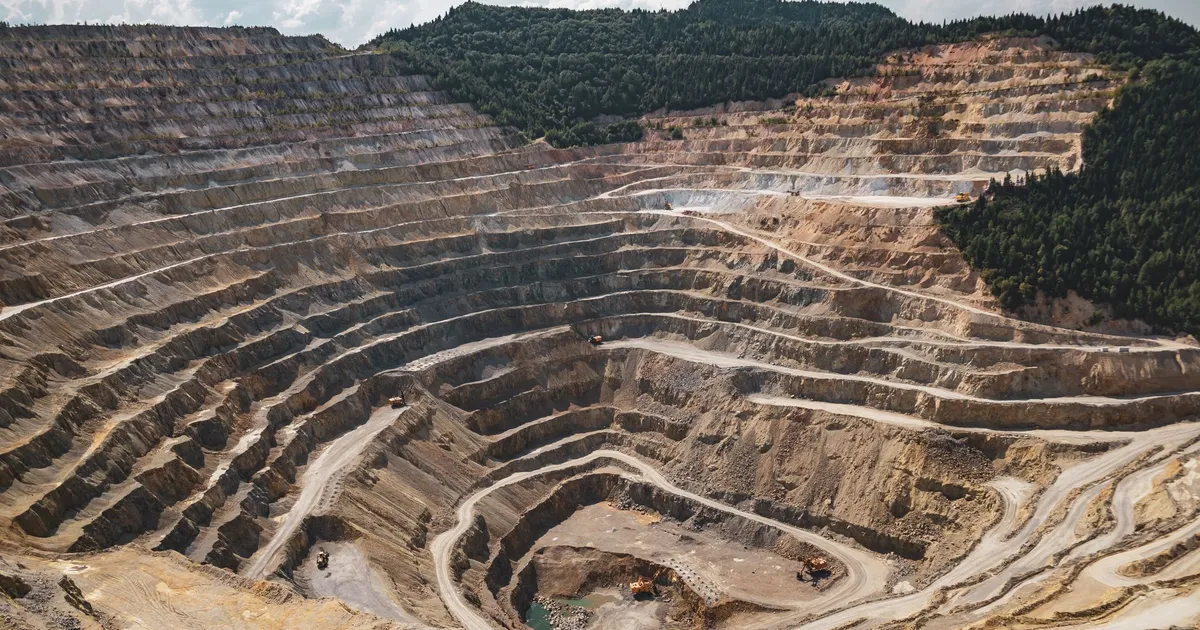
NZ First deputy leader and resources minister Shane Jones has turned mining and quarrying on conservation land into an explicit 2026 election platform, RNZ reported on 5 September. National parks would be carved out, but the rest of the Department of Conservation estate would be fair game. Jones put it in his usual style, telling RNZ his party rejects the notion conservation land is “some type of Camelot lotus land feature of New Zealand that can never ever be used or developed”.
The timing is deliberate. The Conservation Amendment Bill is still before the Environment Select Committee, and its final shape now hinges on who forms the next government. For business readers, this is not an abstract values debate. It is a live regulatory variable that will decide whether the minerals supply chain gets faster access to land, or another term of uncertainty.
The number that frames everything
Here is the figure that should anchor any judgement. A December 2024 NZIER report commissioned by DOC valued the conservation estate’s ecosystem services at $16.42 billion gross a year, with water services alone worth $2 billion and recreation linked to the estate close to $500 million annually. National parks alone were valued at $12.6 billion.
Against that, mining on conservation land is currently tiny. Royalties from mining on the estate in 2023 came to just $1 million, and the industry itself says extraction has touched only 0.04% of the estate to date. That gap does not settle the argument, but it clarifies it. The conservation estate is already doing enormous economic work. Jones is proposing to layer extractive value on top of that, and the question is whether the additional return justifies the consenting risk and political heat.
What Jones actually wants changed
The centrepiece is clause 6(ea) of the bill, which requires DOC to recognise and enable economic opportunities on conservation land “to the greatest extent practicable”. Jones fought to keep it, and it survives in the current draft.
Beyond the clause, NZ First’s March 2026 mining policy proposes longer-term permits, simpler approvals, curbing DOC’s ability to intervene except where conservation value is genuinely high, and returning half of mining royalties to local communities for water, flood protection, energy and transport. In 2025, Jones went further still, calling for DOC to be broken up and floating a Public Lands Commission. In June 2026 he was blunt about the direction of travel, saying “if we form a future government, we will be pushing for the DoC department to drive more economic outcomes from the DoC estate”.
The supply-chain case most people miss
Strip out the culture war and there is a real B2B story here. The government’s own January 2025 Minerals Strategy targets doubling mineral exports from $1.46 billion in the year to June 2023 to $3 billion by 2035, and it makes the point that minerals feed construction, infrastructure, agriculture, manufacturing, medical equipment and IT. For those sectors the immediate question is not whether the estate gets carved up, but whether the next parliament delivers the faster approvals and longer permits the strategy promises.
The industry has been careful to keep the ask narrow. The New Zealand Minerals Council’s July 2026 submission backs clause 6(ea) but frames it as access, not ownership: “The mining sector needs the ability to apply for access to the conservation estate. It does not seek ownership of conservation land.” Council chief executive Josie Vidal has dismissed the “flaming red maps” claiming most of the estate was up for sale or digging as a misinformation campaign.
What the election actually decides
The bill has already retreated once. Provisions that would have made 2.8 million hectares eligible for sale were dropped in June 2026 after public backlash, though clause 6(ea) survived. Conservation Minister Tama Potaka told RNZ the select committee will not finish this term and the next parliament will decide what improvements are made, including on economic development provisions.
That is the concrete business risk. Any operator, or any sector that depends on domestic minerals, is now planning against an outcome that will not be known until after the vote. Jones has made the estate an election asset in the political sense long before it becomes one in the economic sense. Whether the $1 million line ever becomes a serious contributor depends less on his rhetoric than on whether the next government can turn access into investment certainty.
Sources
- NZ First to campaign for conservation land to be open for economic development (2026-09-05)
- Conservation bill clause puts economic growth ahead of conservation, critics say (2026-09-03)
- ‘God as my witness’ – Jones says public land will still be up for development (2026-06-26)
- Let Reality Rule (2026-07-02)
- Conservation Amendment Bill Submission – New Zealand Minerals Council (2026-07-01)
- Expanding mining: NZ First want to declaw DOC, extend permits, return half of royalties to local regions (2026-03-29)
- Jones says he wants to break up DoC (2025-06-24)
- The value of public conservation land (NZIER report for DOC) (2024-12)
- A Minerals Strategy for New Zealand to 2040 (2025-01)