

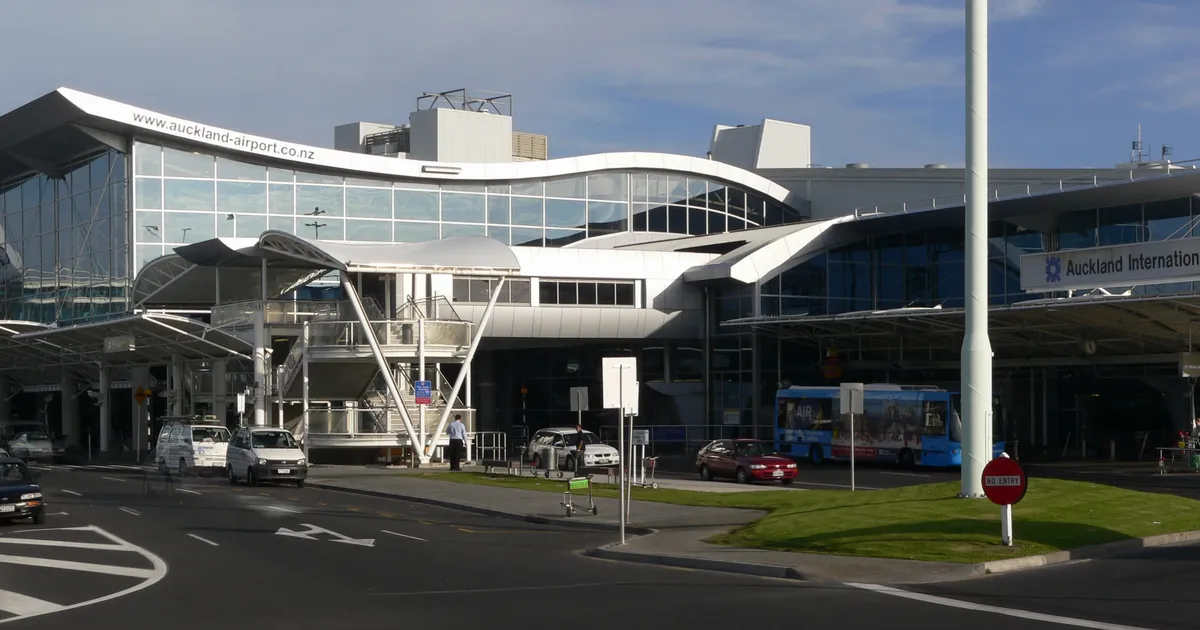
Revenue up, profit down
Auckland Airport crossed a symbolic threshold in the year to June 2026, with revenue rising 3% past $1 billion to $1.036 billion. Operating earnings looked healthy too, with EBITDAF up 3% to $724 million. Yet underlying profit after tax slipped 0.5% to $309 million. Shareholders get a final dividend of 6.75 cents per share on October 2.
A record top line and a shrinking profit is an unusual combination. It tells you the airport is doing more work for less reward, and the forces squeezing it are structural, not seasonal.
Three forces compressing the margin
The first is airline capacity. Seat capacity ran 6% below planned levels in the final four months of the year, and international seat capacity sat at just 92% of 2019 levels nearly seven years after Covid. Chief executive Carrie Hurihanganui said “the global fleet challenges that continue to hang over global aviation mean New Zealand is not exempt.” At Trenz in May, she described airlines as “trimming capacity, rather than slashing it”, with the sector in wait-and-see mode on fuel and geopolitics.
The second is a sharp collapse on Middle East routes. RNZ reported in July 2026 that Middle Eastern seat capacity into Auckland dropped 53% year-on-year in June, sending passenger numbers on those routes down 62%. Total international movements for the month came in at 722,000, down 4%, with US nationals down 6%. Those Gulf hubs are the connecting points for a large slice of long-haul European and other traffic, so their retreat matters well beyond the direct routes.
The third is the airport’s own spending. It is midway through a $5.7 billion aeronautical development programme, including a new integrated domestic terminal due in 2028-29 and a $465 million airfield expansion opened in September 2025. Newly commissioned assets mean more depreciation flowing straight through the profit line. On top of that, disruption from the duty-free refurbishment prompted Forsyth Barr to expect a 5% decline in retail income per passenger, a headwind that lasts until the new terminal opens.
Not a demand problem
Management is careful to frame this as a supply constraint, not weak demand. Hurihanganui said “underlying demand for air travel was strong” heading into summer, and told the Herald “that’s an indication it’s not necessarily a demand problem.” Chair Julia Hoare pointed to new domestic and transtasman capacity and Auckland’s growing role connecting Asia, New Zealand and South America, noting the airport handed regional carriers about $3.5 million in rental abatements during the year.
The distinction is real, but for anyone planning a business it barely matters. If the seats are not flying, the passengers do not arrive, and the spending they bring does not happen.
What flat FY27 means downstream
The most important line for the wider economy is the outlook. Volumes are expected to be relatively flat in FY27, with international passengers rising only modestly from 10.3 million to about 10.6 million. Auckland handles roughly three-quarters of New Zealand’s international arrivals, so its guidance is effectively a forecast for inbound tourism, hospitality, hotels and tour operators, none of whom should bank on a visitor surge this summer.
Freight and logistics feel it too, because much international cargo travels in the bellies of passenger jets. Fewer seats means tighter and pricier freight capacity. Retail and duty-free operators face flat volumes on top of refurbishment disruption. The one clear winner is construction, with the $5.7 billion pipeline rolling on regardless of the profit picture.
Structural, not a blip
This is the pattern the airport is now locked into. Revenue growing modestly, capex and depreciation growing faster, reported profit flat or falling. The half-year to December 2025 already showed the shape, with revenue up 4% and reported profit down 5%. Compare that with the FY24 boom, when revenue jumped 43% and underlying profit rose 87% as airlines flooded back, and the shift from recovery to grind is obvious.
Spending at record levels while revenue leverage is weakest is the right long-term call. Auckland needs the capacity. But investors should expect several more years of squeezed reported profit before the new terminal and expanded airfield open in 2028-29. Whether that spend unlocks enough aeronautical and commercial revenue to justify it depends on one thing the airport cannot control, and that is when airlines finally put the seats back.
Sources
- Auckland Airport profit falls 0.5% to $309m as revenue rises 3% (2026-08-19)
- Auckland Airport CEO optimistic on passenger growth despite global hurdles (2026-08-19)
- Airlines consolidate flights into NZ but passengers keep coming (2026-05-19)
- Middle East routes driving force in Auckland Airport passenger drop (2026-07-15)
- Auckland Airport posts ‘positive’ half-year result (2026-02-19)
Join the discussion
Add useful context, ask a good question, or challenge an idea — keep it specific and respectful.