

A pipeline problem that begins in the classroom
New Zealand’s food and fibre sector is the country’s dominant export engine and one of its largest employers, yet its recruitment problem starts long before anyone posts a job ad. It starts in a Year 12 classroom where agriculture simply never comes up.
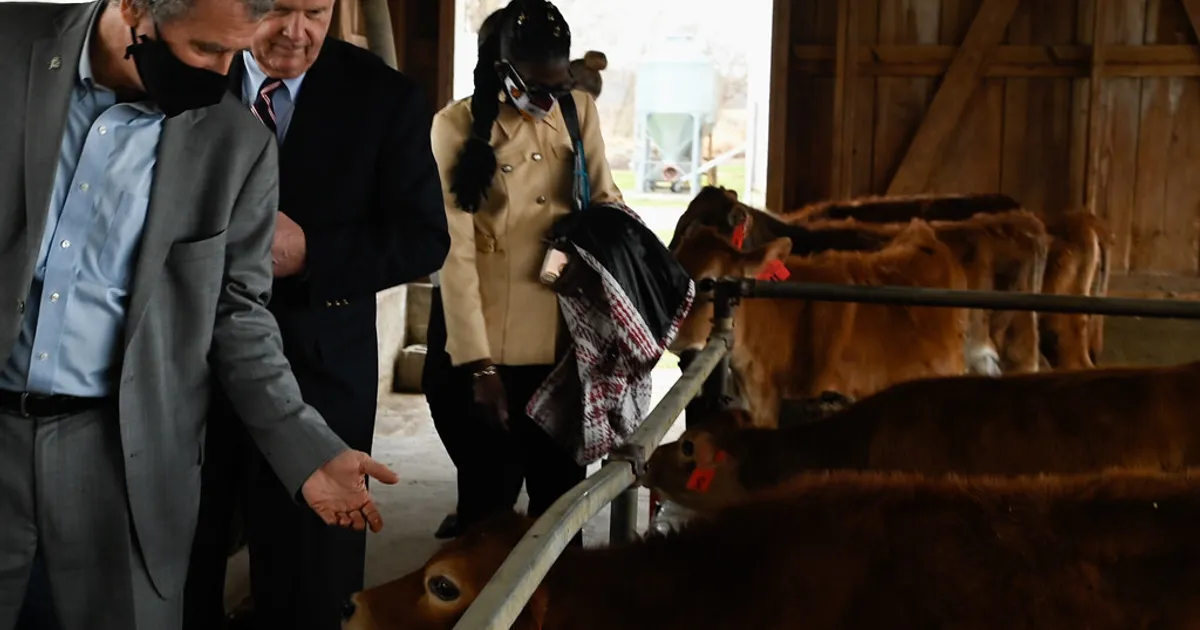
That is the uncomfortable finding industry leaders keep circling back to, and it is the gap Farm2Future is built to close. The 2026 camp, held in Canterbury from 7 to 9 July, took 25 Year 12 students from 20 schools through a string of real agribusinesses, from Rakaia Island Dairy Farm and Oakley’s Premium Fresh Vegetables to PGG Wrightson, Zentera Wool Company and Foodstuffs. More than 80 students applied for the 25 places. Student appetite, in other words, is not the constraint.
What surprised the students
The consistent takeaway is not sudden enthusiasm for farming. It is surprise at how much exists beyond it. Cashmere High School student Keira Cocks said the programme “gave me authentic, real-world insights that went beyond what is taught to me in the classroom”. Lincoln High School student Milan O’Neill called it “way more interesting and eye-opening than I’d expected”, adding that she discovered there were far more opportunities in the sector than she had thought.
O’Neill also noticed something about the people running the businesses. “A fair few of the people that we heard from hadn’t come from farming backgrounds or gone to uni, and it was interesting to hear how they started at the bottom and have made their way up,” she said. That detail matters for recruitment. The stereotype that you need to be off a farm to belong in the sector is exactly the barrier keeping urban school leavers out.
The stereotype problem is expensive
The 2026 cohort also punctures the assumption that these careers skew male. Young women made up more than three-quarters of applicants and 19 of the 25 selected. Robin Oakley, Rabobank Upper South Island client council chairman and founder of Oakley’s Premium Fresh Vegetables, called that encouraging ahead of the United Nations’ Year of the Woman Farmer in 2026.
Industry has been clear that the binding constraint is awareness, not aptitude or pay. Commentary from Fieldays noted that many perceptions of the industry have failed to keep pace with how it has evolved, and that recruitment conversations still routinely begin with students asking whether they will have to milk cows. If the first question a prospective worker asks is based on a picture of the job that is 30 years out of date, the sector has a marketing failure, not a talent shortage.
The numbers behind the urgency
This is not a niche problem. A 2022 NZIER and MPI analysis put the food and fibre workforce at 356,682 individuals in the year to March 2019, spanning dairy, red meat and wool, horticulture, forestry and seafood.
Meanwhile the national pathway into hands-on careers is contracting. Education Counts data shows workplace-based trainees fell 18 percent in 2023 and a further 14 percent in 2024, while apprentice numbers dropped again to around 69,760. A 2024 Food and Fibre CoVE policy analysis found the gaps in how secondary students move into vocational education and sector employment are structural, not incidental. The demand is going one way and trained supply is going the other.
25 students is a proof of concept, not a strategy
Farm2Future works. It is funded by Rabobank, delivered by Lincoln University Future Leaders scholars only a few years older than the attendees, and free to participants. The 2025 edition confirmed the strong year-on-year demand from students continues.
But it reaches 25 young people a year against a workforce of more than 350,000. That is a well-run experiment, not a workforce plan. The real question for the sector’s larger employers is whether they are prepared to fund early-stage pipeline work now, or wait until the hiring crisis lands on their own payroll. The evidence says exposure to a real business changes minds in three days where a careers brochure never does. Scaling that is a commercial decision, and the cost of not making it is measured in jobs the sector cannot fill.
Sources
- Farm2Future: Students explore careers across New Zealand’s food and fibre sector (2026-07-31)
- Young Kiwis missing out on food and fibre career opportunities
- NZ Food and Fibre Sector Workforce (NZIER and MPI) (2022-06)
- Secondary School Pathways and Transitions to VET and Employment (2024-10)
- Farm2Future programme showcases agri sector career opportunities (2025-07-29)