

From environmental extra to core capital
For decades, planting poplars and willows on erosion-prone slopes was filed under environmental stewardship, a nice-to-have that competed with fencing, water and stock for the farm budget. That framing is dead. At Tarawera Station in Hawke’s Bay, erosion-control planting is being treated as productive infrastructure with a defined payback, and the language the operators use gives it away.
Carl Read-Jones, general manager – farming at the Te Awahohonu Forest Trust, puts the investment case bluntly. Planting poles in the right areas keeps soil on the hills, “eases the pressure on river channels, drains and flood protection assets downstream”, and, in his words, “is our cheapest flood protection asset”. That is not compliance spending. That is asset-protection capex.
What the programme actually looks like
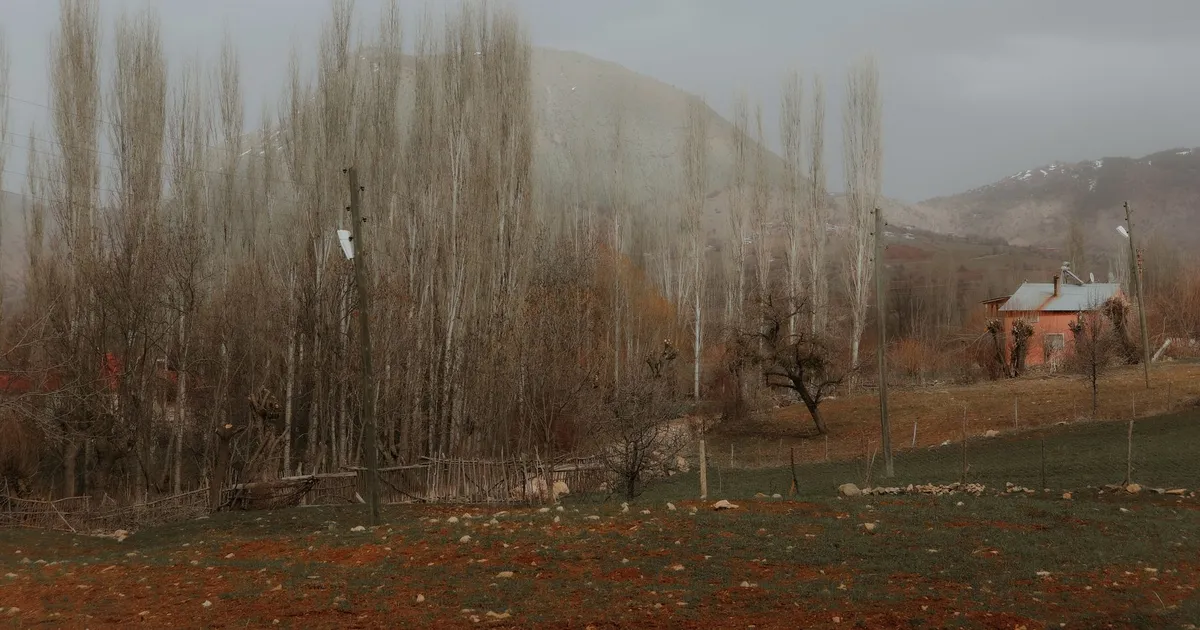
The station, part of the trust’s 2,650ha sheep and beef operation on the Mohaka River about 60km from Napier, has just added 200 poplar and willow poles to the ground. Since 2020 it has planted 1,530 poles, all raised at Hawke’s Bay Regional Council’s Allen Rd nursery. The latest batch is being helicoptered onto steep terrain, a cost the farm carries itself, rather than sending contractors 600 to 700 metres uphill with heavy loads.
The return is real but slow. HBRC’s Colin Stace explains that “two years is the usual time for initial establishment” and that it takes seven to eight years to see the full result, at which point the root systems “become part of the farm’s long-term protection”. That payback profile sits alongside irrigation or a new set of yards – long-dated capital that permanently lifts the productive base of the property. And the effectiveness is not marginal. In Hawke’s Bay, pole planting can reduce erosion by up to 80%.
Gabrielle settled the argument
Tarawera first planted after Cyclone Bola in 1988, restarted in 2020, and then Cyclone Gabrielle arrived to prove the point. Read-Jones is direct that “after seeing Cyclone Gabrielle, it definitely confirmed that it needed to be done”. Early mapping suggested around 170ha had moved, though once the land settled the affected area was nearer 70ha. Much of the vulnerable ground is shallow soil over solid rock, where slips are shallow and gully erosion follows drainage lines – exactly the pattern deep-rooted poplars and willows are meant to hold together.
A national bill that keeps growing
The reason this is a B2B story rather than a farm feature is the scale of the problem it is one small answer to. The Ministry for the Environment’s Our Environment 2025 report classifies 5 percent of New Zealand’s land, or 12,693 square kilometres, as highly erodible without protective woody vegetation. The Our Land 2024 report put 182 million tonnes of eroded soil entering the country’s rivers each year as of 2022.
It is projected to get worse. The same report models regional sediment loads rising 1 to 49 percent under a low emissions pathway and 18 to 233 percent under a higher one by 2090, with soft-rock hill country flagged as particularly exposed. In Hawke’s Bay alone, roughly 252,000 hectares of hill country is considered high risk. Lost soil is lost productive capacity, and downstream it becomes debris removal, blocked drains and damaged flood infrastructure that ratepayers and the Crown ultimately fund.
The partnership model worth copying
What makes the HBRC approach commercially sensible is the split of costs. The council grows the poles, sells them to farms, and supplies the technical advice on variety and placement. Stace’s line captures the discipline required – it is “about putting the right pole in the right place, so it has the best chance of doing its job”. Read-Jones credits that planning directly, noting Stace “helped us with a farm plan and advice on what varieties to use and where to plant them” so the farm can brief contractors accurately.
The farm covers the operational spend, including the helicopter delivery. That is public investment in supply and expertise, private investment in implementation, and it avoids the trap of pure subsidy where nobody owns the outcome.
HBRC chair Sophie Siers frames soil conservation as “the foundational natural infrastructure that underpins flood resilience, protects public assets and reduces long-term costs”. For hill-country farmers weighing where the next capital dollar goes, the reframe matters. Keeping soil on the hill is no longer a green gesture. It is balance-sheet protection, and after two cyclones inside four decades, the businesses running this land have stopped treating it as optional.