

Fast food out, institutional housing in
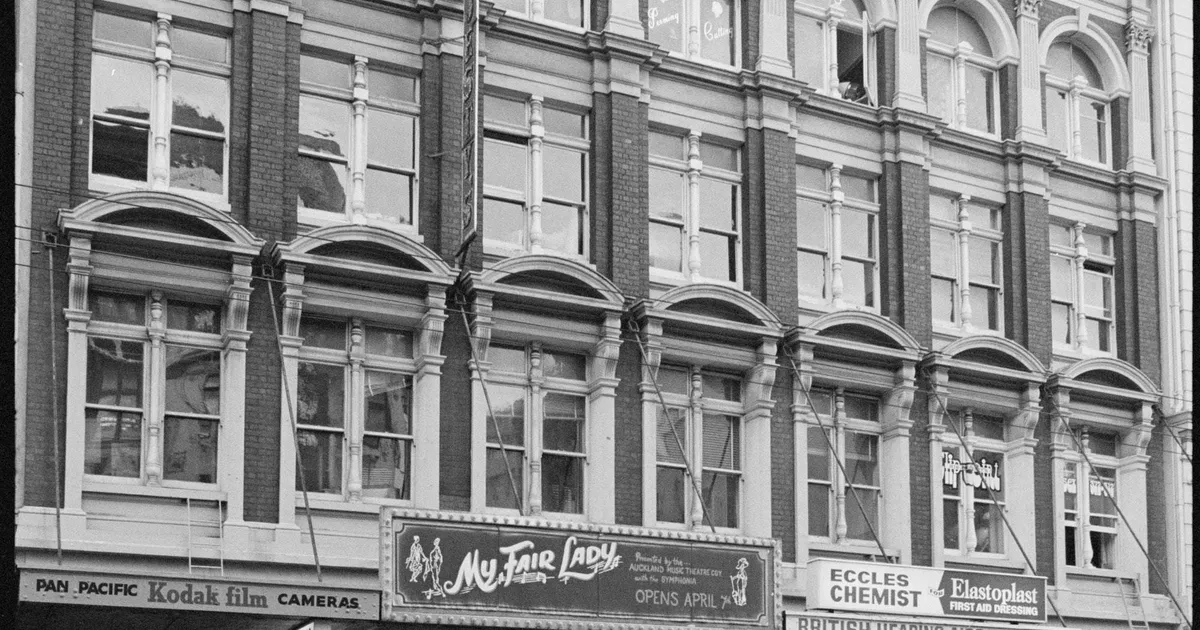
The site at 256 Queen St has worn a lot of hats. It opened in 1884 as the Auckland Savings Bank headquarters, became the country’s original McDonald’s in 1977, and is now set to become New Zealand’s tallest purpose-built student accommodation tower. Precinct Properties is developing a 32-level, 680-bed tower on the plot, roughly 400 metres from both the University of Auckland and AUT, with each of the 638 studio units getting its own kitchen and bathroom.
Icon Construction has won the $201 million build contract, takes possession of the site on 3 November 2026, and is targeting the start of the 2029 academic year for completion. Nobody commits $201 million to a 32-level tower on some of Auckland’s most expensive commercial frontage on a hunch. This is a land use decision, and it tells you something.
Not one tower, a wave
The Queen St project is not an outlier. Auckland is absorbing $716 million of new student accommodation across three towers from Precinct and Cedar Pacific at the same time. Cedar Pacific’s $290 million, 960-unit block at 22 Stanley St in Parnell broke ground in June 2026 and opens in 2028. Precinct’s own committed pipeline now sits at 1,602 beds across its projects. That is a strategic position, not a one-off.
When multiple developers pour institutional money into the same asset class in the same city in the same year, they are reading the same demand signal. And the signal is strong.
The demand is real and it is undersupplied
Simon Neale, the University of Auckland’s chief property officer, says the university has about 4,500 beds near its city campus with strong demand from domestic and overseas students. Experts believe the university could double that stock and still not meet current demand.
Student loan data backs the participation trend. In the January to March 2026 quarter, 126,696 students borrowed $1.144 billion under the Student Loan Scheme, up 19.2% year-on-year, with university borrowers numbering 92,343, up 11.4% on the same quarter in 2025. More students, borrowing more, at universities without enough beds nearby. That is the case underwriting $716 million of construction.
What it means for the businesses around it
Precinct chief executive Scott Pritchard has been direct about the spillover: student residents drive “retail trade, it drives turnover in restaurants and cafes, and it’s just greater vibrancy for the city”. This is not just developer optimism. Over 1,600 new beds by 2029 is a permanent, year-round consumer base within walking distance of Queen St hospitality and retail. Students eat out, buy groceries, join gyms and spend on services, and unlike office workers they do not vanish at 5pm or over summer.
For construction, the pipeline matters more than usual. Icon’s contract lands in a sector that recorded 769 construction firm liquidations over the past year. Large institutional projects deliver the multi-year certainty smaller commercial jobs cannot, and that certainty flows down to subcontractors and suppliers. The broader consent numbers confirm the direction of travel, with 39,087 new home consents in the year to April 2026, up 16%, apartments up 27%, and Auckland leading on 16,687 consents, up 21%.
The doors from the skip
The heritage subplot gives the project texture. The building is a Category 1 Historic Place, the highest level of protection, designed by architect Edward Bartley. Its coffered banking hall ceiling has been removed piece by piece and put in storage for reinstatement once the tower is built. A set of ornate timber doors McDonald’s discarded in 1977 were rescued from a skip by a passing architect and stored in a Birkenhead warehouse for decades, and will now be reinstated in the restoration.
The gap this money does not close
One caution worth naming. Institutional-quality student housing tends to price at the top of the market, and student living cost borrowing already averaged $1,471 per student in the March quarter, up 7.9%. New supply is unambiguously good, but if the towers sit at premium rents they ease the shortage without solving affordability. With demand deep enough to absorb double the current stock, this $716 million wave narrows the gap rather than closing it, which means the next round of investment is already a safe bet.
Sources
- Auckland’s original McDonald’s site to become 680-bed student tower (2026-07-13)
- Icon wins $201m Precinct Properties’ contract for NZ’s tallest new student accommodation tower (2026-07-15)
- Property Insider: Auckland’s three new student accommodation towers (2026-07-15)
- Student Loan Statistics – January to March 2026 (2026-03)
- Multi-unit homes lead rise in home consents in April 2026 (2026-04)
- Housing market update – March Quarter 2026 (2026-03)