

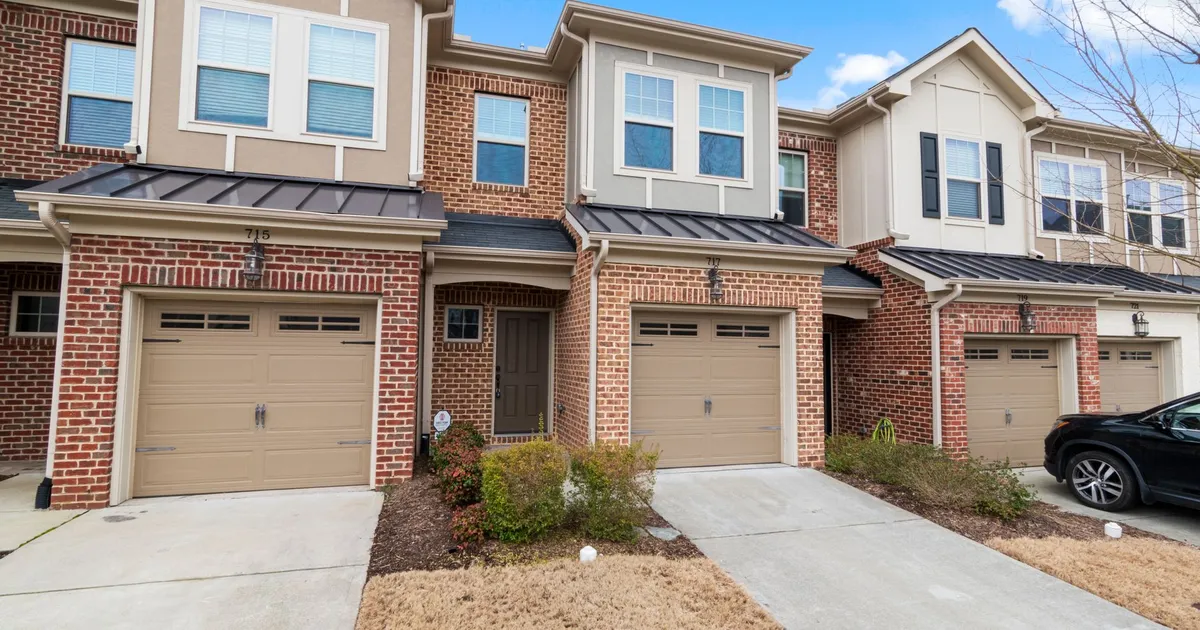
A price drop that should scare you
When a builder sells a finished townhouse for barely more than it cost to put up, it looks like good news for buyers. It isn’t. It’s a symptom.
CBS Co-operative chief executive Carl Taylor told RNZ that builders and developers are selling completed townhouses “at, or very close to cost, simply to free-up capital and keep their businesses moving.” His verdict was blunt: “That’s not a sign of a healthy market. It’s a sign that cash flow has become more important than profit.”
That single line reframes the whole conversation. This is not an affordability reset. It is a distress sale playing out across an entire sector, and the people carrying the exposure are not the developers offloading stock.
The numbers behind the fire sale
The scale of the squeeze is now on the record. The government’s Housing Market Update for the March 2026 quarter counted 769 construction sector liquidations over the past year, the highest level on record and equal to 0.9% of the entire sector.
The sector is visibly shrinking. 1News reported that there were 551 fewer building and construction companies operating at the end of 2025 than a year earlier, with roughly half involved in multi-family dwelling construction. Total construction activity fell 7.8% to $58.1 billion in 2024.
And costs are climbing again just as margins vanish. The HUD report shows construction costs rose 3.0% annually in the March 2026 quarter, the fastest rate in two years, driven partly by geopolitical tensions and an oil shock lifting material costs. Builders are eating those increases rather than passing them on.
The consent paradox
Here is where the surface story misleads. Building consents rose 11.7% year-on-year to 37,534 dwellings in the year to February 2026. Taylor described Canterbury and Otago as “humming” with record consents.
Yet liquidations are at record highs, hundreds of firms have left, and developers are selling at cost. The consent pipeline reflects decisions made months or years ago. It says nothing about current confidence or margin. As Taylor put it, “There’s still a smaller pool of work. So the guys are competing for that smaller pool by lowering their margins, lowering their labour, and lowering their total profitability and trying to win work.”
This is not recovery. It’s a sector running on fumes, and the short pipeline of actual work risks a vacuum that pushes prices and rents back up later, the opposite of the affordability story the consent numbers superficially suggest.
Who actually holds the risk
The developer who sells at cost has already solved their problem. They’ve freed up capital and moved to the next site. The risk simply moves downstream.
Subcontractors feel it first. When the head contractor has no buffer, margins get squeezed to zero and payment gets delayed or disappears entirely if a project stalls. “We’re seeing a lot of guys that are working for nothing,” Taylor said.
Lenders are quietly loading up on exposure. Residential development lending increased 18% year-on-year in February 2026, even as the sector recorded record insolvencies. Developers who bought land at peak prices and are now selling at cost have no equity cushion if the market turns further.
Suppliers and co-operatives carry credit risk from members who are technically solvent but cash-starved. A CBS Co-operative survey in April 2026 found roughly 60% of members were still absorbing rising input costs rather than passing them on, a slow bleed that eventually forces a reckoning.
Buyers who sign with a zero-margin developer risk an insolvency mid-build, a scenario that has repeated through this cycle.
Confidence, not announcements
Centrix managing director Keith McLaughlin told 1News that “when houses are sitting on the market for some period of time, and when the prices are weaker, then quite clearly builders and construction firms are pulling out of that sector of the market.” He does not expect recovery this year, citing upcoming elections, rising interest rates, and weak confidence.
The government has signalled proportionate liability reform and a home warranty policy. Taylor’s response is pointed: “That direction is welcome. But builders operate on certainty, not announcements.” Within the industry, the home warranty policy is seen as another cost layer at the worst possible moment.
The HUD outlook is explicit that recovery will be “gradual and fragile rather than immediate.” Until margins return, every discounted townhouse is a warning light, not a bargain, and anyone with money owed by a builder should be watching the invoice, not the price tag.
Sources
- Developers selling houses ‘close to cost’ as building downturn bites (2026-07-14)
- Inside New Zealand’s shrinking building and construction industry (2026-07-12)
- Housing Market Update for the March Quarter 2026 (2026-04-01)
- Builders say they may not be able to hold their pricing for much longer (2026-04-05)