

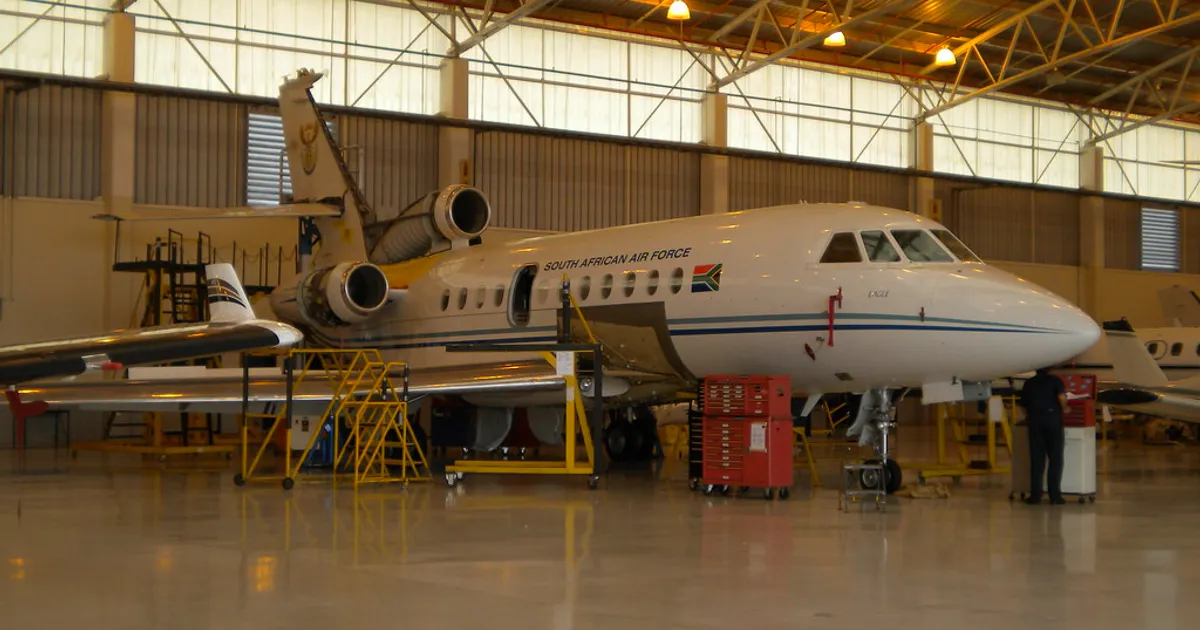
New Zealand talks a lot about attracting high-value visitors. This week someone with global capital decided to back that talk with infrastructure.
PrivatPort, the executive aviation arm of global ground-handler Swissport, has signed a joint venture with Auckland private equity firm SO Capital, announced on 13 July 2026. The stated aim is to position Auckland as the VIP entry point to Australasia and the Pacific. SO Capital already owns regional carrier Air Napier, which gives the venture homegrown operational credentials, while PrivatPort brings Swissport’s international executive aviation network and VIP ground-handling expertise.
A small market they intend to grow
The raw numbers are modest. Around 1,500 private jet flights move in and out of New Zealand airports each year, according to RNZ Checkpoint reporting on the deal. That is the baseline the joint venture wants to formalise and expand.
Growing that figure is the whole commercial challenge, and it is not guaranteed. But the logic behind the bet is sound. New Zealand’s problem has never been demand from wealthy travellers so much as friction, the practical hassle of getting a private jet, its crew and its passengers cleared and moving. Take that friction out and the calculus shifts in New Zealand’s favour against competing Pacific and Asian destinations.
The premium tourism thesis it plugs into
This deal does not land in a vacuum. It slots neatly into a tourism sector that has spent the past two years deliberately repositioning toward high spenders.
The money is real. International tourism expenditure hit $18.1 billion for the year ended March 2025, up 7.0% on the prior year, making tourism New Zealand’s second-largest export earner behind dairy and 17% of total exports. Visitor numbers reached 3.32 million for the same period, contributing $12.2 billion to the economy, up 9.2%.
The standout is the American traveller. US visitor spend grew 15% to $1.8 billion, and the most recent provisional figures show the momentum holding, with 170,730 overseas visitors arriving in the four weeks to 7 June 2026, up 7.8% on the same period a year earlier.
The industry has already picked its lane
The rest of the sector reached the premium conclusion first. Tourism NZ chief executive Rene de Monchy has described New Zealand as “by definition a premium destination” because of its distance and average travel time, the point being that the cost of getting here self-selects for higher spenders.
Air New Zealand’s North America manager Ben Evers-Swindell noted in May 2026 that “premium demand is strong, despite prices increasing”, and Auckland Airport chief customer officer Scott Tasker observed that “airlines are seeing commercial advantage in having more premium seats”. Air NZ backed the thesis with capacity, adding 20,500 business premier and premium economy seats across its long-haul network. The same analysis noted premium leisure visitors “are probably going to stay the longest and spend the most on experiences every day”.
A private jet terminal is simply the top of that same pyramid. If the whole sector is chasing the highest-yield traveller, dedicated executive aviation is the logical apex of the strategy.
Why this matters beyond the tarmac
For operators in premium hospitality, luxury experiences and professional services, the deal signals two things. First, it lowers the barrier for ultra-high-net-worth visitors and investors to choose New Zealand at all. Second, and arguably more important, it shows that serious international capital, in the shape of a company operating across dozens of countries, has made a strategic commitment to Auckland as a Pacific hub rather than a stopover.
SO Capital’s Air Napier holding also points to a regional dimension. Private jet passengers are not landing in Auckland to stay in Auckland. Napier, Queenstown and the country’s other high-end destinations are the itinerary, and the spending that follows flows well beyond the arrivals hall.
Financial terms and timelines are not yet public, and 1,500 flights a year is a slim base to build a business on. But the direction is unambiguous. When a country insists it wants the world’s wealthiest visitors, the honest test is whether anyone will build the infrastructure to receive them. Someone just did.
Sources
- Auckland getting private jet HQ as Swissport unit, SO Capital team up (2026-07-13)
- Air Napier owner SO Capital ties up with Swissport’s PrivatPort (2026-07-14)
- More international visitors to jet in to NZ on private planes (2026-07-13)
- Air NZ taps bulging US purses amid domestic belt-tightening (2026-05-21)
- Tourism Satellite Account – Tourism Evidence and Insights Centre (2025)
- International Visitor Survey – Year end March 2025 Data Release (2025-06-03)
- International travel (provisional) – Stats NZ (2026-07-01)