

A product with no legal home
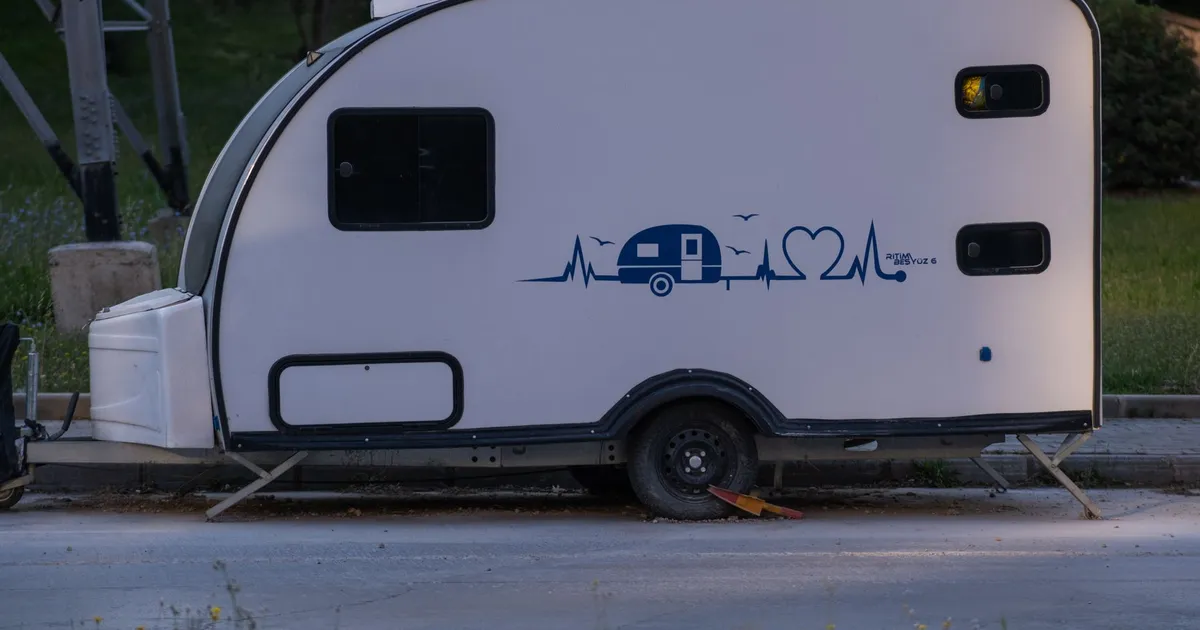
Tiny homes on wheels are sold as affordable flexibility. Buy one, tow it, live cheaply, move when you need to. The reality is that New Zealand has possibly more than 10,000 of them occupied as primary residences, and not a single one has a clear, nationally consistent legal pathway to full compliance.
That finding comes from Karen Flett, a tiny homes advocate who completed a master’s degree in architecture on the issue and presented her thesis at Parliament at the invitation of ACT MP Cameron Luxton. Her verdict is blunt. Tiny homes on wheels are lived in throughout the country but do not offer the same housing security as a conventional dwelling because they are not recognised within a clear, nationally consistent legislative framework.
Three laws, one product, no answer
The trap runs across three statutes at once. MBIE’s Tiny Houses Guidance, now on its fifth version in five years, spells out how the Building Act 2004, the Resource Management Act 1991 and the Land Transport Act 1998 each treat a tiny home differently, with no mechanism to resolve the conflicts.
The circularity is almost comic. If someone lives in a tiny home, it is a dwelling under the RMA, which means it must meet the Building Code. But there is no compliance pathway in the Building Code for a trailer-based foundation. So it cannot comply. As Flett puts it, it is stuck in a circle of never being able to get complete certainty.
This is not new. A court was already adjudicating the vehicle-versus-building question in 2019. MBIE has revised its guidance five times since, each update a signal the previous version left too many questions open.
The granny flats fix skipped them
The most significant recent change was the January 2026 granny flats exemption, letting eligible dwellings up to 70 square metres be built without building consent if built or supervised by Licensed Building Practitioners. It created a workable pathway for conventional compact housing.
Tiny homes on wheels were explicitly left out. A High Court ruling confirmed they are not granny flats and cannot use the exemption. In that case, Tasman District Council landowners were ordered to pay over $58,000 in legal costs after their tiny home was ruled fixed to the land despite having wheels. Housing Minister Chris Bishop has acknowledged that simplifying tiny home rules gets raised with him regularly, but said it is not on the work programme due to resourcing pressures.
The cost falls on individuals
When the law gives no answer, the bill lands on the buyer. Evening Report documented in August 2025 the case of a woman, then 69, who bought a $102,500 tiny home in 2022 on advice it needed no consents. A compliance officer later disagreed. What followed was 16 months and over $40,000 in unexpected costs for geotech engineers, pile foundations, a septic tank, drainage upgrades and a vehicle crossing, many of which were later found unnecessary.
Attempts to game the system fail too. MBIE determination 2026/003 covered a 30 square metre unit built in 2023, then fitted with a trailer, axles and a tow bar to claim vehicle status. It was still ruled a building, and the owner got a notice to fix.
Inconsistency is baked in
In 2024, University of Auckland Business School research fellow Dr Claire Dale identified the problem plainly. Tiny house is not a defined term in the Building Act, and a tiny house could be a building, a vehicle, or both. Some councils, she noted, only allow them in specific zones, and some prohibit them altogether.
Councils are not being difficult. They are applying legislation that does not give them a clear answer. That is fatal to the whole value proposition, because the point of a home on wheels is mobility, and mobility means moving between council jurisdictions that each interpret the rules differently.
The business risk is concrete
For builders, the legal status of the product they sell depends on where the buyer parks it. For landowners leasing space, tiny home tenants sit outside the Residential Tenancies Act, with no clear framework for either party’s obligations. For buyers spending $100,000-plus, a compliance notice or forced removal can arrive on a council officer’s interpretation. And the industry cannot scale on a foundation this unstable, which is why several tiny home builders have collapsed leaving customers out of pocket.
The fix, a nationally consistent framework that specifically recognises tiny homes on wheels, is not complicated in concept. The government just proved it can cut consent red tape when it wants to. It simply chose not to for this product, and until it does, affordability remains a council lottery.
Sources
- Why owning a tiny home on wheels can be a legal nightmare (2026-07-05)
- MBIE Tiny Houses Guidance Version 5 (2026-01-01)
- Determination 2026/003: notice to fix for construction of a unit without building consent (2026-01-30)
- Tiny homes could help ease the housing crisis, but councils are dragging their feet (2025-08-07)
- Tiny house or granny flat? What a difference a name makes (2024-06-27)
- Appeal Judgment CIV-2019-085-000404 – vehicle or building (2019-01-01)