

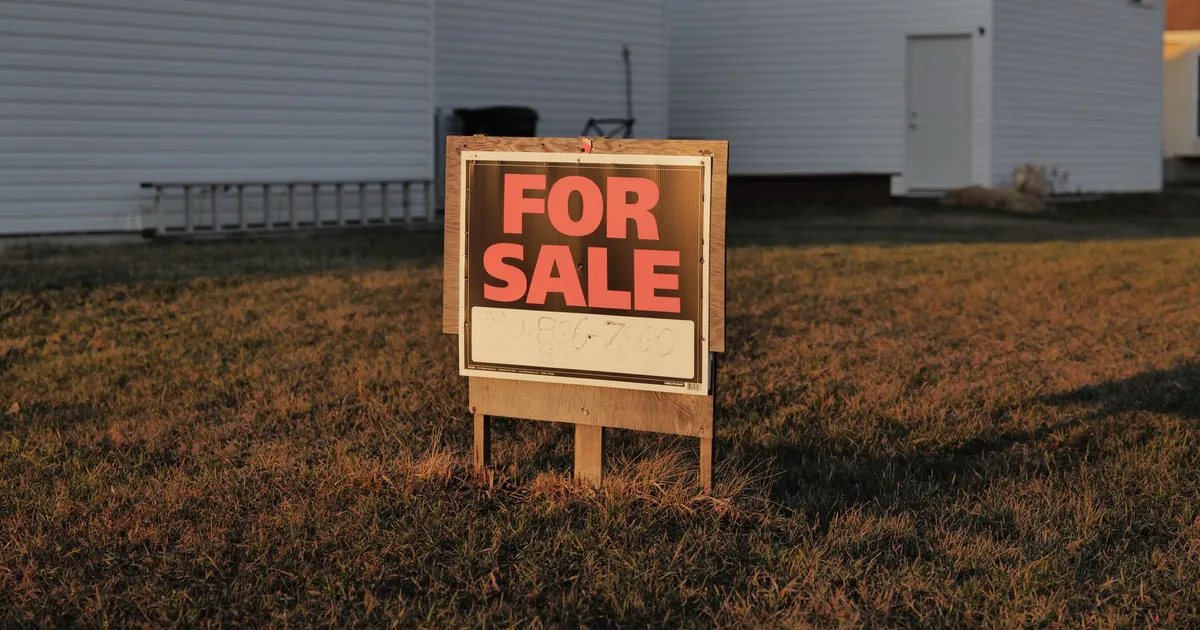
A charade with a chequebook attached
A Grey Lynn couple bought their King St home for $900,000 last year, renovated it, and now find themselves spending thousands more marketing a property they already know no one will buy. Their agent, Harcourts’ Bob Howard, called the process a “charade”: the couple must prove the property is unsaleable before the Crown will step in to acquire it. Howard said “they were pretty gutted. But they’d rather find out then than spend another half-million dollars.”
They are one of roughly 240 property owners whose homes sit inside the Northwest Busway’s 18km designated route and face compulsory acquisition under the Public Works Act. About 20 properties have already been bought, at a cost of $40 million. The rest are stuck.
The shadow period, and why the courts won’t help
The gap between a project announcement and the Crown actually buying your land is known legally as the shadow period. You can’t sell at market rate, can’t redevelop, can’t plan, and you can’t claim compensation for any of it. That was settled by the Court of Appeal in Casata Limited v Minister for Land Information, analysed in a January 2025 legal paper. Commercial owners in Petone sought $3.6 million in additional compensation for a suspended asset. The court found only physical interference with land is compensable, not economic losses flowing from an announcement.
In plain terms, the marketing costs, the low-ball offers, the years of frozen equity, none of it comes back.
The wait just got longer
Timing makes this worse. The busway will eventually carry up to 9,000 passengers per hour in each direction, the equivalent of four motorway lanes, and NZTA lodged a substantive fast-track application in February 2026 to speed things along. Then in July 2026, NZTA halted its own fast-track application over a clash with Auckland Council. Owners had already been warned it could be up to 10 years before the Crown required their property. The stall pushes that toward the longer end.
What the Act actually pays
When full residential acquisition finally happens, owners get market value plus modest extras. Auckland Transport’s 2021 landowner guide set out $35,000 to $50,000 under section 72 for providing vacant possession on time, a $5,000 discretionary hardship payment, plus reasonable legal costs and disturbance payments. For partial acquisitions or commercial land, compensation is capped at 10% of land value, maximum $25,000, a figure that will fall far short of real impact for most business owners. Crucially, none of it accounts for the shadow years.
The industry says this is self-defeating
This is not just a homeowner’s lament. Infrastructure New Zealand, the sector’s own peak body, told Parliament in January 2026 that “inadequate or inconsistently applied compensation and engagement processes are a primary driver of delay in the land acquisition that is required to deliver important public infrastructure.” Where owners see the system as unfair, INZ warned, “resistance and challenge become more likely” and projects slow down. Under-paying owners costs the public more, not less.
The business disruption story is similar. NZIER research in April 2025 found construction disruption costs are systematically left out of investment decisions. A Canadian survey found small firms lost an average 22% of revenue during major construction over five years. Seattle’s Light Rail set aside US$50 million in advance for business support, with 85% of businesses still operating at completion. New Zealand has no equivalent framework.
The uplift they’ll never see
Here is the sting. NZTA’s own October 2025 evaluation of the Wellington Northern Corridor found transport investment lifted residential property values, rising to a 5% uplift in Kapiti after Transmission Gully was completed. The Crown has quantified the value it creates for nearby owners. But the people inside the acquisition zone get the downside of the announcement and none of the completed project’s upside.
The policy moment
This reaches well beyond Grey Lynn. Up to 630 properties may be caught by the Airport to Botany busway, with acquisition years away and LIMs already flagged. Commercial landlords, developers and businesses near any of Auckland’s transit corridors face the same frozen-asset problem. On Newstalk ZB in June 2026, Kerre Woodham framed the balance to strike: pay a “fair market rate” so owners can stay or move on, without an open chequebook. With the Public Works Amendment Bill in play, the question is whether the law will finally price in the wait, or keep leaving owners to carry it alone.
Sources
- Home owners spend thousands marketing Grey Lynn house in path of Northwest Busway (2026-07-04)
- NZTA halts Northwest Busway fast-track application over clash with Auckland Council (2026-07)
- Kerre Woodham: Fairness and land acquisition for public works (2026-06)
- INZ Submission on the Public Works Amendment Bill (2026-01-27)
- Te Ara Hauauru – Northwest Busway | NZ Transport Agency Waka Kotahi (2026-04)
- Caught in the shadows: unpacking compensation claims for the acquisition of land for public works (2025-01-29)
- Evaluation Note 001 – Change in real estate value related to major transport programmes, Wellington Northern Corridor case study (2025-10)
- Impacts of construction disruptions should be incorporated into infrastructure investment decisions in New Zealand (2025-04-03)
- Hundreds of Auckland properties threatened by major Northwest Busway project
- Airport to Botany busway: 630 Auckland properties in acquisition zone after route confirmed
- Landowner Guide – Auckland Transport (2021-05-25)