

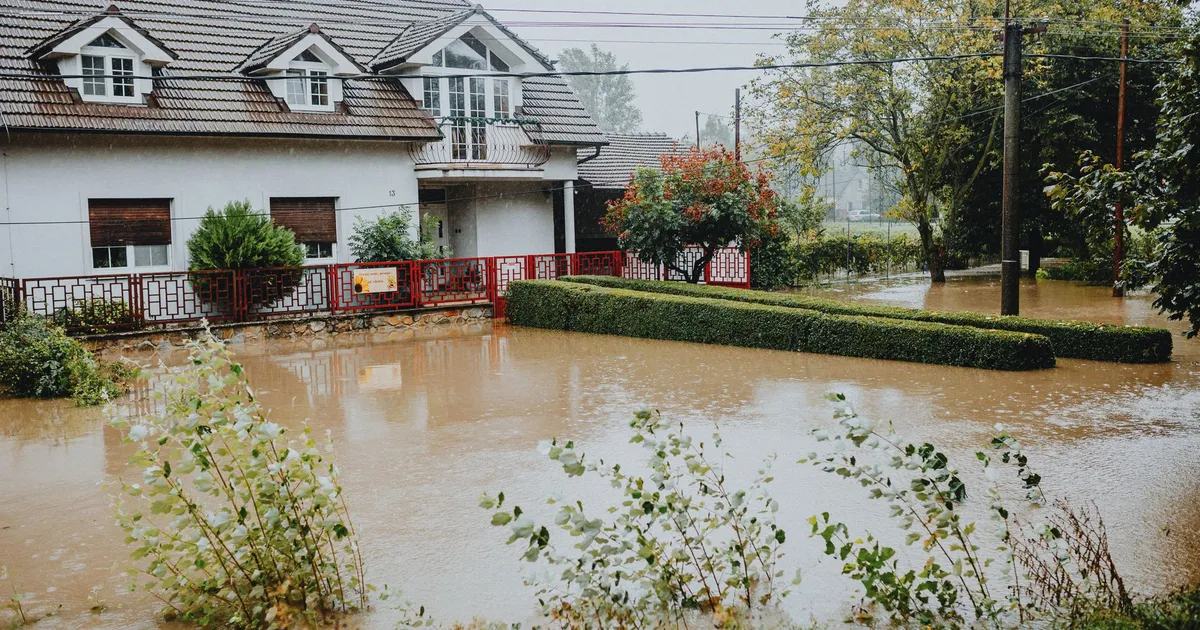
The number that should worry every property owner
Climate risk used to be something businesses argued about in sustainability reports. It now sits on the balance sheet, in black and white, as a fixed and compounding operating cost.
IAG’s 2026 annual climate poll of 1,000 New Zealanders, released on 30 June, found four out of five people say insurance is becoming less affordable, and half worry they will not be able to keep paying. Some 69% believe growing climate risk is driving premium increases, and the most recent Treasury monitoring data cited in the same report shows average premiums rose by a third between October 2022 and October 2025.
This is not a blip. Treasury’s January 2026 Cabinet paper documents that home premiums have grown at three times the rate of general CPI since 2011, with a 40% rise in the last two years alone. S&P Global, cited in a February 2026 Treasury OIA response, predicted continued growth of roughly 9% per annum until 2027.
When premiums hit the banking system
The most significant escalation came from the Reserve Bank. Its May 2026 Financial Stability Report put the national average annual premium for a standalone buildings policy at about $2,900 and mapped how retreating cover could reach bank balance sheets, through depressed property values, weaker debt-servicing capacity and regional credit exclusion.
Deputy governor Christian Hawkesby said the immediate stability risk looked limited but “could change quickly and warrants monitoring”. The Bank estimated total residential sum insured at around $1.5 trillion across roughly two million dwellings, with about 60,000 homes already uninsured – a figure set to grow as premiums climb.
The logic is brutal for business owners. A commercial property or rental in a flood-prone area that becomes hard to insure also becomes harder to borrow against and harder to sell. The asset does not just cost more to hold, it can become stranded.
Cover is already retreating
This is not theoretical. AA Insurance temporarily paused new home cover in Westport over flood risk, and the Treasury Cabinet paper names Wellington, Marlborough and Canterbury as regions where access is getting harder. For firms operating there, the threat is not just higher premiums but the prospect of withdrawal altogether.
The doom loop nobody wants to fund
New Zealand’s natural hazard protection system assumes near-universal private insurance. When households drop cover, they lose access to the scheme’s first layer too, and the fiscal backstop shrinks. The Treasury Cabinet paper is stark: at the current levy of 16 cents per $100 of building cover, the scheme has only a 38% probability of sufficiency. Treasury recommended lifting the levy to 24 cents, raising the maximum annual charge per dwelling from $554 to $828 and generating roughly $464 million extra a year.
The catch is obvious. Raising the levy lifts the scheme to a 66% chance of sufficiency, but it also adds to the very affordability pressure that is pushing households out. Finance Minister Nicola Willis launched a six-month review in February 2026 and has paused the levy decision pending its outcome, meaning the scheme stays underfunded while premiums keep compounding.
Pay now, or pay much more later
The industry’s message is that doing nothing is the expensive option. At an ICNZ panel on 5 June, Simplicity chief economist Shamubeel Eaqub put it plainly: “The people of New Zealand will pay one way or the other, either it will be done individually and unfairly, or it’ll be done collectively and fairly, and I suspect the latter will be a hell of a lot cheaper.” The panel noted roughly $64 billion has been spent responding to natural disasters since 2010, averaging $5.5 billion a year after inflation.
FMG chief executive Adam Heath warned global reinsurers are watching: “They are looking to us as a country to say ‘what are you doing about mitigating the risk.'” IAG chief executive Phil Gibson said the challenge “is not insurmountable” but “requires a clear strategy and senior political leadership.”
Willis’s Cabinet paper also flagged that insurers may run higher margins than their Australian counterparts, hinting at a competition problem in a market dominated by three players. That is worth resolving. But it does not change the core arithmetic for business owners: premiums are rising faster than inflation, cover is thinning in the riskiest regions, and the public backstop is underfunded. Climate risk is now a line item, and the review clock is the only thing moving slowly.
Sources
- RNZ: 1 in 2 people worried about insurance affordability as risk of climate disasters grows (2026-06-30)
- 1News: Govt launches high-powered review into soaring insurance premiums (2026-02-03)
- Newswire: Reserve Bank says rising insurance costs and 60,000 uninsured homes could test NZ’s banks (2026-05-10)
- Insurance Business Mag: Inaction on insurance affordability carries a measurable cost, ICNZ panel warns (2026-06-05)
- Treasury Cabinet Paper ECO-26-SUB-0003 (PDF) (2026-01-28)
- Treasury OIA Response 20250830 – Insurance affordability work plan options (2026-02-19)